



Before you patch that Raymond slab, decide if it is low, broken, or moving.
Sound surrounding concrete with a limited damaged edge may support a focused repair.
A sound but low slab belongs in a concrete-leveling assessment.
Broken pieces may need a new pour. Movement tied to the building needs a structural check.
Walk the slab and find the exact joint that catches a shoe. That is your first diagnostic. A front landing or driveway approach can look like one problem when it is two: a low panel that still rings solid, or a broken edge with loose aggregate. Check whether the driveway approach is part of the same movement or a second problem. If the joint is tight and the panel is sound, you may be looking at a leveling question, not a repair. If the edge is crumbled or the surface is spalling, that is a repair candidate. If the crack is wide, offset, or runs through the building line, stop and treat it as a movement question.
A sound but low panel can often stay in place. A repairable broken edge or surface can be patched if the base is stable and the repair is not carrying a structural load. A slab that is cracked through, settled unevenly, or tied to a failing base usually needs removal and re-pour. The decision is not about age. It is about whether the concrete still does its job. If the slab is flat enough for drainage and safe underfoot, leaving it alone is a legitimate outcome. If the break is at a control joint and the pieces are still interlocked, a repair may buy time. If the slab is hollow underfoot, that is a different conversation.
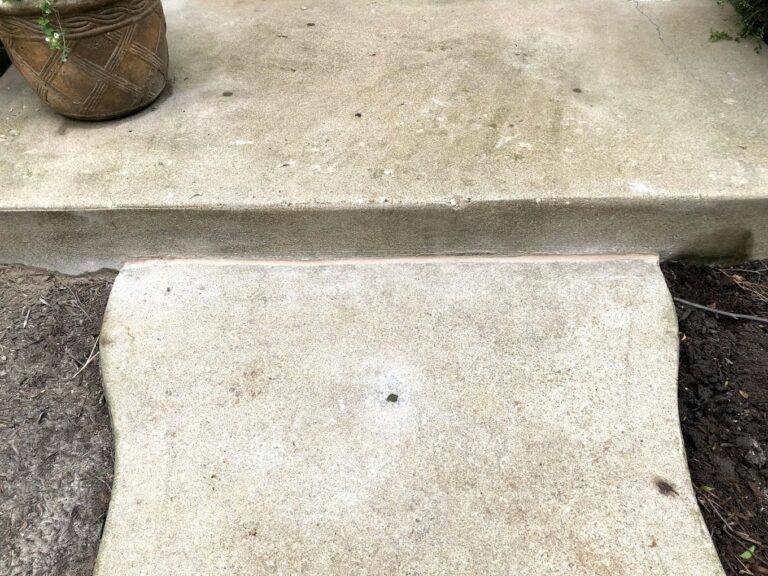
For a sound but low panel, the method is leveling, not patching. For a broken edge or surface, the method is preparation and repair material matched to the exposure. For a slab that has lost its base or is broken into moving pieces, the method is removal and re-pour. ACI RAP-7 discusses horizontal concrete repair preparation, ACI RAP-11 discusses slabjacking assessment, and ACI RAP-1 discusses structural concrete cracks. We do not assume leveling is always cheaper. We compare the cost of repair against the cost of replacement and tell you which one fits the condition.
ACI's horizontal repair guide is general technical guidance, not a specification for this house.
Raymond's town forms page routes driveway permits to Public Works and lists a separate street-opening permit. That keeps a private entry slab separate from a repair that breaks into a street approach. We can scope the concrete first and identify any town-side question before work is booked.
Read the Raymond source. We check the approval path against the proposed scope.
A crack caused by building movement is not a concrete repair by itself. If the crack follows a foundation wall, runs through a structural slab, or shows offset on both sides, the fix may belong to a foundation or structural scope. We do not claim a structural slab always needs piers. We do not treat every crack as structural. A repair can also fail if the base is still moving, if water is not redirected, or if the repair must bridge a joint designed to move. NRMCA CIP6 discusses planned slab joints. We separate these structural concerns from ordinary crack repair.
Access is the first constraint. A front landing or driveway approach may be easy to reach, but a repair that breaks into a street approach is a different job. We can scope the concrete first and identify any open question before work is booked. Other constraints include slope, drainage, and whether the work area can be isolated. We do not guess at soil, water table, or local house type. We look at the actual slab and the actual grade.

A written estimate starts with measurements. We measure the slab, the crack width, the joint spacing, and the elevation difference. We note whether the repair is cosmetic, functional, or structural. We list what is included: preparation, material, and cleanup. We list what is excluded: permits, engineering, and any work outside the concrete scope. If the repair is a patch, we say so. If the repair is leveling, we say so. If the slab needs removal and re-pour, we say so. The estimate is not a promise that the crack will disappear. It is a scope of work based on what we can see and measure at the site.
Sometimes the answer is no work. A hairline crack in a sound slab that is not offset and not leaking may not need repair. A low panel that drains away from the house and is safe underfoot may not need leveling. A broken edge that is not in a walking path may only need a cosmetic patch. We will tell you if the concrete can stay. If you are not sure whether the driveway approach is part of the same movement or a second problem, that is a reason to inspect before you book. The goal is to fix what is broken and leave what is working.
We separate a private entry slab from a repair that breaks into a street approach. We do not handle permits for you. If your repair stays on private property, the town-side question may not apply. If it breaks into the street approach, ask Public Works before you dig. You decide what work you want done. We tell you what we find in the concrete and what it means for the repair. That way you can plan the job with clear information in hand.
Show us the concrete and we will tell you what is worth fixing, what can stay, and what still needs checking.

