



Decide which private driveway panels need replacement before planning the street-side edge.
You can replace a failed private driveway panel in Concord without assuming the whole drive must be torn out. We identify the panel that broke, the base under it, the garage and walk elevations, and whether the street approach is included. That last boundary changes the review question. It does not turn a private driveway pour into a municipal project by default.
Mark every existing joint, the edge of the garage slab, and the point where the drive meets the street. A crack through one panel can be a replacement problem. A sound panel beside it may be worth keeping. On the other hand, a bad base can extend beyond the visible break. We will not promise a one-panel job until removal and grading boundaries are clear.
Measure the garage threshold and adjoining walk. A new slab needs to meet those fixed heights while sending water away from the opening. Pouring a beautifully flat panel that slopes toward a garage door is an expensive mistake. We work backward from the door and drainage path, then set the new grade. If a vehicle catches a lip but the panel is still intact, concrete leveling may be a more conservative option.
Cracked concrete can result from several causes. A soft spot or washed-out base is one of them, but we do not diagnose it by looking at a close-up of the crack. Removal lets us inspect the material beneath the failed panel. We specify what base preparation is included and what discovery would change the scope. A new slab on a failing base can repeat the movement.
If the visible damage is only a small sound edge, concrete repair deserves consideration before demolition. If the old panel is in separate moving pieces, patching those seams is a weak answer. This is why the estimate should state the condition of the pieces, not just the square footage of the pour.
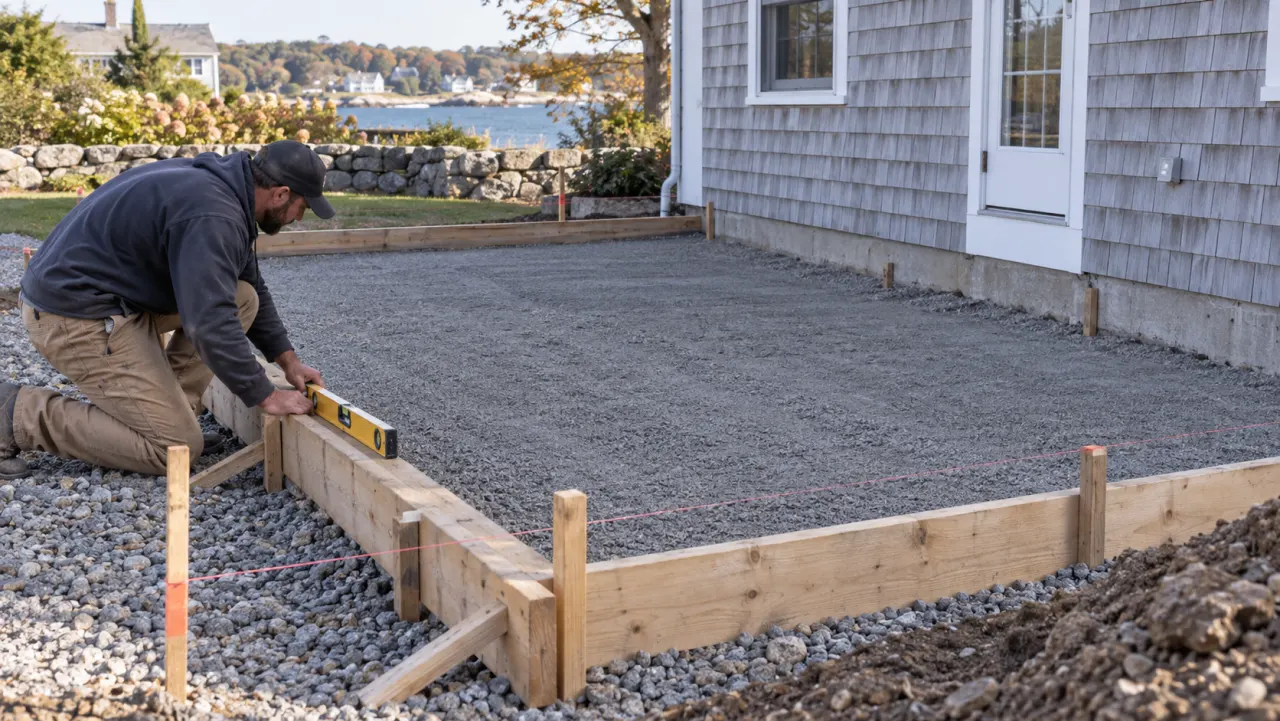
The NRMCA slab-joint guide explains why joints control where cracking develops and why a driveway should be isolated from adjoining structures. It does not provide a universal drawing for your property. We choose the panel layout after measuring the garage, walk, driveway width, and any permanent restraints. Avoid an awkward small sliver at the edge merely to reuse an old form line.
A joint also is not a cure for a poor base or bad water route. It helps the concrete move where intended. The support and drainage still need their own attention. Ask how the new panel meets what remains and where the water goes after rain.
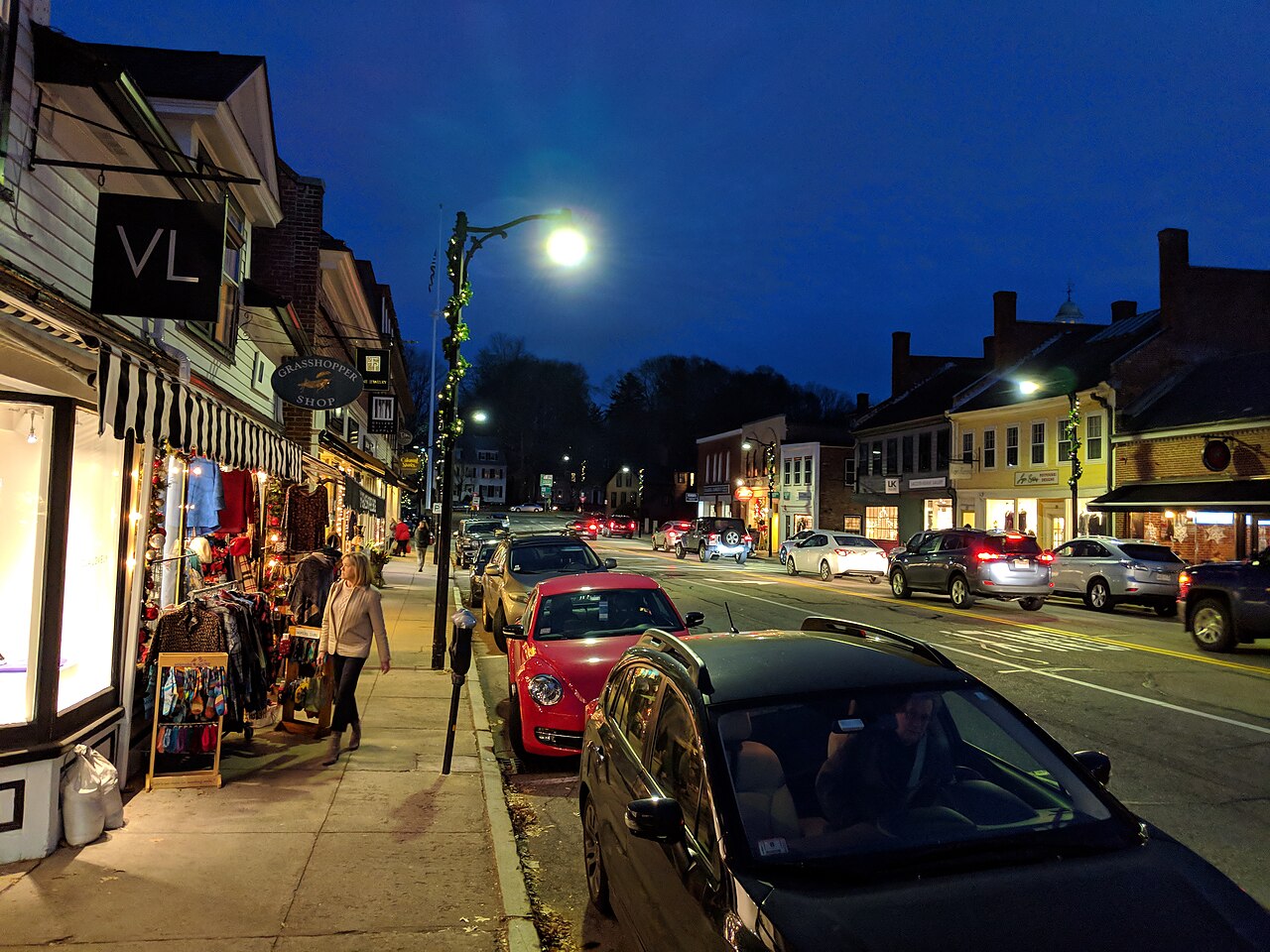
Concord Public Works’ Right of Way and Driveway Permits page says disturbance or work within the Town’s right-of-way requires a right-of-way or driveway permit, or both. It explains that the right-of-way can include road, sidewalk, utilities, shade trees and grass strip, and that its width varies by street. This is more specific to a driveway approach than a generic building-permit page. It still does not establish the property line from a photo. We would locate the proposed removal and truck access before saying which application the town needs. A private garage-side panel, with no public-way disturbance, should not be described as though it is automatically a road-opening project.
For a quote, ask for a sketch showing the panel to be removed, the street-side limit, and any adjacent area left in place. Mark the curb, public walk and the route for the concrete truck or debris container if either might use the public way. Concord distinguishes its online driveway application from its right-of-way application; the contractor should confirm the actual proposal with Engineering rather than treating one generic “permit” line as enough. That makes it possible to compare proposals without assuming every contractor priced the same end of the driveway.
If removal exposes soft material beyond the marked panel, pause and document it before widening the job. The revised scope should say how much base will be removed, how a stable support will be verified, where the new slab will meet the old one, and whether that change crosses the agreed street-side limit. This discovery rule protects a homeowner from a “one-panel” price that silently turns into a whole approach replacement. It also gives a fair reason to stop if the neighboring concrete proves sound.

Google review · Customer experience
William Sparks ★★★★★
“Called to have Radon mitigation system installed.
They were EXTREMELY professional, very reasonable, and quick to get the job done. The job was done right the first time too!If you want the white-glove treatment, then look no further.”
The surface finish, planned joints, and protection period should be in writing. Fresh concrete needs suitable curing conditions; the NRMCA curing guide explains why moisture and temperature matter. It does not supply an exact day to park a car on every Concord slab. The return-to-use instruction depends on the mix, weather, and loading in the actual proposal.
We should also say where vehicles and foot traffic will go while the panel is unavailable. This is part of the homeowner’s decision. If access is the main reason to postpone the job, a small safe repair may be reasonable until the full replacement can be planned. The NRMCA cracking guide ties stable support, contraction and isolation joints, proper placement and curing to crack control. That sequence is why a proposal should describe more than finish color and square footage. It is also why no contractor should promise an ordinary outdoor driveway panel will never crack.
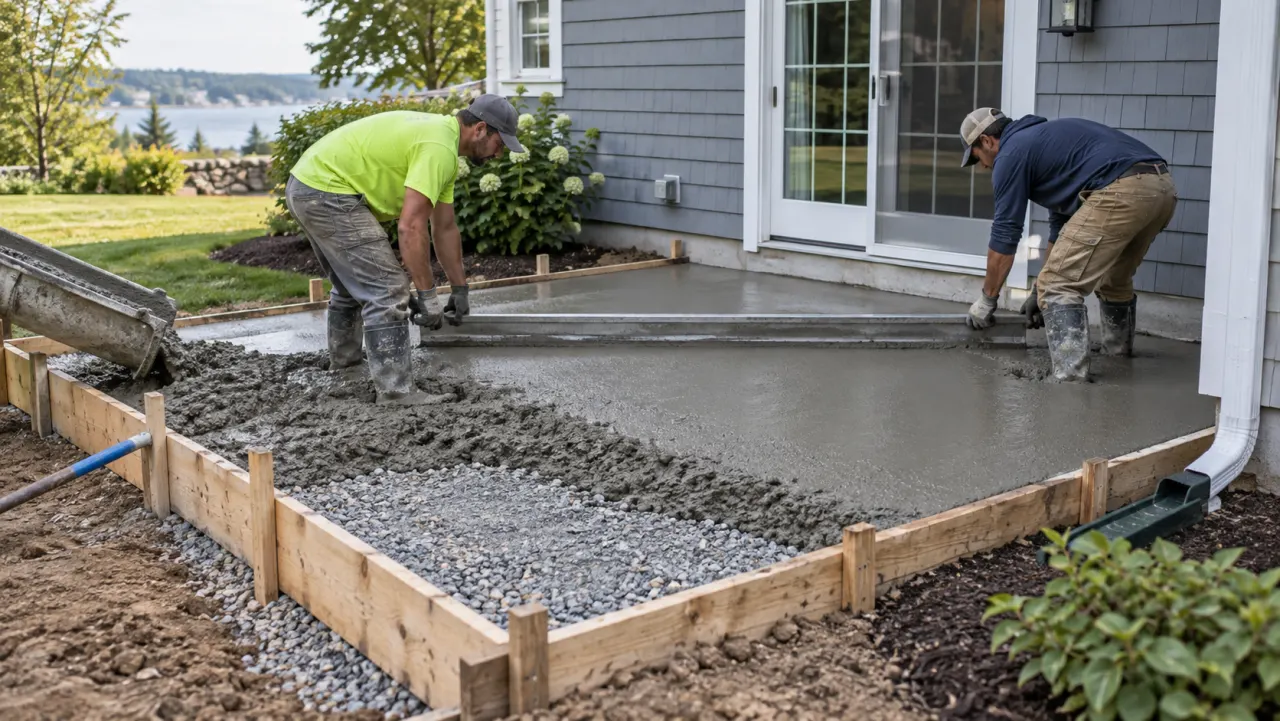
Keep sound concrete where possible. A local patch can serve a stable edge. An intact low panel can be evaluated for lifting. And if movement traces into a bearing wall or footing, a driveway pour will not repair that foundation problem. We will tell you which boundary we found and why replacement does or does not fit.
Send a wide photo from the street toward the garage and a second one across the worst joint. At the visit we measure heights and examine the base clues. The written scope should name removal, base preparation, grade, joints, finish, curing, and exclusions. “New driveway concrete” alone is not enough information.
The answer should be marked on the driveway. If a panel is sound and its grade works, keeping it may save useful concrete. If it shares the failing base, we explain why the removal limit grows.
Show us the affected concrete. We will explain what we measured, what can stay, and which scope fits the house.

