



A new slab in Derry is a base, water, and access decision before it is a concrete decision.
A sound low panel may be worth leveling instead of demolishing.
Broken concrete or failed support may call for removal, base work, and a new slab.
A slab that carries the house needs a structural assessment before a pour is scoped.
Walk the whole route from the driveway to the door before deciding what needs concrete work. An uneven front walk or patio needs a close look. We check drainage, joints, and whether the raised edge catches a foot or tire. For a basement slab, the same logic applies inside: look at the whole floor and check more than the easiest crack to see. 603 Basement Solutions scopes the slab on the property, and the homeowner can confirm any public-side responsibility with Derry. The diagnosis includes the route, the water, and the visible defect.
Not every uneven slab needs removal. If the concrete is sound and low, leveling may be the better path. That decision belongs with an assessment of the slab, not a blanket rule. First check whether the slab still works. A low area may affect a walk, driveway, patio, or basement floor in different ways. If the slab is sound, 603 can talk through whether leveling is worth considering instead of a full replacement. If it is broken, scaled, or poorly supported, replacement may be the honest answer.
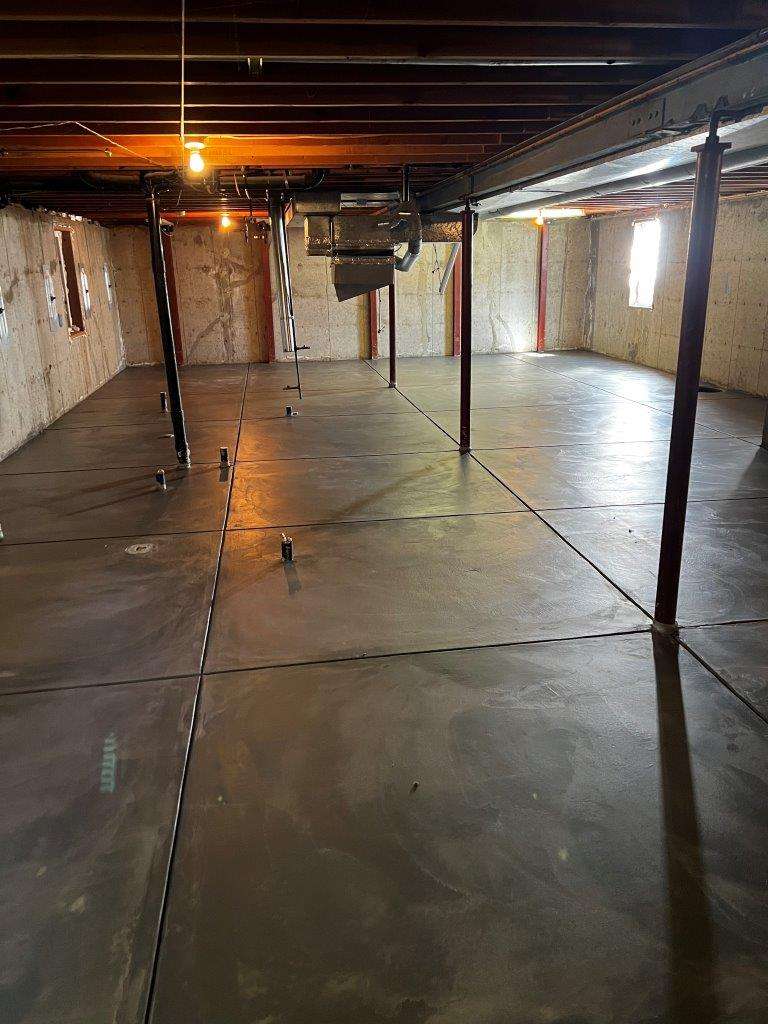
Removal limits are job-specific. A basement slab, a driveway slab, and a patio slab each have different access and edge conditions. Before any pour, the base and water plan matters: how water moves away from the slab, how the base is compacted, and how the edges are formed. Joint layout, curing, and use timing are questions to settle in the estimate, not assumptions. The homeowner should ask what stays, what comes out, and how the new slab will handle water. Those answers shape the scope more than any single number.
NRMCA's slab-joint guidance is general technical guidance, not a specification for this house.
Derry Public Works is the town department responsible for roads and related public infrastructure. If a raised edge is on a town walk or roadway edge, that is not a private patio quote. The homeowner can confirm public-side responsibility with Derry while 603 scopes the concrete on the property. This keeps the exterior flatwork question separate from any structural slab discussion inside the home.
Read the Derry source. We check the approval path against the proposed scope.

Method selection starts with the slab's condition and the site. A new pour makes sense when the existing slab is beyond leveling or when the base and water plan cannot be corrected otherwise. Leveling may make sense when the slab is sound and low. ACI RAP-7 discusses horizontal concrete repair preparation, and ACI RAP-1 discusses structural concrete cracks. For a basement slab, a driveway, or a patio, the choice depends on access, edges, joints, and how the slab is used. 603 Basement Solutions can walk the property and explain which option fits the actual conditions. The homeowner may not need a repair at all.
Some conditions fall outside a straightforward slab quote. A raised edge along a public walk or roadway edge is not a private patio quote. You handle the public side; we scope the concrete on your property. Other limits include equipment access, material removal, and whether the base and water plan can be corrected within the work area. A structural slab inside a basement is a different conversation from exterior flatwork, and load-bearing slabs are not covered here. If the scope drifts into public infrastructure or structural work, separate it before anyone treats it as a simple pour.
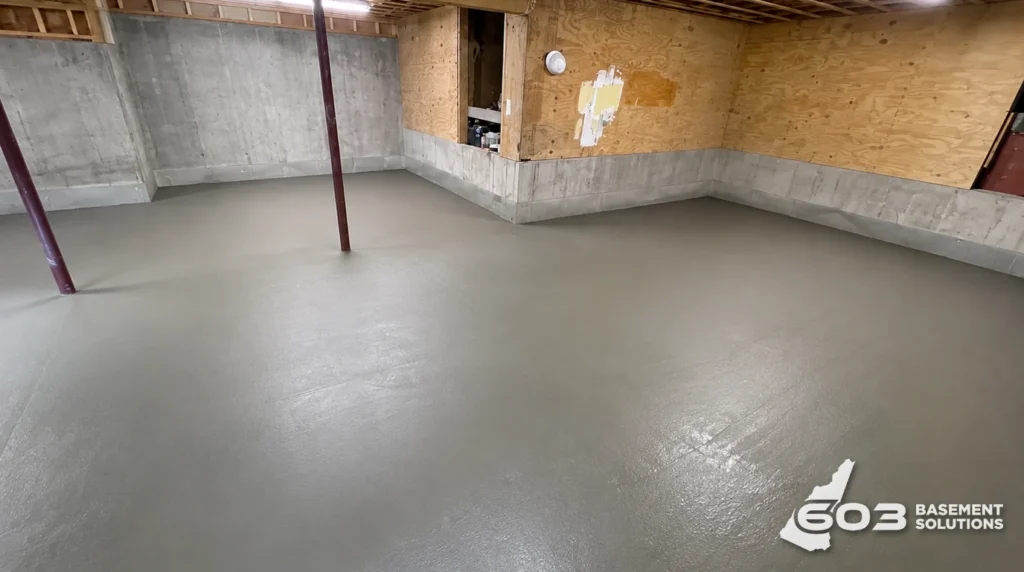
Site constraints shape every slab job. Access for removal and delivery, the distance from the truck to the work area, and the edges where the new slab meets existing surfaces all matter. For a driveway, the transition at the street and the garage matters. For a patio, the transition to the house and the yard matters. For a basement slab, the route through the home matters. Water is part of the same picture: where it drains, where it pools, and how the base is prepared. These are job-specific questions, not a fixed recipe. 603 Basement Solutions can review the site and explain what the constraints mean for the scope, the schedule, and the use timing.
A written estimate should show what is measured, what is removed, what is poured, and what is left alone. Measurement includes edges, joints, access, and the water plan, not only square footage. The estimate should state curing and use timing as job-specific questions, because those depend on the slab and the weather. If the slab is sound and low, the honest recommendation may be leveling or no work at all. We can put the scope in writing and explain the reasoning. You should feel free to ask what happens if the base or water plan changes once the work starts. That is the point of a written estimate.
It depends on the slab, not the address. If the concrete is sound and low, leveling may be worth considering. If it is broken, scaled, or poorly supported, replacement may be the better path. Walk the whole route from the driveway to the door and look at drainage, joints, and edges. 603 Basement Solutions can scope the slab on the property and put the options in writing. If a raised edge is on a town walk or roadway edge, confirm public-side responsibility with Derry first.
Show us the concrete and we will tell you what is worth fixing, what can stay, and what still needs checking.

