



Before you pour a new Exeter slab, find out what can stay and what actually has to come out.
A sound low panel may be worth leveling instead of demolishing.
Broken concrete or failed support may call for removal, base work, and a new slab.
A slab that carries the house needs a structural assessment before a pour is scoped.
A slab decision starts with what the concrete is doing now. Look for cracking, settlement, ponding, scaling, or a hollow sound underfoot. Check whether the problem is one panel or the whole surface. On a hypothetical Exeter walkthrough, a concrete step and a driveway apron would be inspected as separate items because they serve different purposes. The step and landing are fixed heights tied to the entry. The apron is tied to roadway access. Mixing them into one quote hides what is actually being repaired. Diagnosis should say whether the slab is sound but uneven, or whether the concrete itself is failing. That answer drives everything after it.
Not every slab needs to come out. A sound, low concrete slab can sometimes be leveled instead of replaced. That is a real option when the concrete is intact and the problem is a drop or void under part of it. On a driveway, one lifted panel may be a leveling candidate while the rest stays. On a patio, a settled corner may be repairable without tearing out the whole surface. On a basement slab, a sound floor with a localized low spot is a different job than a cracked, wet, or heaved floor. The estimate should state plainly what is being kept.
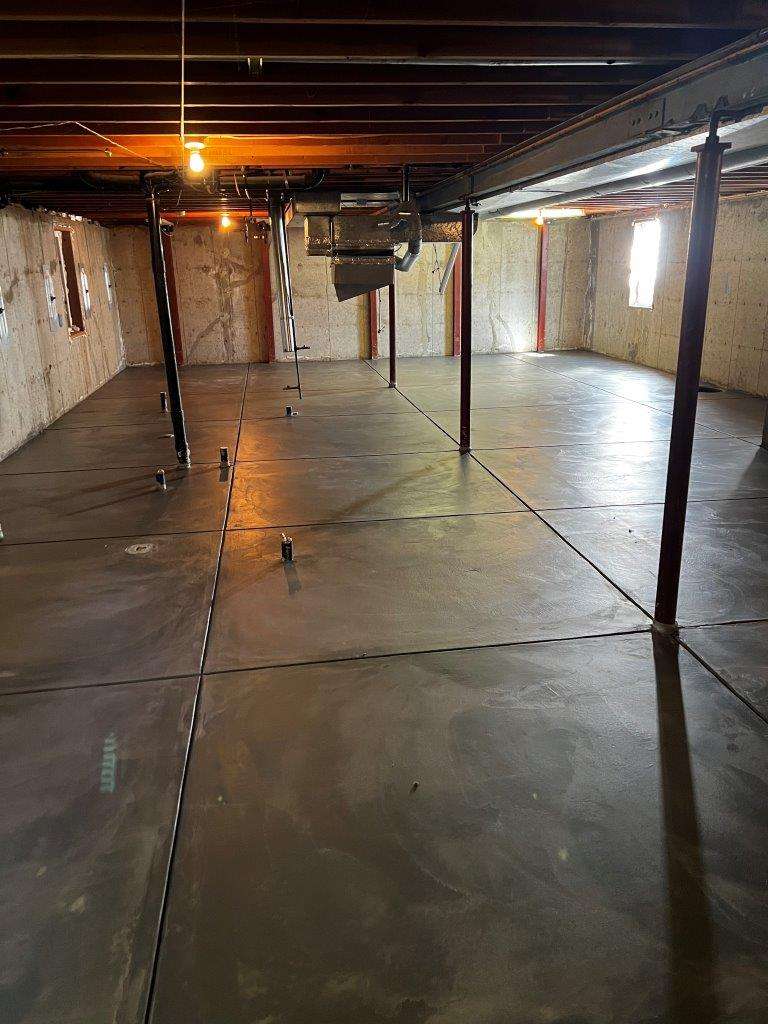
Removal has limits. Concrete that is broken into small pieces, delaminated, or tied to a failed base usually has to go. Access decides how much can be removed and how fast. A backyard patio with no equipment path is a different removal than a driveway near the garage. Base prep and water control come before any new pour. The base has to be graded so water moves away from the house and does not sit under the slab. On a basement slab, water and vapor below the floor matter. On a driveway or patio, slope and drainage away from the structure matter. These are job-specific questions, not a single recipe. The written scope should say what is removed, what base work is included, and how water is handled.
NRMCA's slab-joint guidance is general technical guidance, not a specification for this house.
Exeter Public Works publishes a dedicated driveway-paving resource for residents. That page is useful when a project touches the street side of a driveway or the apron. It does not cover a private basement slab, patio slab, or the structural condition of a residential slab. Use it to keep roadway access questions with the town, and keep the private flatwork scope inside the concrete quote.
Read the Exeter source. We check the approval path against the proposed scope.

Once the diagnosis is clear, method selection follows. A full replacement, a partial panel replacement, and a leveling repair are three different scopes. Edges matter because a new slab has to meet steps, garage aprons, walls, or existing concrete cleanly. Joints matter because NRMCA CIP6 discusses planned slab joints as a way to manage cracking. Curing and use timing are also job-specific. A basement slab, a driveway slab, and a patio slab do not reach use at the same time. The quote should say when the surface can be walked on, loaded, or parked on. It should also say what reinforcement or mix is proposed and why, without pretending one answer fits every Exeter property.
Some problems sit outside a slab-pouring quote. ACI RAP-1 covers structural concrete cracks, and ACI RAP-7 covers horizontal concrete repair preparation. If a crack points to a structural issue, you may need a foundation repair scope instead of a new slab. If water is causing the base to fail, fixing the slab alone may not solve it. The quote should name exclusions: utility conflicts, unknown underground conditions, and any work beyond the slab surface. A clear exclusion list protects both sides.
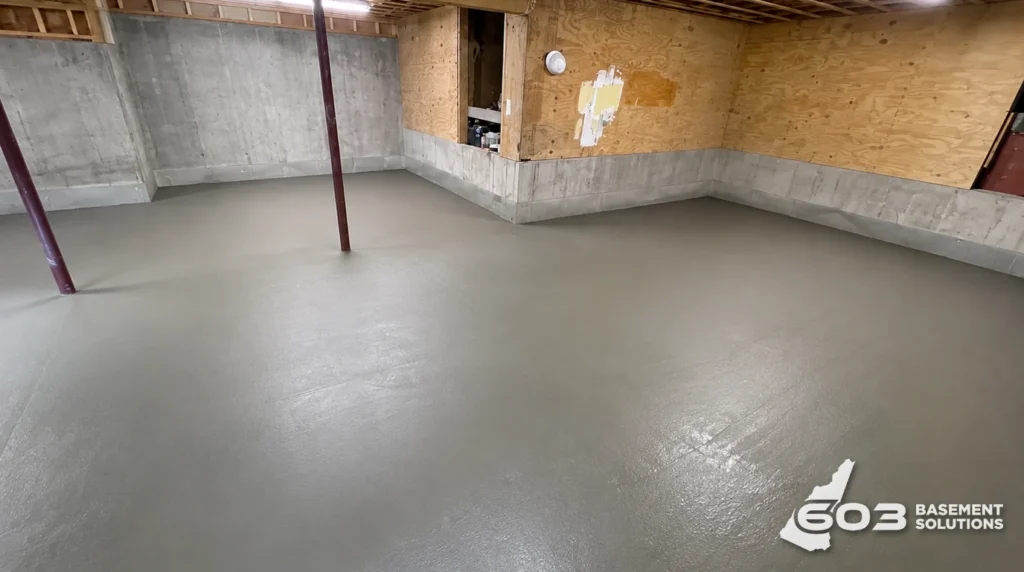
Site constraints change the job more than most homeowners expect. Access for equipment, room to stage removed concrete, overhead clearance, and where trucks can park all affect the plan. A tight Exeter lot with a fence, a steep grade, or a finished basement may limit what can be done in one visit. The written estimate should include measurements of the actual area, not a guess. It should separate removal, base prep, forming, pouring, finishing, and curing. It should state which surface is covered: basement, driveway, or patio. If a step, landing, or apron is involved, the estimate should list it as its own line so an entry repair is not mixed with roadway access.
Sometimes the honest answer is that the slab does not need to be replaced. If the concrete is sound and only part of it is low, leveling may be the smaller repair. If the damage is cosmetic and not affecting use or drainage, monitoring may be reasonable. If the problem is water, the fix may be drainage before any concrete work. A homeowner should ask what happens if nothing is done, and what the smallest useful repair would be. That question often separates a real need from a sales pitch. A good estimate can include a smaller scope, a phased plan, or a recommendation to wait. The goal is the right repair, not the largest one.
It depends on the concrete. If the slab is sound and just low or uneven, leveling may be an option. If it is cracked, broken, or sitting on a failed base, replacement is more likely. The right next step is an on-site look at the actual surface and base.
Show us the concrete and we will tell you what is worth fixing, what can stay, and what still needs checking.

