



A new driveway entrance needs a grade and drainage decision before anyone counts square feet.
A new concrete driveway in Georgetown starts at the entrance, not at the square-foot count. If you are adding a drive or changing where it meets the road, the grade and drainage at that junction affect the whole slab. We measure the street-side tie-in, the garage or parking elevation, and the route water must take between them. Then we decide what concrete belongs in the private scope. A sound existing panel with only a low joint may need concrete leveling instead of a new pour. We will say so.
A new driveway can mean one replacement panel, a changed entrance, or an entirely new private surface. Those are different jobs. We first mark what is being removed and what stays. If the existing garage floor is sound, its height is a fixed point. If the street-side apron or sidewalk crossing is outside the proposed private work, that is another fixed point. The proposed slab has to connect the two without leaving an abrupt lip or a low pocket at the door.
Tell us whether the goal is access, parking, a safer walk to the house, or a surface that sheds rain away from the garage. Those needs change the layout. A driveway drawing that shows only its outline misses the useful part: elevations and where the water goes. We want to see the site after rain and compare that with the planned finished surface. Photos help us locate the joints, but they cannot tell us what lies under the existing concrete.
Georgetown’s curb-cut application information asks for the proposed driveway grade, width, surface type, and drainage or snow-removal concerns. Its driveway guidance also addresses grade and drainage where a drive intersects a public way. That matters if your project creates or changes the entrance. It is not a blanket permit statement about replacing a private panel behind the public-way line.
We identify that line before promising to pour to the road. The street, curb, sidewalk crossing and private drive may have different owners or review paths. If the entrance changes, the proposal should say who will confirm the needed town review and which work is included. If only a private interior panel changes, we still check the grades at its neighbors; we do not pretend a town curb-cut application is automatically part of the job.
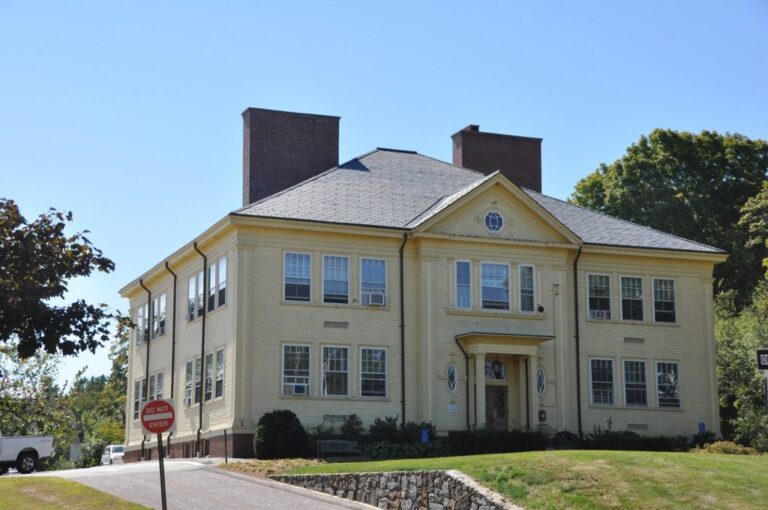
After any old slab is removed, we can inspect the support beneath it. A cracked surface alone cannot tell us whether the base was sound, washed out, or poorly prepared. Fresh concrete placed over a weak area can leave you with a new slab and the old movement. The written scope should describe excavation or removal limits, base preparation, and how a condition discovered after demolition will be handled. We cannot settle those details from a city-page photograph.
Vehicle use also matters. Tell us what parks there, where tires cross panel joints, and whether a truck needs to reach the garage. We use that information to plan the surface and discuss the project-specific mix, thickness, reinforcement and joint layout. This page does not set those specifications for an unseen driveway. A neighboring patio slab or a basement floor has a different use and should not inherit driveway details by default.
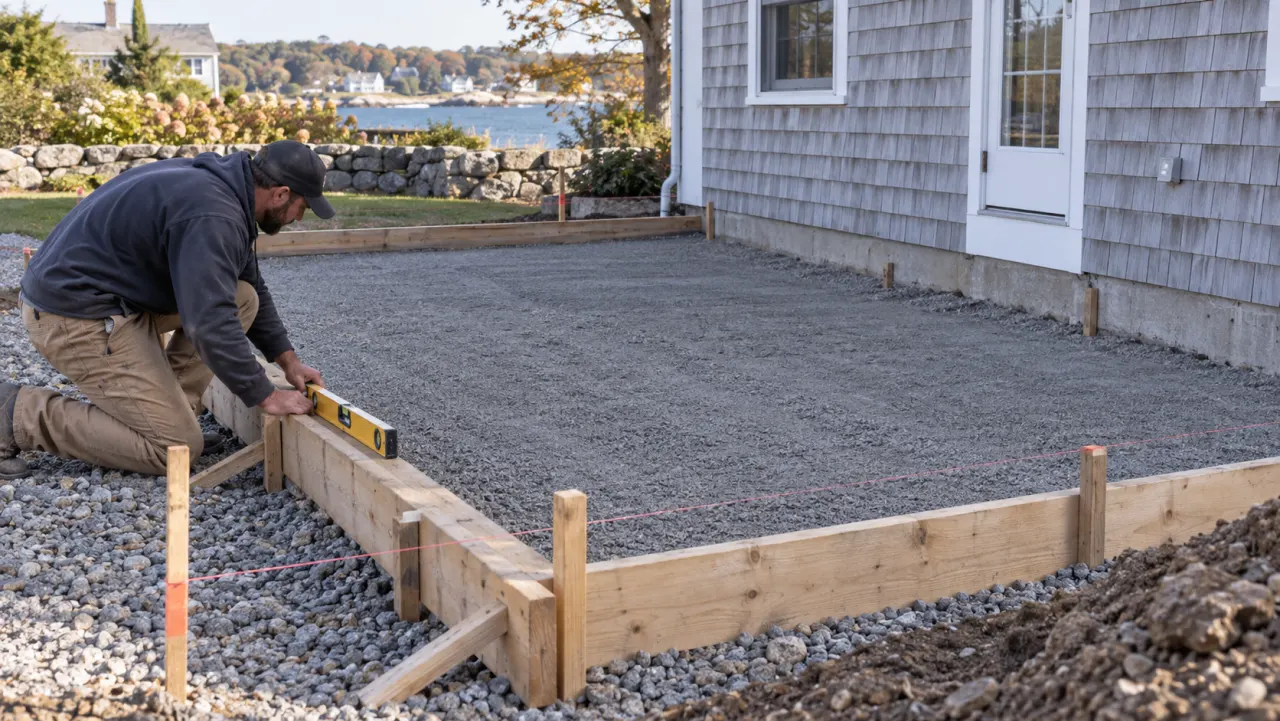
Formwork fixes the edges and proposed elevation. Placement and finishing follow the site plan, not a generic promise that a driveway will be perfectly flat. Water must have somewhere appropriate to go. We check the garage threshold, adjoining panels and street-side condition before the truck arrives. A last-minute change to grade can affect every connection.
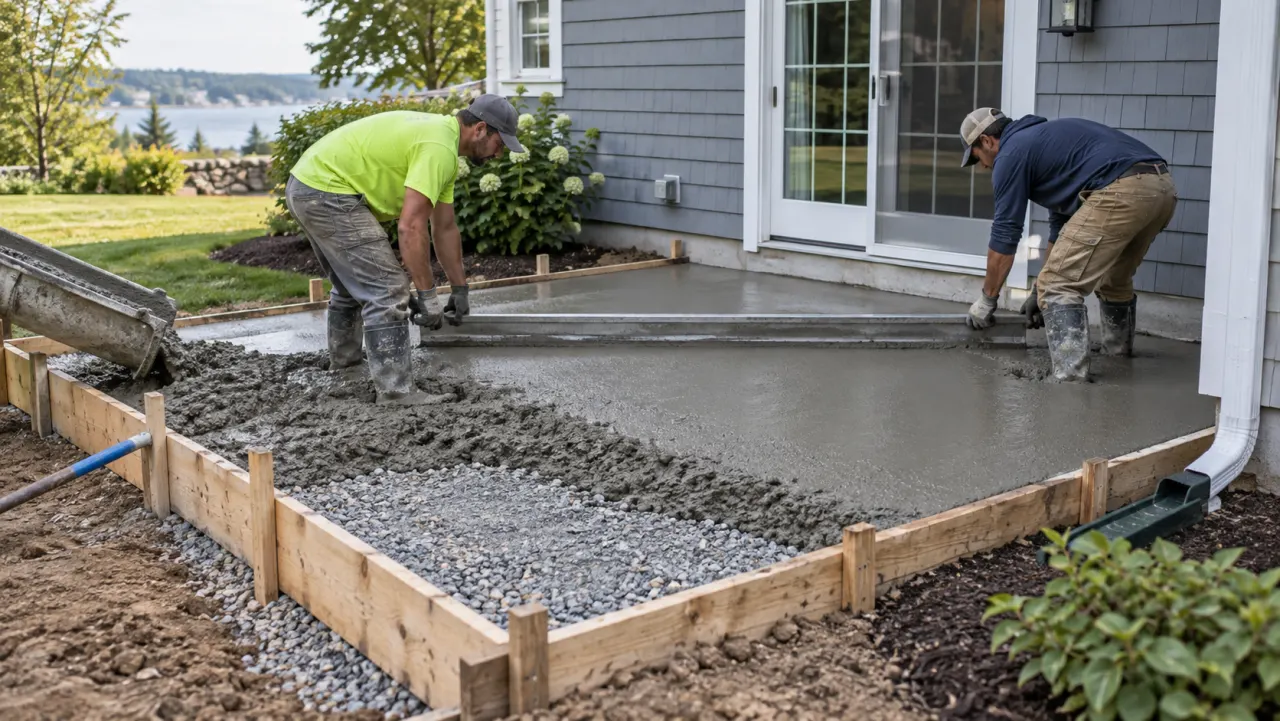
The National Ready Mixed Concrete Association’s curing guide explains that newly placed concrete needs suitable moisture and temperature conditions while it develops its intended properties. We discuss protection, weather and when you can use the driveway for the actual job. We will not promise a universal parking date. If the new slab blocks the garage, plan another place to park before work starts.

Google review · Customer experience
lexi courtemanche ★★★★★
“The crew was very friendly, kept the work area remarkably clean, and always communicated well!
Definitely recommend to anybody looking for superior work!”
New concrete is not the default answer to every uneven drive. A separate panel that is intact but has settled can be assessed for leveling. A chipped edge on an otherwise stable surface may be a concrete repair question. If the garage wall or footing is moving, pouring a driveway panel against it will not stabilize the foundation. We investigate the support problem first.
There is also an appearance-only choice. You may want a uniform new surface even if the old drive still functions. That is fair, but we separate that preference from work needed to correct a trip, drainage or access problem. You should know what you are buying.
Ask for a marked plan of the removal and new-placement boundary. The quote should name the base work, finished elevations at both ends, joint connections, runoff direction, disposal, access for equipment and the curing plan. If the road-side entrance changes, the town-review responsibility should be in writing. If a buried condition is unknown until removal, the proposal should say how we will report it and decide on a change.
We measure before quoting. Bring a wide photograph of the driveway, a closer view of the garage threshold, and any note about where water stands. Our free inspection should leave you with a reason for the chosen boundary, not just a price for a vague “new driveway.”
Often that is the boundary to test first. We need to see whether the existing entrance and adjoining panels can stay, and whether the new panel can meet their elevations without creating a drainage or access problem. A changed road connection is a separate decision. We will not fold public-way work into a private-slab quote without identifying it.
Show us the affected concrete. We will explain what we measured, what can stay, and which scope fits the house.

