



Before you pour a new slab in Hampton Falls, figure out whether the low spot is a concrete problem or a water problem.
A sound low panel may be worth leveling instead of demolishing.
Broken concrete or failed support may call for removal, base work, and a new slab.
A slab that carries the house needs a structural assessment before a pour is scoped.
A slab estimate starts with what is actually wrong. For a basement slab, look at cracks, moisture, unevenness, and whether the floor has settled as a whole or only at edges. For a driveway or patio, look at the same things plus how water leaves the surface. A low concrete approach beside a ditch is a different problem from a low slab inside a dry basement. The inspection question is simple: see whether the low edge is beside the ditch or closer to the house, and ask where water goes after a hard rain. That answer decides whether removal and replacement is honest, or whether leveling a sound slab is the smaller correct job.
Not every low or cracked slab needs to come out. A sound slab that has settled evenly can sometimes be leveled instead of replaced. A basement floor with minor surface wear and no structural movement may only need patching or a topping. A driveway or patio with stable concrete and a drainage problem may need water redirected, not a new pour. The decision point is whether the slab is still doing its job. If the concrete is sound and the low spot is small, leveling can be the smaller correct answer. If the slab is broken into moving pieces, replacement is usually the honest path.
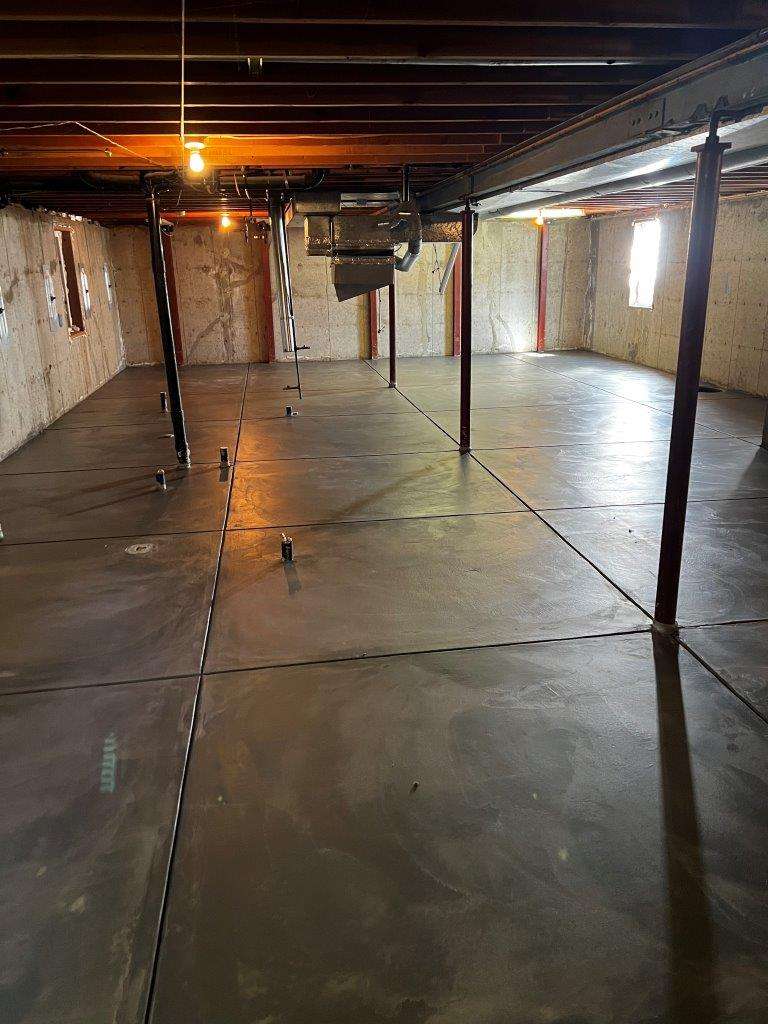
Replacement is for slabs that are broken, too far gone, or in the wrong place. Leveling is for slabs that are sound but low. For a basement slab, replacement means removal, base preparation, and a new pour. For a driveway or patio, it means the same plus attention to edges and water. Leveling is less disruptive when the slab is intact. The choice is not about which method is cheaper. It is about whether the existing concrete can still perform. If the slab is sound and the low area is localized, leveling deserves a look. If the slab is cracked through and moving, replacement is the realistic scope.
NRMCA's slab-joint guidance is general technical guidance, not a specification for this house.
Hampton Falls' driveway form identifies a town right-of-way and places driveway-culvert maintenance on the property owner. That matters here because exterior flatwork near a culvert or ditch can involve the right-of-way. Keep that work separate from a structural basement slab quote. If a low concrete approach sits near a culvert or ditch, the water path has to be understood before promising a new height.
Read the Hampton Falls source. We check the approval path against the proposed scope.
A new slab can go wrong if the base is not prepared, if water is not managed, or if joints and edges are ignored. Cracks can return. Low spots can reappear. A driveway approach near a culvert can create a drainage problem if the new height blocks the water path. That is why the water question comes before the pour. Some work is outside a concrete slab scope. A failing culvert or a structural foundation problem may need another trade or a different conversation. A slab pour is not a fix for a drainage system that does not work. Say so before the estimate.
Access, slope, and water path shape every slab job. A backyard patio with no equipment access may need a different approach than a driveway with street access. A basement slab may be limited by ceiling height, stairs, or the need to carry material through the house. A driveway approach near a ditch may be limited by where water goes after a hard rain. These are not details to settle after the pour. They decide removal limits, base preparation, and whether the job is a replacement or a leveling. The site visit is where we measure these constraints, not guess them.
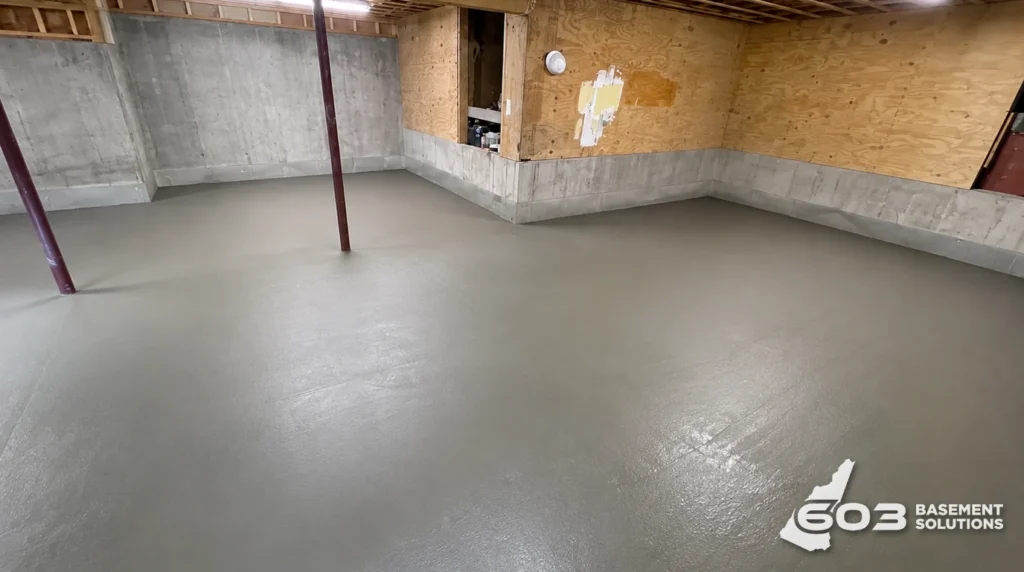
A written estimate should show what is included and what is not. For a slab, that means removal limits, base preparation, edges, joints, and curing or use timing. It should say whether the existing slab stays or goes. It should note access and any protection needed. It should not promise a specific thickness without a site visit. Measurements matter. A basement slab, driveway, and patio are different applications with different constraints. The estimate should treat them separately. If the scope is unclear, the estimate is not ready. Ask for the written scope before any work starts.
Sometimes the honest answer is that no slab work is needed. A sound low slab can be left alone if water is not causing damage. A small entry landing with a minor low spot may only need leveling. A driveway approach near a culvert may need the water path fixed before any concrete decision. If the slab is sound and the problem is drainage, a new pour may not solve it. If the slab is broken and moving, replacement is the realistic scope. The homeowner should hear both possibilities. A contractor who only sells new slabs is not giving the full decision. The right call may be smaller work or no work.
It depends on whether the slab is sound. If the concrete is intact and only settled, leveling may be the smaller correct job. If it is cracked through, moving, or in the wrong place, replacement is usually the honest scope. For a driveway approach near a culvert or ditch, the water path has to be understood first. A site visit with measurements decides which path is realistic.
Show us the concrete and we will tell you what is worth fixing, what can stay, and what still needs checking.

