



Your slab may not need replacing. Here is how to decide before anyone breaks concrete.
A sound low panel may be worth leveling instead of demolishing.
Broken concrete or failed support may call for removal, base work, and a new slab.
A slab that carries the house needs a structural assessment before a pour is scoped.
Start by naming the problem. A driveway panel with a low corner, a front path with a raised lip, or a basement slab with a crack all point to different decisions. We walk the surface, note where water stands, and check whether the slab is still supported. A hollow sound underfoot or visible drop at an edge may mean the base has moved. A tight crack with no height difference is often a different conversation. For a path, measure the lip where people actually walk. For a driveway, compare the low panel with the road approach and trace runoff along the curb or swale. Diagnosis comes before any removal number.
Not every slab needs to come out. If most of the surface is flat and well supported, a partial repair may be the honest answer. A single settled panel can sometimes be leveled instead of replaced. A sound basement slab with cosmetic cracks may need nothing more than monitoring. The key is whether the concrete is still doing its job. If the base is stable and water drains away, replacement may be wasted money. We look for sections that can stay and explain why. That keeps the scope smaller and the disruption shorter. You should know what we are leaving alone before we quote removal.
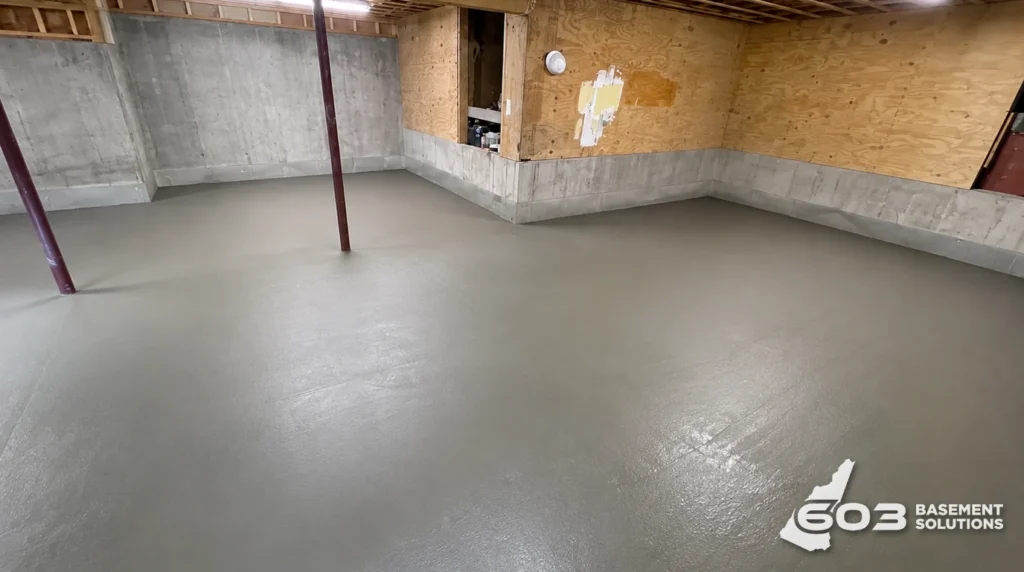
When a slab has failed, we compare removal and repour against leveling. Removal means breaking out the old concrete, checking the base, and placing new concrete. Leveling means lifting a slab that is still sound but has settled. The choice depends on how much of the slab is affected and whether the base can be corrected. We do not prescribe thickness, mix, or reinforcement here because those are job-specific. ACI RAP-7 discusses horizontal concrete repair preparation, and ACI RAP-11 discusses slabjacking assessment. We explain the tradeoffs and let the condition of your slab drive the recommendation.
NRMCA's slab-joint guidance is general technical guidance, not a specification for this house.
Hudson Engineering lists driveway applications among its work. A particular road-connection project and drainage scope still require town confirmation. For a concrete section near the road, record how water moves before picking a lift height. If the job reaches the driveway connection, the municipal drainage question belongs in the plan. That is a reason to keep exterior flatwork out of a structural quote.
Read the Hudson source. We check the approval path against the proposed scope.
Concrete work has limits. Removal can expose unexpected base conditions, water problems, or access issues that change the plan. A slab near a road connection may involve drainage questions that belong with another professional, not the concrete crew. We do not answer those questions or claim a particular outcome. If a structural slab is involved, that is a separate conversation from exterior flatwork. A driveway or patio slab is not a load-bearing foundation. We also cannot guarantee that leveling will always be cheaper or that replacement will always last longer. The honest approach is to flag what is outside our scope and what needs another professional before work starts.
Every slab sits in a specific spot. Access matters: can a truck or machine reach the work area without crossing a fragile surface? Water matters more. Before choosing a lift height near the road, record how water moves. If runoff crosses the slab, a new pour may inherit the same problem. Edges and joints matter too. A slab that meets a curb, a foundation, or a path needs a clean transition. We look at slopes, downspouts, and swales. NRMCA CIP6 discusses planned slab joints, which is a reminder that joint layout is part of the plan. These are site questions, not a one-size answer.
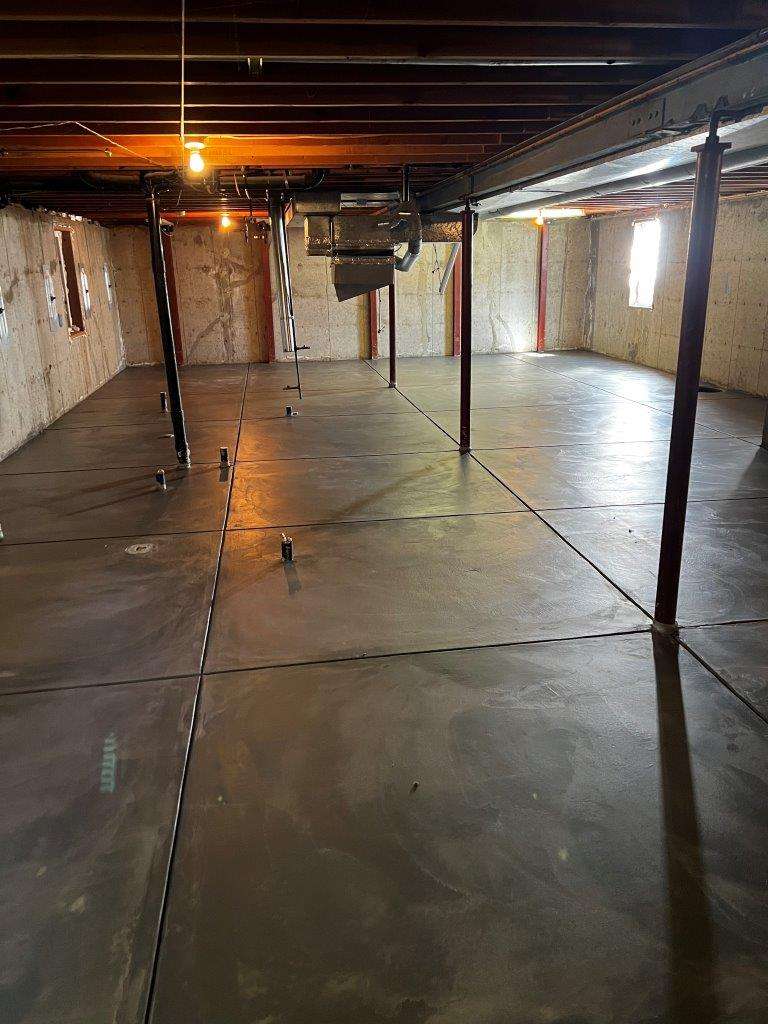
A useful estimate starts with measurements. We measure the slab, note the areas to remove, and record the base and drainage conditions we can see. The written scope should say what stays, what goes, and what is excluded. We do not quote a price without knowing access and water. Curing and use timing are job-specific questions: when can you park on it, when can you walk on it. Those answers depend on the mix and the weather, so we put them in writing rather than guess.
Sometimes the right answer is no work. If the slab is sound and water drains away, replacement is not necessary. If one panel is low but the rest is stable, leveling may be the smaller job. If a crack is tight and not moving, monitoring may be enough. We would rather tell you that than sell a full repour. The decision sequence is simple: diagnose, check what can stay, compare methods, flag limits, measure, then decide. If the scope shrinks to a partial repair or nothing at all, that is a good outcome. You should never feel pushed into concrete work you do not need.
Not necessarily. A single low panel that is still sound may be a candidate for leveling instead of replacement. We compare the low panel with the road approach, check how water moves, and look at whether the base has settled. If the rest of the driveway is stable, a partial repair can be the smaller, smarter job. The only way to know is a site visit and a written scope.
Show us the concrete and we will tell you what is worth fixing, what can stay, and what still needs checking.

