
Quick Answer
603 Basement Solutions inspects and repairs structural foundation problems in Amherst, New Hampshire for dropping footings, inward-moving walls, low beam lines, compromised posts, and structural wood loss. Depending on the findings, 603 may recommend helical or push piers, wall reinforcement, floor support, structural wood replacement, crack repair, or observation. 603 documents the recommendation in a free written estimate.
When the floor and wall tell different stories
A crack is easy to photograph. A load problem is not always that obvious. If an Amherst floor slopes toward the center, the cause may sit at a beam, column, footing, or connection. If the floor drops near the outside wall, the sill and joist ends also belong in the inspection. If the wall is leaning inward, adding another post under the beam does not stabilize it.
That is why foundation repair begins with the whole support path. We check what has moved, what carries it, and whether the condition is changing. A stable, isolated crack may only need foundation crack repair in Amherst. Settlement, wall movement, or lost floor support needs a broader plan.

Three symptoms, three different inspections
A dropping corner
We compare floor level, exterior cracking, openings, and the footing area. When settlement is confirmed, an engineered helical-pier plan may be appropriate.
An inward-moving wall
We measure the wall rather than judging it from a shadow or paint line. The design may call for carbon-fiber straps, power braces, or another structural scope.
A soft or sloping floor
We inspect the beam, sill, existing posts, post connections, and footings together. Replacing the visible column alone can miss damaged material above or below it.
Foundation Problems, Inspection Points, and Possible Repairs in Amherst
| What you are seeing | What 603 inspects | Possible repair |
|---|---|---|
| Floors and trim changed above the same footing section | Measure the change and inspect the footing, framing, grade, and history | Stabilization below the footing may apply to the measured section |
| A stair-step pattern appears with wall displacement | Document deflection while reviewing masonry condition and water management | Wall reinforcement can be selected for the material and displacement found |
| A beam end or sill has lost sound material | Check the whole support line instead of judging one shiny or temporary post | Supplemental support may fit when the existing beam line is inadequate |
| One concrete opening leaks after rain | Read the pattern in context with the rest of the foundation and structure | Injection or sealing may apply when the wall remains stable |
Possible does not mean required; the site findings control the recommendation.
A post is only as useful as what it supports
When the beam is sound and the column or base is the failed component, review the lally column replacement scope.
A new lally column should transfer load from a sound beam to a suitable footing. Before recommending one, 603 checks where the load comes from, whether the beam itself is damaged, and whether the proposed location addresses the actual low point. The column must be plumb, connected correctly, and included in a written scope.
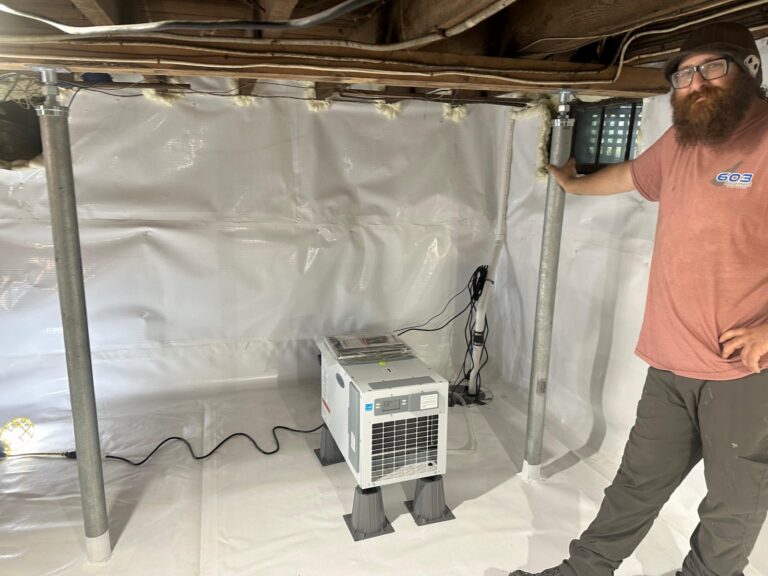
Lally-column replacement generally runs $1,300–$2,500 and carries a 10-year warranty against further settlement in treated areas. Sill or beam repairs are scoped separately because the damaged length, access, and required support can change the job.
Why Homeowners Choose 603 for Foundation Repair
A foundation proposal needs trust as well as measurements; the evidence below shows how 603 follows through for homeowners around Amherst.
Foundation Repair Methods and Pricing in Amherst
Helical piers are for verified footing settlement, not every diagonal crack. 603 self-performs the installation. Confirmed pricing is $2,700 per pier for the first three and $2,200 for each additional pier, with a 25-year engineered-performance warranty. The required number and placement come from the structure, not an online estimate.
A settling footing may be supported with push piers or helical piers, but the systems are installed differently. Push piers are hydraulically advanced using the existing building as reaction weight. Helical piers rotate into the soil, with installation torque recorded against the design. We check the footing, structure, access, supported area, and repair objective before choosing. Neither method repairs a failed beam, weak column base, or wall that needs lateral stabilization.
For a wall that is moving inward, the goal is to stop further movement. Carbon-fiber straps are $850 each and power braces are $1,300 each under 603’s current pricing framework. Treated wall stabilization carries a 25-year warranty within the system’s design tolerances. A wall that is crumbling or displaced may require a different quote-based scope.
When the concrete under the house has moved
A basement-floor mark can be local to the surface, so it should not be labeled structural from a photograph. We check whether the slab supports the building, whether the sides of a crack are displaced, and whether movement continues into nearby walls or openings. A stable isolated crack may be monitored or repaired directly. Confirmed movement in a building-supporting slab can lead to stabilization or replacement instead. The slab foundation repair page lays out that branch while the Amherst inspection determines which path fits.
What the inspection should answer
- Is the visible condition stable, or is there evidence of continuing movement?
- Which part of the load path is no longer doing its job?
- Is a narrow crack repair enough, or would it hide a larger problem?
- What method, quantity, price, and warranty belong in the proposal?
- Does the scope require engineering or another review before work starts?
The inspection and estimate are free. 603 is licensed and insured, explains the options without pressure, and normally delivers the written quote within 24 hours. You can review the full service on the Structural and Foundation Repair page or compare variables in the New Hampshire foundation repair cost guide.
Before the appointment
Take one wide photograph of the entire wall or support line and one closer photograph of the condition. Note when you first saw it and whether a door, window, floor, or crack has changed. Leave the area visible if it is safe to do so. Those details give the inspector a useful timeline, but they do not replace measurements at the house.
Amherst context without guessing at the house
The 2023 American Community Survey reports a median housing year of 1978 in Amherst, with 11.6% of housing units built in 1939 or earlier. That is useful context for the range of homes an inspector may encounter. It is not evidence that a particular address has a certain foundation material, support layout, or structural problem. Those details come from the on-site inspection.
Prior work matters too. A floor may have an added post, a replaced section of beam, a patched crack, or an opening cut through the support path during a renovation. Tell the inspector what you know, but do not adjust a post or remove material to “test” it before the visit. The safest next step is to document the condition and leave the load supported.
How to compare two Amherst repair scopes
- Diagnosis: Do both contractors identify the same failing component?
- Quantity: Are pier, brace, strap, column, or repaired-length counts written down?
- Connections: Does the plan say how new support connects to the beam and footing?
- Limits: Does the proposal distinguish stabilization from lifting, straightening, or cosmetic repair?
- Warranty: Is coverage tied to the treated area and the actual method?
If the scopes answer different questions, the totals are not directly comparable. Ask each contractor to explain the finding first. A low bid for a narrow repair is not a savings if it leaves the failed part untouched, and a broad structural system is not justified when a stable isolated crack is the only condition.
What 603 can show before you hire us
603 has genuine portfolio images covering helical piers, wall braces, lally columns and footings, sill replacement, and beam work. The support photo on this page is method proof. The company is licensed and insured, self-performs helical-pier installation, has served 5,000+ New England homeowners, and has 260+ Google reviews.
One customer with rotting beams described the structural crew as professional, knowledgeable, on time, and careful about keeping the workspace clean. That short excerpt supports the process homeowners can expect from 603.
From finding to written repair
After the free inspection, the proposal should identify the observed condition, the component being treated, the repair method, and the price. 603 normally delivers that written quote within 24 hours. Lally-column replacement generally runs $1,300–$2,500 and carries a 10-year treated-area warranty. Helical piers and wall stabilization each carry 25-year method-specific coverage. The final scope controls because access, quantity, and adjoining damage can change the job.
Questions to close before work begins
Can a stable crack be handled separately?
Yes. If the wall, footing, and nearby support system are stable, a narrow injection or crack-repair scope may be enough. The broad structural page exists for the cases where the crack is one sign of settlement, wall movement, or lost support elsewhere.
Does a new post guarantee a level floor?
No. The repair should stabilize the intended load. The amount of recovery depends on the framing, prior movement, and what can be adjusted safely. The proposal must state whether lifting is included rather than treating it as an automatic result.
What should remain accessible?
Ask whether a brace, pier connection, post, or repaired framing area needs to remain visible for service or future inspection. Take completion photographs and keep them with the warranty before a basement finish or storage hides the work.
When should I call again after monitoring?
Schedule another evaluation if the reference mark changes, the wall moves, a floor drops farther, or doors and windows begin sticking. A new symptom changes the evidence even when an earlier inspection found the condition stable.
For the first call, describe where the floor feels low, whether the change is near the outside wall or center beam, and what else changed at the same time. That short pattern is more useful than guessing at a product. It helps the inspection begin with the likely support path while leaving the final diagnosis to measurements at the house. Include any prior repair date you can verify.
Get the failed part identified before choosing the repair
Free inspection, free estimate, and a written scope for the house in front of us.
Sources: U.S. Census ACS 2023 5-year table B25035; 603 confirmed service, pricing, warranty, and credential information. The work photo shows a 603 repair method.