
Quick Answer
For structural foundation concerns, 603 Basement Solutions serves homeowners in Harvard, Massachusetts for foundation movement, wall displacement, framing deflection, column concerns, and failed sill material. 603 matches the diagnosis to support piers, wall repair, posts and beams, sill replacement, focused crack work, or monitoring when movement is not confirmed. A free site visit establishes the scope before the homeowner decides.
Measure a quiet foundation concern before deciding
A faint crack or gentle floor slope does not always need immediate foundation work. The first useful step may be a reliable baseline.
We measure points you can find again. If nothing changes, you have evidence to keep watching instead of paying for a repair too soon.
What the Harvard housing number can and cannot tell us
The 2023 ACS lists 1974 as the median year built for housing across Harvard. That is a citywide midpoint, not the age or condition of your foundation.
Harvard's townwide housing number cannot tell us whether a crack in your house is active. Only repeatable observations at the address can answer that.
Dated photos, repeat wall measurements, floor readings, and changes in doors or windows give the property-level answer.

Foundation Problems, Inspection Points, and Possible Repairs in Harvard
| What you are seeing | What 603 inspects | Possible repair |
|---|---|---|
| A section of the foundation seems to have dropped | Compare elevations and trace loads into the footing below | Deep pier support may fit if the measurements confirm bearing failure |
| The wall leans toward the basement | Map the wall movement and inspect cracks, construction type, and outside conditions | A wall-specific design is needed before any system is selected |
| The floor changes elevation across one basement span | Define damaged material and identify what must be held during repair | Column, beam, sill, or footing work may restore the support path |
| A fieldstone joint is losing mortar or admitting water | Determine whether the slab carries load and how its edges are supported | The crack should be routed to its own repair only after diagnosis |
The possible-repair column does not prescribe work for a Harvard property.
Four useful checks for this Harvard concern
Choose marks that will still be there next season
A monitoring point fails when storage, paint, or new flooring hides it. Pick stable wall corners and floor spots that stay accessible.
Track each symptom on its own
A door can stick from humidity while a basement crack remains stable. One does not prove the other moved.
Set a reason to call before you start watching
Monitoring without a trigger can leave you checking the same crack forever. Decide which change would justify another inspection.
Sometimes the right repair is no repair yet
Stable supports and unchanged readings can make observation safer than adding hardware. That is especially true when finishes would move during adjustment.
How pier selection fits this finding. A quiet Harvard foundation concern should earn a pier recommendation through repeatable settlement evidence. Push piers use the weight of the existing structure as installation resistance; helical piers advance with helical plates. House weight, footing condition, access, and design then determine the system. Stable controls and an unchanged crack may support continued observation instead of either pier method, and that is a useful result.
Give a quiet Harvard slab concern a measurable threshold
A surface crack in a basement floor is different from movement in a slab that supports the house. Harvard monitoring starts by naming which condition is being tested. Fixed points track displacement, changing crack width, and any related movement at a bearing wall or opening. Stable readings remain in the record rather than being discarded. They may support closure, continued monitoring, or focused crack treatment. Confirmed structural change can lead to stabilization or replacement. The series must connect the load-supporting slab to the concern before slab foundation repair applies. Its decision threshold is set before the next reading.
How confirmed 603 prices may apply in Harvard
If the measured wall in Harvard needs stabilization, a power brace costs $1,300 and a carbon-fiber strap costs $850. Work completed to the written design carries a 25-year warranty.
When the weak point is under a beam, a lally column costs $1,300 to $2,500. The support work carries a 10-year settlement warranty.
If settlement calls for helical piers, the first three cost $2,700 each. Additional piers cost $2,200 each, and engineered work carries 25-year coverage.
Those figures do not choose the repair. The right method and count depend on the wall, beam, post, footing, or settling section found at your Harvard home.
Choose marks that will still be there next season
We label the exact camera angle and measuring direction. That lets the next photo or reading match the first one.
A phone picture from a different distance can make a crack look wider. Repeatable position matters more than taking many photos.
Track each symptom on its own
We track crack width, wall shape, floor elevation, and opening behavior separately. Then we look for a physical connection between them.
This avoids turning a cluster of ordinary house quirks into one large structural story without enough evidence.
Set a reason to call before you start watching
A widening crack, new displacement, faster door change, or lost bearing can move the decision forward. An unchanged mark usually cannot.
If you see a sudden shift, do not wait for the calendar. Call while the new condition is still visible.
Sometimes the right repair is no repair yet
We will tell you when the evidence does not support a brace, pier, or column. You can keep the baseline and spend nothing today.
If later readings show change, the same points help define a smaller repair. Good monitoring reduces guessing in both directions.
Choose points you can measure again
A good baseline uses fixed locations that will still be there in a few months. A wall corner, beam pocket, doorway, or marked floor point works better than a vague note about the middle of a room.
Use the same tool and direction each time. Small differences can come from technique, so repeatability matters more than taking dozens of readings on one day.
Track different symptoms separately
A foundation crack, sticky door, sloped floor, and basement leak may occur near one another without sharing one cause. Give each symptom its own date and photo. Then look for changes that happen together.
This keeps a wet crack from being mistaken for settlement and keeps normal wood movement from becoming a foundation alarm. We combine the clues only when the structure connects them.
Know what should trigger another visit
Call sooner when a crack grows quickly, a wall shifts out of plane, a support loses contact, or an opening suddenly binds. Water entering near electrical equipment also deserves prompt attention.
A hairline mark that stays unchanged may only need another photo after a season. The trigger should match the concern, so you are not checking the whole basement every week.
Monitoring is an active decision
Waiting does not mean ignoring the house. It means the current evidence does not support repair and you have a clear way to notice change. Keep the area visible and avoid covering the mark during the watch period.
If later readings stay the same, you have useful reassurance. If they change, the comparison helps the next inspection focus quickly. Either outcome is better than buying a product before the problem is understood.
How long should you monitor
The interval depends on the symptom. A quiet hairline crack may be checked after a season, while a recently changing wall or support deserves a much earlier review.
We help choose points and warning signs that match the concern. The goal is not to watch every inch of the basement or measure so often that normal variation looks alarming.
If you feel unsafe or see rapid movement, do not wait for the next date. Keep people away from the area and call for a prompt inspection.
A pencil mark is useful only when it stays easy to find. Add the date beside it and photograph enough of the wall to show the location. Avoid covering the mark with storage or paint during the watch period.
Seasonal changes can affect wood doors and trim without moving the foundation. A repeat wall or floor measurement helps separate those everyday changes from a structural trend. That is why a baseline matters more than memory.
How to read a Harvard foundation estimate
If work becomes necessary, a Harvard estimate should connect the repair to the changed measurement. It should state where the treatment begins and ends.
A proposal based only on an old photo or a general slope needs more support. Ask what changed and which structural part caused the recommendation.
What happens during the free foundation inspection
We can set a baseline during the free inspection when the structure does not call for immediate work. The points should be easy for you to revisit.
If we see lost bearing, a leaning post, or measurable wall movement, we explain why watching alone is not enough.
603 Basement Solutions is licensed and insured and has worked in more than 5,000 homes. The same team handles helical piers and structural lifting.
If work is recommended, 603 normally sends a written quote within 24 hours. The price and warranty should match the exact area being treated.
Why Homeowners Choose 603 for Foundation Repair
The proof below gives Harvard homeowners a direct view of 603’s service, explanations, and completed structural work.
Get the Harvard foundation checked
We will measure the concern and tell you whether it needs repair now or a clean set of readings for later.
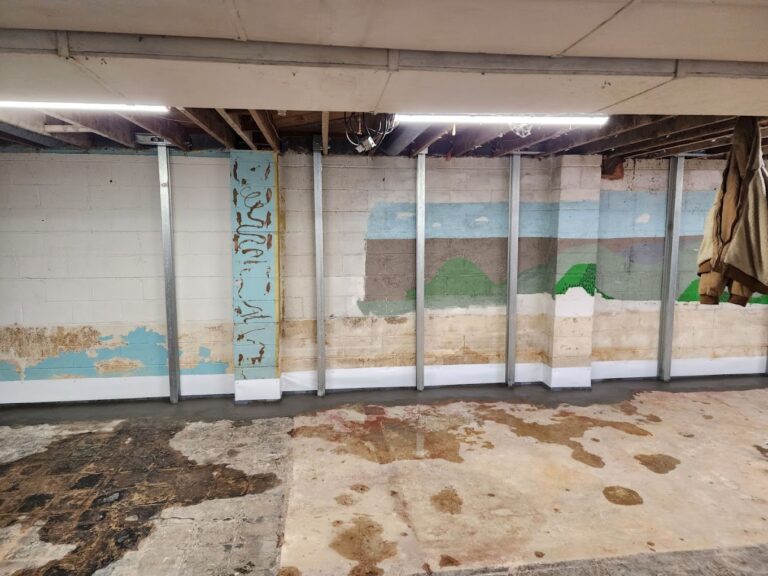
Sources: U.S. Census Bureau 2023 ACS 5-year table B25035. The city image caption gives its photographer and Wikimedia Commons license. 603 supplied the service, price, warranty, and crew details. The work photo shows a 603 repair method. See Structural and Foundation Repair or Foundation Crack Repair.