
Quick Answer
603 Basement Solutions helps homeowners separate structural movement from limited damage in North Reading, Massachusetts for settlement, inward wall movement, uneven floors, failed columns, and damaged sills or beams. Depending on the findings, 603 may recommend helical or push piers, wall reinforcement, floor support, structural wood replacement, crack repair, or observation. A free site visit establishes the scope before the homeowner decides.
Choose repair order when more than one component moves
A settling corner, bowed wall, and low floor can share a building without sharing one repair. Order follows the measured load paths.
We identify what must be stabilized first, what can wait, and what needs its own monitoring record. Each decision stays visible.
North Reading housing context without the guesswork
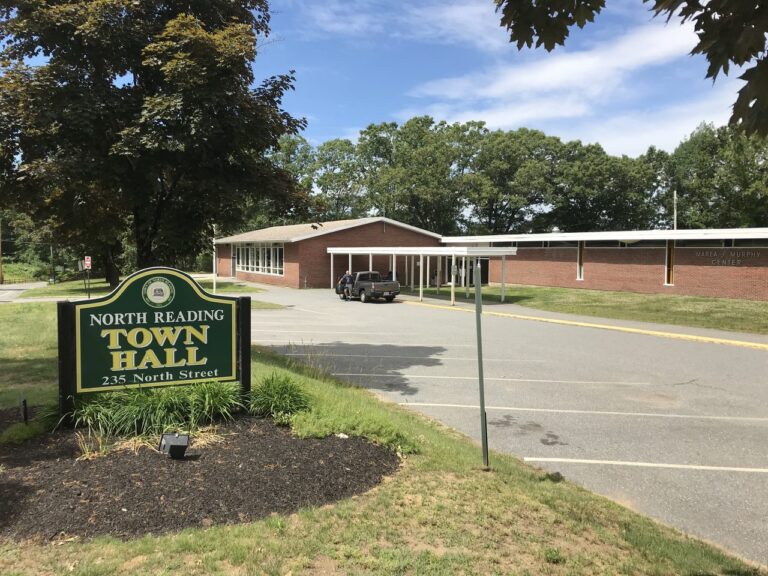
The 2023 American Community Survey estimates North Reading’s median housing year at 1972. It does not identify one home’s structural system or repair history.
Map the actual foundation, beams, columns, and rooms above. Bring earlier measurements or photographs when they show the same components.
Foundation Problems, Inspection Points, and Possible Repairs in North Reading
| What you are seeing | What 603 inspects | Possible repair |
|---|---|---|
| Floors and trim changed above the same footing section | Compare elevations and trace loads into the footing below | Helical or push piers may be designed where competent bearing is needed |
| A horizontal opening accompanies a bowed wall | Check the amount and direction of movement across the entire wall | Repair may focus on restraint, drainage, rebuilding, or a combination |
| Doors bind above a low support line | Define damaged material and identify what must be held during repair | Only the component causing the low area should drive the repair scope |
| An earlier patch opened again while nearby finishes stayed stable | Record direction, width, displacement, moisture, and changes around it | Injection or sealing may apply when the wall remains stable |
A symptom at one North Reading home can have a different cause at another.
Put the visible clue in the right lane
A footing section settles
Define its limits and the loads above before pier layout.
A wall bows beside that corner
Measure the wall independently and test whether the conditions connect.
A floor dips farther inside
Trace its beam and supports before combining scopes.
A stable crack remains elsewhere
Keep it in the focused crack-repair lane.
List dependencies before dates
A repair comes first when later work relies on its support, access, measurements, or exposed connections.
Draw arrows between dependent tasks. Unrelated work can remain separate even when one crew performs both jobs.
Protect the starting measurements
Record footing, wall, and floor reference points before temporary support or adjustment begins.
Use one location system across trades. A later reading must identify which earlier condition it repeats.
Close each component independently
Pier work needs brackets, quantities, supported limits, and readings. Wall work needs full-height units and connections.
Floor work needs beams, posts, bases, footings, and elevations. One completed system should not hide another open item.
Draw separate maps before building the sequence
Use one plan for foundation sections, one for wall movement, and one for floor support. Give every location a shared number.
Connect maps only where the structure connects them. Nearby symptoms should not create an automatic dependency.
Order work after those connections are visible. Preserve independent monitoring points throughout the project.
Give each dependency its own price and outcome
List the supporting task before the dependent task. Add quantities, access, design, temporary work, and completion evidence for both.
If two systems are independent, keep separate totals and warranties. Shared mobilization does not make one repair.
Approve sequence changes only after checking measurements and access again.
Confirm every dependency before concealment
Check supporting work, readings, inspection, photographs, and changes before dependent work begins. Record the release date and person.
Repeat the process at each boundary. Do not use final restoration as proof of an earlier structural step.
Trace the full sequence once more during closeout.
Complete the dependent pier section first
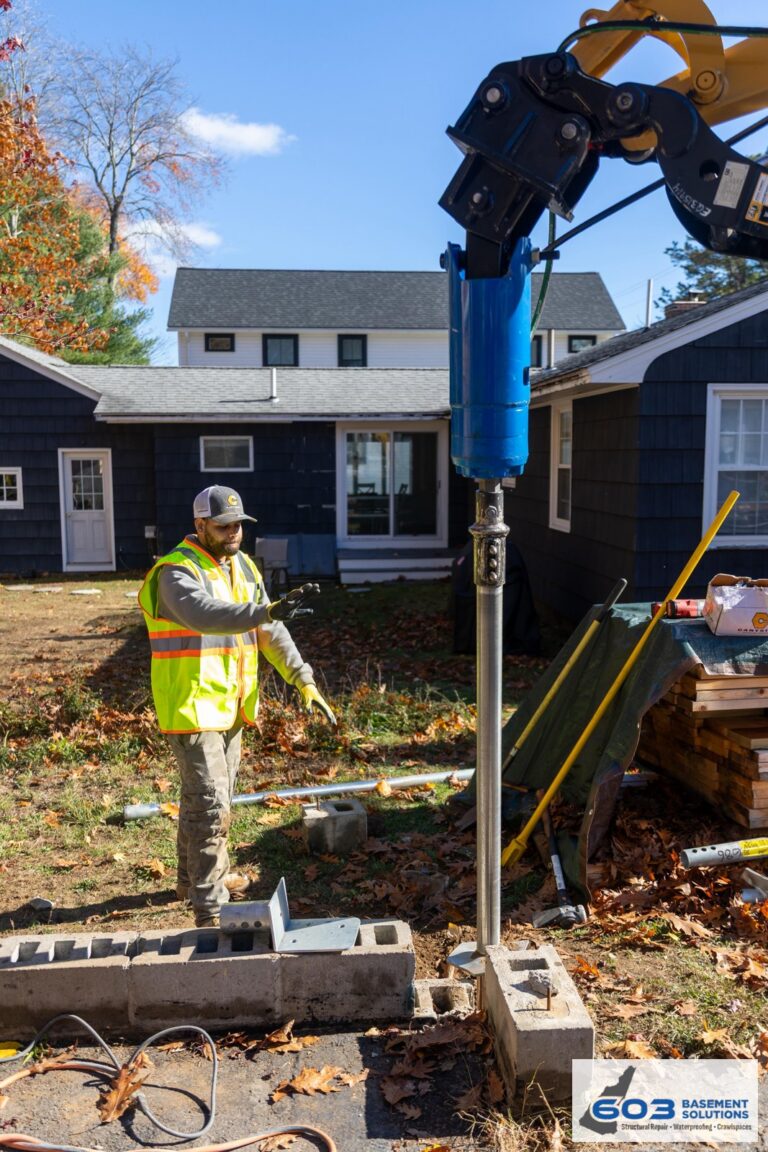
Map the North Reading footing section, brackets, access, utilities, target, and measurements that later wall or floor work relies on.
603’s first three helical piers cost $2,700 each and later piers cost $2,200. Engineered work carries a 25-year warranty. Record the dependency boundary.
Close wall work before dependent finishes
Show full-height measurements, treated length, brace or strap positions, restraint, openings, and connections before the surface closes.
603 charges $1,300 per steel brace and $850 per carbon-fiber strap. The labeled wall section carries a 25-year stabilization warranty within written limits.
Protect the floor baseline through the sequence
Record elevations, joists, beam, columns, bases, and footings before nearby structural work can change a reference point.
Lally columns from 603 generally range from $1,300 to $2,500 each. Treated support carries a 10-year settlement warranty. Write adjustment limits separately.
Prevent one repair from erasing another baseline
Mark measurement points that temporary support, excavation, or adjustment could disturb. Repeat them before the next component changes.
If a point becomes unusable, close its record and create a new one. Do not pretend measurements from different surfaces are continuous.
Keep unaffected reference points active. They help show whether movement stayed inside the treated boundary.
Use one dependency sign-off
Before dependent work starts, confirm the supporting installation, required inspection, photographs, readings, and open changes.
Name the person who releases the next stage. Attach the sign-off to the same drawing.
At final closeout, trace the dependency arrows again and confirm no required evidence was covered early.
Keep independent warranties independent
Mark the treated boundary, outcome, and access requirement for each completed system.
Store all warranties in one packet without blending their coverage. A pier section, wall section, and floor area are different boundaries.
Update the packet when later work touches any covered connection.
Update the sequence when conditions change
Place the new observation on the correct component map. Check whether it creates a real dependency or remains separate.
Revise quantities, access, price, timing, and closeout evidence together. Do not change only the calendar.
Send the updated sequence to every person responsible for a later task.
Mark the old version as superseded and retain it. The field record should explain how the project reached its final form.
Repeat reference points near the changed condition. Confirm that the measurement surface and method remain valid.
Recheck temporary support and household access before restarting. A scope change can alter both work zones.
Update inspection or design contacts when their decisions are affected. Do not assume an earlier approval covers new work.
Close the change with photographs, measurements, authorization, cost, and schedule effect. Keep all five beside the final drawing.
Give the homeowner one current sequence at every update. Retire printed copies that could send a later trade to the wrong area.
North Reading inspection worksheet
- Build the North Reading sequence. List every condition, component, dependency, access need, and measurement.
- Mark independent work. Keep separate load paths on separate scope lines.
- Protect reference points. Repeat them after temporary support, adjustment, and permanent installation.
- Close in dependency order. Document the supporting work before dependent work is covered or accepted.
North Reading foundation questions
Must every condition be repaired together?
No. The sequence should follow measured dependencies and practical access.
Which repair comes first?
The work that safely supports or preserves later decisions usually leads.
Can monitoring continue during another repair?
Yes, when its reference points remain valid and accessible.
Does pier work include a guaranteed lift?
No. The proposal must distinguish stabilization from an attempted lift.
What 603 brings to the inspection
603 is licensed and insured, has worked in more than 5,000 homes, and self-performs helical-pier installation and structural lifting. The inspection and estimate are free. We normally send the written quote within 24 hours.
We will tell you when the house needs a smaller repair or a period of monitoring. If work is proposed, the scope should name the treated area, quantities, outcome, exclusions, and warranty.
Why Homeowners Choose 603 for Foundation Repair
The proof below gives North Reading homeowners a direct view of 603’s service, explanations, and completed structural work.
Get the North Reading load path checked
We will measure the structure, explain the repair boundary, and give you a written scope you can compare.
Sources: U.S. Census Bureau, 2023 ACS 5-year table B25035. The city image caption links its Wikimedia Commons source and license. 603 supplied the confirmed service, pricing, warranty, and operating information. Work imagery shows a 603 repair method. See Structural and Foundation Repair or the Foundation Crack Repair service.