
Quick Answer
Foundation repair by 603 Basement Solutions begins with measured conditions in Randolph, Massachusetts for settlement, inward wall movement, uneven floors, failed columns, and damaged sills or beams. Possible scopes include deep foundation support, wall bracing, beam or post correction, sill work, focused crack repair, or no major work yet. The inspection and written repair proposal are provided without charge.
Compare structural quotes by measurable units and exclusions
A long proposal can still hide the treated area. A short proposal can omit access, bearing, or closeout evidence.
We normalize quantities, locations, intended results, exclusions, and warranties. That makes price a useful comparison instead of the first guess.
Randolph housing context without the guesswork
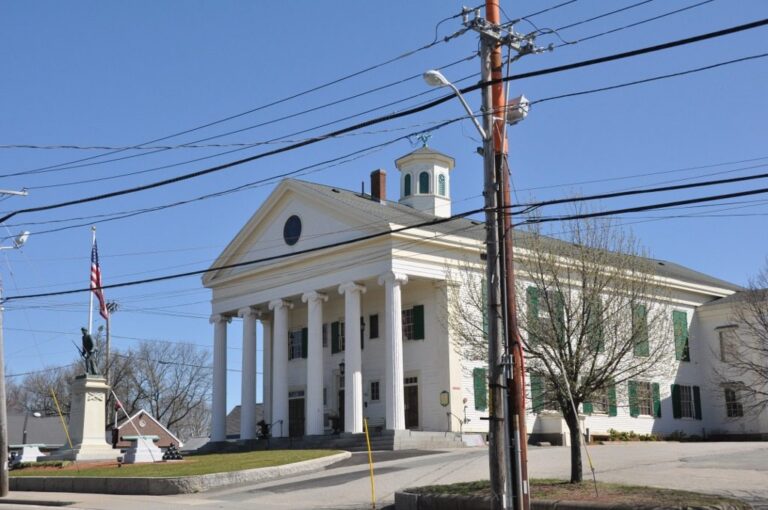
The 2023 American Community Survey estimates Randolph’s median housing year at 1967. It cannot establish the structure or condition of one home.
Use measurements and property records from the address. Add prior repairs and alterations only where they touch the inspected load path.
Foundation Problems, Inspection Points, and Possible Repairs in Randolph
| What you are seeing | What 603 inspects | Possible repair |
|---|---|---|
| A section of the foundation seems to have dropped | Test whether the visible changes align with a loss of support at the footing | Monitoring remains an option when current movement is not established |
| Blocks or poured concrete no longer remain in plane | Check the amount and direction of movement across the entire wall | The measured wall condition determines the stabilization method |
| The floor changes elevation across one basement span | Inspect structural wood, post condition, connections, and the base carrying each support | Unsound structural wood can be replaced in a planned support sequence |
| A slab has changed elevation near another structural element | Read the pattern in context with the rest of the foundation and structure | Slab repair depends on whether the changed concrete is structural |
This table helps route the concern; it is not a repair plan for the Randolph address.
Put the visible clue in the right lane
Brace counts do not match
Compare wall length, spacing, restraint, connections, and treated endpoints.
Column prices look different
Check beam work, footings, adjustment, access, and the unit count.
Pier totals vary widely
Place every bracket on the supported foundation section.
One quote bundles restoration
Separate structural work, openings, utilities, cleanup, and finish repair.
Normalize the drawing first
Use one labeled plan for walls, beams, posts, cracks, corners, and exterior access.
Ask every contractor to place proposed components on it. Different boundaries should be explained through measurements.
Normalize the result
Write sealing, support, stabilization, adjustment, or attempted lift beside each item.
These outcomes are not interchangeable. Note what slope, cracks, or cosmetic damage may remain afterward.
Normalize change control
State how concealed conditions, added quantities, and access changes will be measured and approved.
Connect payment milestones to visible evidence. Final counts should match the drawing, photographs, invoice, and warranty.
Put competing scopes on one measured plan
Give walls, beams, posts, cracks, and foundation sections permanent labels. Ask each bidder to place every brace, column, pier, or replaced length on that plan. A difference in location deserves an explanation. Totals become comparable only after both contractors describe the same observed structure.
Separate fixed quantities from field quantities
List confirmed units in one group and measurement-based allowances in another. For each allowance, state the field condition, unit rate, evidence, and approval owner. Remove undefined contingency language. Randolph homeowners should see how a possible discovery becomes an authorized amount before work continues.
Compare the promised endpoint
Support, stabilization, sealing, adjustment, and attempted lift require different proof. Place the chosen word beside every major line. Note whether existing slope, cracking, staining, or finish damage may remain. A stronger-sounding proposal is not better when its endpoint cannot be measured at closeout.
Lay out Randolph floor support by bearing
Map joists, beam condition, posts, top connections, bases, and verified footings before choosing locations.
603 lally columns range from $1,300 to $2,500 each. Treated support carries a 10-year settlement warranty. Price beam work and adjustment separately.
Measure the complete Randolph wall
Record wall height, curve, displacement, restraint, openings, utilities, and the exact treated length before placing components.
603 power braces are $1,300 each and carbon-fiber straps are $850 each. The treated wall section carries a 25-year warranty within written limits.
Foundation Repair Methods and Pricing in Randolph
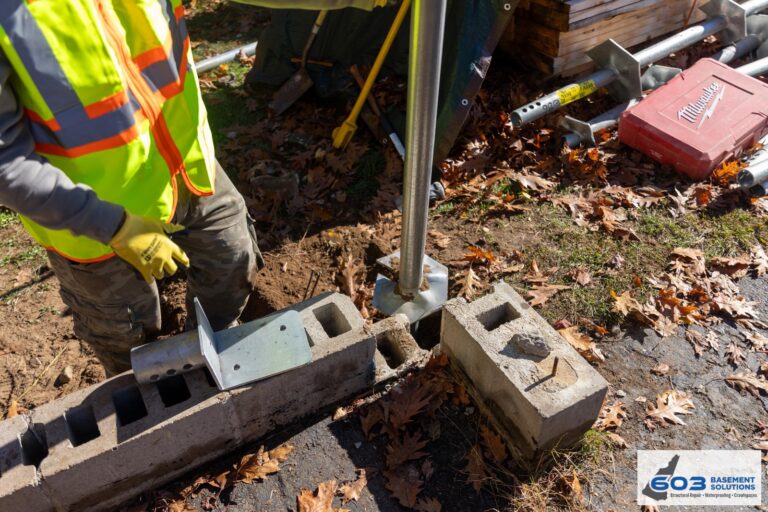
Connect interior evidence to one exterior footing section. Show brackets, access, utilities, quantity, restoration, and the movement target.
603 charges $2,700 each for the first three helical piers and $2,200 for later units. Engineered work carries a 25-year warranty.
Score exclusions with the same care as products
Check engineering, permits, utility work, excavation, temporary support, openings, debris, cleanup, and restoration. Mark included, excluded, allowance, or not applicable. Obtain written clarification for blanks. An omitted supporting task can change the real price more than a small difference in structural unit rates.
Reconcile closeout before final payment
Count installed components and match them to photographs, the final drawing, invoice, and warranty. Attach approved field changes to their evidence. List unfinished restoration or monitoring separately. The Randolph project record should explain every quantity change without depending on a sales conversation or memory.
Score proposal clarity
Give one point for measured condition, mapped locations, quantities, intended outcome, exclusions, change rules, warranty boundary, and closeout evidence.
The score does not choose a contractor. It reveals where persuasive language lacks a buildable answer.
Send the same unanswered questions to every bidder and keep revised documents together.
Check payment milestones against specific evidence. A deposit, progress payment, and final payment should each connect to an agreed project stage.
Reconcile the final numbers
Installed quantities should match the marked plan, invoice, photographs, and warranty. Explain every field change and its approval.
Separate allowances that became fixed from unused allowances. Record restoration or monitoring that remains open.
The final packet should be easier to compare than the original estimates.
Retain superseded proposals with clear dates. They show why the selected scope changed and keep phone explanations from becoming the only record.
Ask every bidder for a one-page abstract
The abstract should name the concern, measured finding, treated area, method, quantity, result, price, exclusions, warranty, and proof of completion. Attach the detailed proposal behind it. Use identical headings for every contractor. Highlight blanks and request written revisions. When a bidder says an item does not apply, record that answer. Keep the final abstract with the signed scope and updates. The short format helps owners notice a missing footing, access task, or warranty boundary before a polished presentation controls the decision.
Retain the comparison after selection
Do not discard the normalized bid sheet. Add the chosen proposal version, written clarifications, approved changes, and final counts. The record shows why one scope fit the measured condition. It also identifies work that was considered but excluded. A later contractor can then distinguish a deliberate boundary from a forgotten item.
Randolph inspection worksheet
- Build the Randolph comparison. List measured condition, method, quantity, location, outcome, and exclusion for each bid.
- Add unit pricing. Use 603’s confirmed rates only after the proposed count and treated boundary are visible.
- Test the change rule. Ask who approves added work and which evidence supports it.
- Compare closeout packets. Require final readings, installed quantities, photographs, warranty, and remaining items.
Randolph foundation questions
Can I compare only total price?
Not until the treated scope, quantity, outcome, and exclusions match.
Why can brace counts differ?
Contractors may define the wall length or spacing differently.
Does every pier plan include lifting?
No. Stabilization and attempted lift are different outcomes.
What does 603’s inspection cost?
The foundation inspection and written estimate are free.
What 603 brings to the inspection
603 is licensed and insured, has worked in more than 5,000 homes, and self-performs helical-pier installation and structural lifting. The inspection and estimate are free. We normally send the written quote within 24 hours.
We will tell you when the house needs a smaller repair or a period of monitoring. If work is proposed, the scope should name the treated area, quantities, outcome, exclusions, and warranty.
Why Homeowners Choose 603 for Foundation Repair
For a Randolph homeowner comparing contractors, the review and field evidence below show how 603 handles the work.
Get the Randolph load path checked
We will measure the structure, explain the repair boundary, and give you a written scope you can compare.
Sources: U.S. Census Bureau, 2023 ACS 5-year table B25035. The city image caption links its Wikimedia Commons source and license. 603 supplied the confirmed service, pricing, warranty, and operating information. Work imagery shows a 603 repair method. See Structural and Foundation Repair or the Foundation Crack Repair service.