
Quick Answer
603 Basement Solutions handles foundation movement and support problems in Reading, Massachusetts for structural settlement, displaced walls, floor deflection, support failure, and rotted bearing wood. Possible scopes include deep foundation support, wall bracing, beam or post correction, sill work, focused crack repair, or no major work yet. 603 provides the inspection and written estimate at no cost.
Build a repair record that survives the next owner
A structural repair should leave a record that another homeowner or contractor can understand. Location labels and closeout evidence matter as much as photographs.
We connect the starting symptom, measured condition, approved scope, installed work, warranty, and future checks in one packet.
Reading housing context without the guesswork
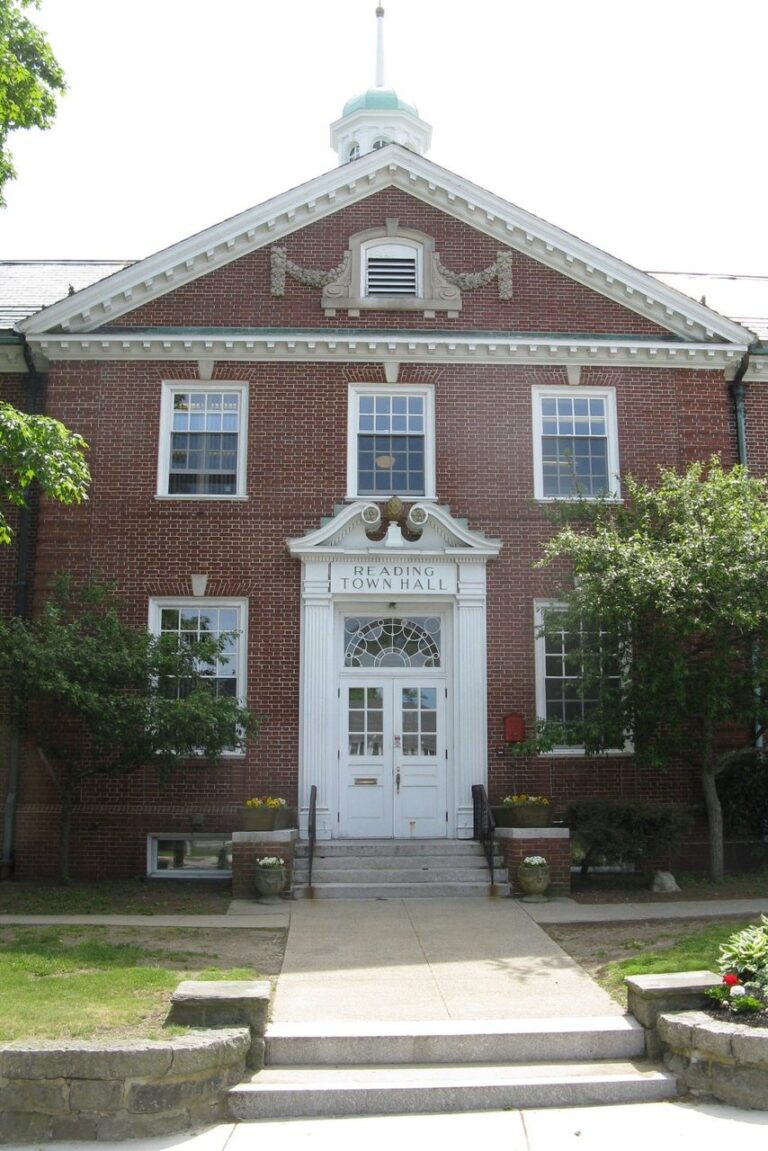
The 2023 American Community Survey places Reading’s median housing year at 1960. That citywide statistic cannot identify the age or structure of one home.
Use actual property records and repair history when available. Keep assumptions out of the permanent file unless inspection evidence confirms them.
Foundation Problems, Inspection Points, and Possible Repairs in Reading
| What you are seeing | What 603 inspects | Possible repair |
|---|---|---|
| Floors and trim changed above the same footing section | Measure the change and inspect the footing, framing, grade, and history | Support on deeper bearing can be proposed when shallow support has failed |
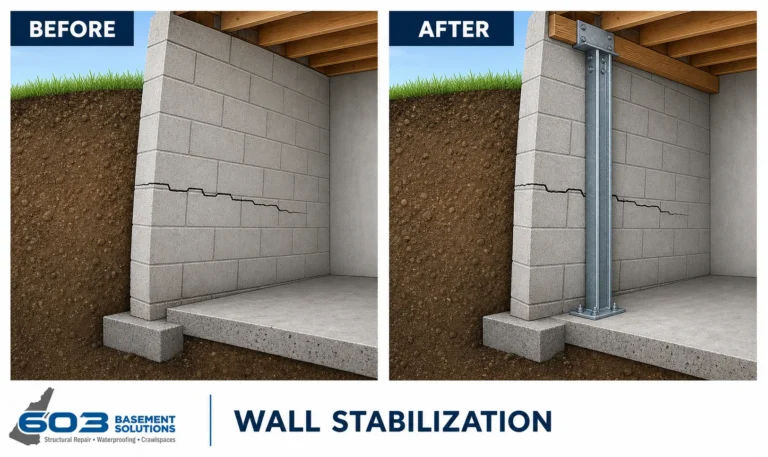
| The wall leans toward the basement | Map the wall movement and inspect cracks, construction type, and outside conditions | Carbon fiber, steel bracing, or another designed system may apply |
| An interior column is tilted, corroded, or poorly supported | Compare floor elevations with beam bearing, columns, sills, and concrete below | The failed post or framing member can be corrected after loads are safely supported |
| An earlier patch opened again while nearby finishes stayed stable | Read the pattern in context with the rest of the foundation and structure | Injection or sealing may apply when the wall remains stable |
These are decision paths, not diagnoses for a Reading house.
Put the visible clue in the right lane
A prior repair has no drawing
Reconstruct its location and visible connections before adding new work.
Several owners changed the basement
Separate dated facts from stories that cannot be verified.
A warranty names only a product
Attach a drawing that shows the exact treated area.
Monitoring points may be covered
Mark them before new storage or finishes hide access.
Use permanent location labels
Number foundation walls clockwise from a fixed entry. Label beams, posts, corners, openings, and rooms above with the same system.
Put those labels on inspection photographs, proposals, change orders, closeout images, and warranty documents. Avoid filenames that only say before or after.
Keep evidence in chronological order
Start with the earliest reliable record. Follow with inspection readings, the approved drawing, opening evidence, installed work, and final measurements.
Place every change order beside the condition that caused it. The file should show what changed, why, and who approved it.
Record what remains
List cosmetic conditions, unrelated damage, restoration, monitoring, and utility work that remain after structural installation.
A complete closeout packet does not claim every symptom vanished. It shows the treated boundary and the next responsibility.
Store the packet where it will be found
Keep a digital copy with the property records and a concise paper index near warranties. Use filenames with the date, location, and document type.
Include contractor contact details, signed scope, drawings, approvals, progress evidence, final readings, warranties, and open monitoring dates.
If later work changes the treated area, add a new dated section. Do not overwrite the original record or remove an earlier condition.
Make photographs searchable
Begin every filename with the location label and date. Add wide, detail, connection, measurement, and final as consistent descriptors.
Keep original resolution files. Message previews and screenshots can remove detail, timing, and metadata that help later review.
Create a one-page index with thumbnail, filename, and description. The packet becomes useful when a reader can find the right evidence quickly.
Give open items an owner and date
List restoration, cosmetic repair, utility work, engineering follow-up, monitoring, and unrelated defects separately.
Assign each item to 603, the owner, another contractor, or a future decision. Add a target or review date.
Do not mark the whole project complete while an important structural check remains open. Close each line with evidence.
Record every wall component for the property file
The Reading closeout should show brace or strap location, preparation, top and bottom connections, treated length, final readings, and visible conditions left unchanged.
603 confirms $1,300 for each steel power brace and $850 for each carbon-fiber strap. The 25-year warranty must stay attached to the marked wall section.
Record every floor-support connection
Show the beam, joists, column top, base, footing, temporary support, damaged framing, and final elevations. Give each item a permanent location label.
603’s lally-column range is $1,300 to $2,500 per unit. Treated support work has a 10-year settlement warranty. Store footing and beam additions with the same record.
Foundation Repair Methods and Pricing in Reading
The final drawing should identify the settling section, pier number, bracket location, access point, target, final reading, and restoration status.
603 prices the first three helical piers at $2,700 each and later units at $2,200. Engineered pier work includes a 25-year warranty. Retain engineering with the closeout packet.
Create a one-page repair abstract
Summarize the original concern, measured condition, treated component, method, quantity, intended outcome, completion date, warranty, and next check.
Include a small labeled plan and links to detailed photographs. Keep technical attachments behind the summary instead of replacing them.
A future owner can begin with the abstract and open the evidence only when needed. The summary should never overstate what the repair covered.
Preserve superseded documents
Mark old proposals, drawings, and schedules as superseded without deleting them. Add the date and the document that replaced each version.
Keep approved changes beside the field evidence that caused them. A clean history explains why installed work differs from the first estimate.
Use the final approved drawing for warranty and monitoring. Retain earlier versions so future questions have a complete timeline.
Review the packet once a year
Check that digital files still open, warranty contacts remain current, and monitoring dates have not passed. Add later renovations that touched the same structural area.
Do not rewrite the original diagnosis when new work occurs. Add a dated note that connects the later change to the earlier location labels.
A brief annual check keeps the record usable without treating every old symptom as active movement.
Replace broken file links and note the new storage location. Preserve the original filenames and dates during any move.
Check that labels remain visible in the basement. Replace a damaged label without moving its measurement point.
If the property changes hands, transfer the complete packet rather than a summary alone. The detailed evidence preserves the limits of the work.
Keep the signed warranty beside the final drawing.
Reading inspection worksheet
- Label the Reading structure. Create a simple plan that a future reader can match to the basement.
- Attach the starting evidence. Include wide and close photographs, readings, dates, and the original concern.
- Record installed quantities. Show every brace, column, pier, connection, or replaced structural length.
- Save warranty and monitoring. Keep the covered area, conditions, future dates, and company contact together.
Reading foundation questions
Do I need professional drawings for the file?
A simple labeled plan may be enough unless the repair requires engineering.
Should cosmetic cracks be photographed?
Yes. Record them separately from the structural outcome.
What if an old repair has no paperwork?
Inspect what is visible and document unknowns instead of inventing a history.
Can the record help a future contractor?
Yes. Clear locations, quantities, readings, and photographs reduce guesswork.
What 603 brings to the inspection
603 is licensed and insured, has worked in more than 5,000 homes, and self-performs helical-pier installation and structural lifting. The inspection and estimate are free. We normally send the written quote within 24 hours.
We will tell you when the house needs a smaller repair or a period of monitoring. If work is proposed, the scope should name the treated area, quantities, outcome, exclusions, and warranty.
Why Homeowners Choose 603 for Foundation Repair
The review and project evidence below show how 603 communicates through structural work for homeowners near Reading.
Get the Reading load path checked
We will measure the structure, explain the repair boundary, and give you a written scope you can compare.
Sources: U.S. Census Bureau, 2023 ACS 5-year table B25035. The city image caption links its Wikimedia Commons source and license. 603 supplied the confirmed service, pricing, warranty, and operating information. Work imagery shows a 603 repair method. See Structural and Foundation Repair or the Foundation Crack Repair service.