
Quick Answer
Homeowners can call 603 Basement Solutions for foundation repair in Stoneham, Massachusetts for foundation movement, wall displacement, framing deflection, column concerns, and failed sill material. The result may be a pier layout, wall bracing, corrected support line, sill or beam replacement, crack-specific work, or a recommendation to watch the condition. 603 documents the recommendation in a free written estimate.
Trace a diagonal symptom through the whole load path
A diagonal crack near an opening can begin at several structural conditions. The shape alone does not choose the repair.
We inspect the opening, wall, corner, floor framing, beam, supports, footing, and exterior context before narrowing the cause.
Stoneham housing context without the guesswork
The 2023 American Community Survey estimates Stoneham’s median housing year at 1965. That midpoint does not identify your wall material or repair history.
Record the actual opening, additions, altered framing, and nearby repairs. Keep citywide context separate from address-level evidence.
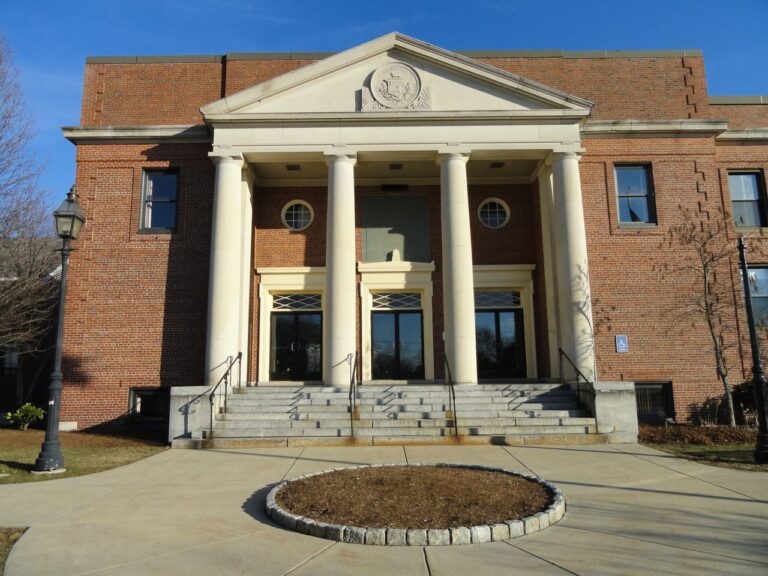
Foundation Problems, Inspection Points, and Possible Repairs in Stoneham
| What you are seeing | What 603 inspects | Possible repair |
|---|---|---|
| A section of the foundation seems to have dropped | Measure the change and inspect the footing, framing, grade, and history | A pier plan is considered only after settlement is verified |
| A horizontal opening accompanies a bowed wall | Inspect how the wall is built and what is acting on it from outside | A wall-specific design is needed before any system is selected |
| Joists deflect where they meet a beam, wall, or support | Check the whole support line instead of judging one shiny or temporary post | The failed post or framing member can be corrected after loads are safely supported |
| A vertical, horizontal, or stair-step line raises concern | Separate water entry from movement by checking the wall and connected loads | Slab repair depends on whether the changed concrete is structural |
A symptom at one Stoneham home can have a different cause at another.
Put the visible clue in the right lane
A crack leaves a window corner
Measure the opening and the full wall rather than reading the diagonal alone.
A doorway changes upstairs
Map its bearing direction and supports below before linking it to settlement.
A corner shows outside damage
Pair interior and exterior photographs with the same location label.
The crack gets wet
Test water entry and structural movement as separate questions.
Begin beyond the crack
Take a wide view showing the wall, corner, floor line, ceiling, openings, utilities, and adjacent surfaces. Then capture the crack detail.
Map whether the line crosses concrete, masonry joints, finishes, or an earlier patch. Do not infer the hidden structure from the surface alone.
Follow every possible connection
Trace loads from rooms above through joists, beams, posts, walls, and footings. Mark additions and altered openings that touch the same path.
A symptom may sit beside the cause or only beside another symptom. Measurements decide whether the conditions belong together.
Choose a repair with a visible boundary
Crack repair treats a stable opening. Bracing treats a measured wall. Columns support beams. Piers support a settling foundation section.
The proposal should show where the treatment begins and ends. It should also name conditions that stay outside the scope.
Check the opposite side of the symptom
Inspect both faces of the wall or framing area when access allows. A finish line on one side may not show the structural connection behind it.
Pair interior and exterior views by location label. Include grade, openings, attachments, utilities, and drainage observations without assigning cause too early.
When only one side is accessible, write that limitation in the scope. The recommendation should not imply evidence that was never visible.
Use crack direction as a question
A diagonal line can guide where to inspect, but it cannot prove soil movement, opening stress, wall movement, or framing change alone.
Write each plausible explanation and the evidence it would require. Then inspect those locations rather than choosing the most familiar label.
The final scope should name the measured condition. Avoid carrying the visual nickname into the contract as if it were a diagnosis.
Revisit the first symptom at closeout
Return to the original diagonal line, opening, floor, or corner. Repeat the starting view and measurement from the same point.
Record what changed because of the repair and what remains visible. Cosmetic restoration may occur later and should stay separate.
If monitoring continues, protect the reference points and set the next date before the project record closes.
Let wall shape decide the stabilization lane
A diagonal crack can lead the inspection, but full-height Stoneham wall measurements decide whether the wall needs braces, straps, or a focused crack repair.
603 confirms power braces at $1,300 each and carbon-fiber straps at $850 each. The 25-year warranty applies to the written treated area and stabilization tolerances.
Let framing evidence decide the support lane
Trace a changing opening or floor through joists, beams, posts, bases, and footings. Do not add a column only because it sits near the visible symptom.
A 603 lally column typically ranges from $1,300 to $2,500. Treated support work has a 10-year settlement warranty. Beam and footing requirements need their own details.
Foundation Repair Methods and Pricing in Stoneham
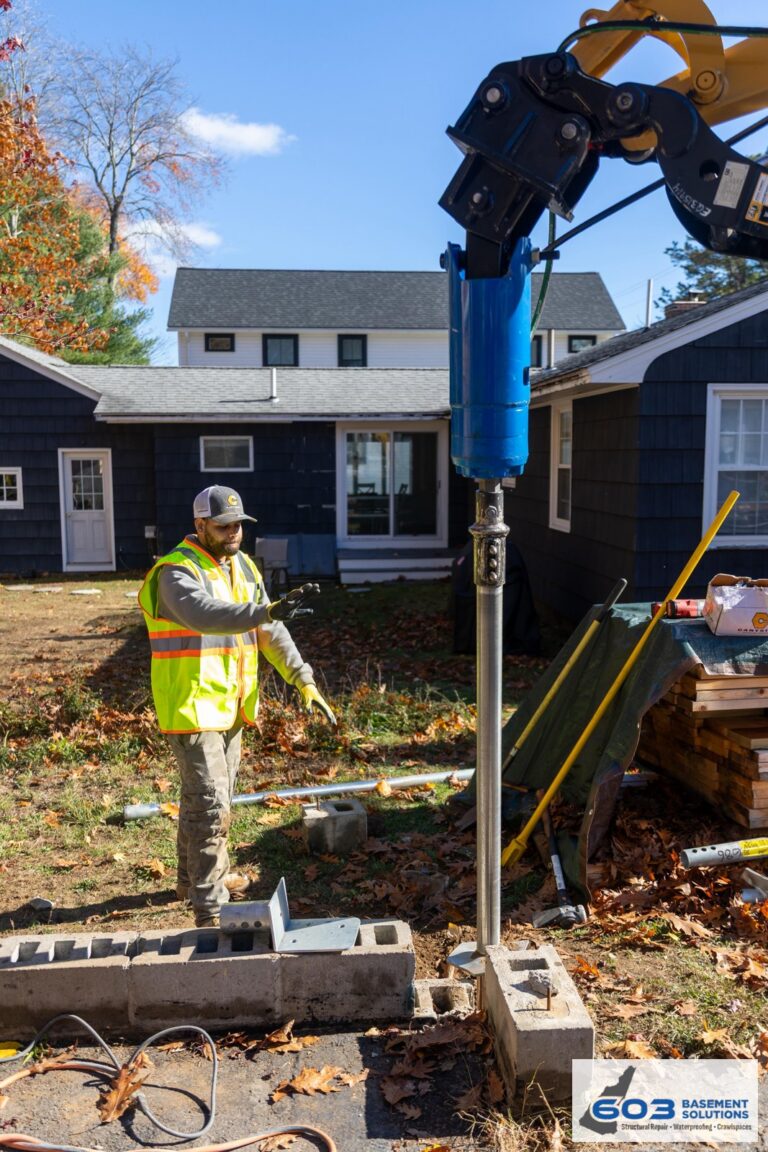
Connect the interior symptom and exterior foundation section with matching labels. Map bracket locations, quantity, access, and the expected stabilization or lift target.
The first three 603 helical piers cost $2,700 each. Additional piers cost $2,200 each. Engineered work carries a 25-year warranty, while excavation and restoration stay visible.
Measure openings without blaming them
Record opening width, height, level, plumb, operation, nearby cracks, and wall shape. Note whether finishes hide the structural edge.
Look above and below the opening for framing and support changes. Keep trim separation and sticking hardware as observations.
An opening can concentrate visible cracking without proving the underlying cause. The repair should target the measured wall or load-path condition.
Separate interior and exterior repair lanes
Use matching labels for both sides of the wall. Record grade, attachments, utilities, steps, paving, and access without assuming they caused movement.
Place excavation, wall support, water control, and surface restoration on separate scope lines. State where each line begins and ends.
At closeout, photograph both sides again. Keep structural completion, drainage work, and cosmetic restoration as distinct results.
Keep the crack-only option visible
If wall measurements show stability and the opening remains the primary condition, compare the focused crack-repair scope with structural work.
Record why the crack belongs in that lane. Include leakage, surface condition, wall material, location, and the evidence that broader movement was not found.
If measurements show movement, return to the full structural drawing. Do not let a smaller surface repair stand in for support or stabilization.
Keep the crack record with later wall readings. A focused repair does not erase the value of the original baseline.
Stoneham inspection worksheet
- Photograph the Stoneham diagonal. Capture its full path, both endpoints, nearby opening, and wall context.
- Map connected structure. Trace the room above, framing direction, supports, corner, footing, and exterior.
- Test competing explanations. Write what evidence would support or reject each possible condition.
- Close the loop. Repeat photographs and readings after repair or at the monitoring date.
Stoneham foundation questions
Does a diagonal crack mean settlement?
Not by itself. Its location, displacement, wall shape, and connected structure matter.
Can a window cause the crack?
The opening changes the wall, but inspection must establish the actual condition.
What if the crack also leaks?
Water control and structural support need separate findings, even when both are needed.
Should I patch it before inspection?
No. Leave the edges and surrounding surface visible until the condition is documented.
What 603 brings to the inspection
603 is licensed and insured, has worked in more than 5,000 homes, and self-performs helical-pier installation and structural lifting. The inspection and estimate are free. We normally send the written quote within 24 hours.
We will tell you when the house needs a smaller repair or a period of monitoring. If work is proposed, the scope should name the treated area, quantities, outcome, exclusions, and warranty.
Why Homeowners Choose 603 for Foundation Repair
For a Stoneham homeowner comparing contractors, the review and field evidence below show how 603 handles the work.
Get the Stoneham load path checked
We will measure the structure, explain the repair boundary, and give you a written scope you can compare.
Sources: U.S. Census Bureau, 2023 ACS 5-year table B25035. The city image caption links its Wikimedia Commons source and license. 603 supplied the confirmed service, pricing, warranty, and operating information. Work imagery shows a 603 repair method. See Structural and Foundation Repair or the Foundation Crack Repair service.