
Quick Answer
Homeowners can call 603 Basement Solutions for foundation repair in Westford, Massachusetts for foundation movement, wall displacement, framing deflection, column concerns, and failed sill material. The measured condition may lead to pier support, wall stabilization, column or framing work, sill replacement, a crack-specific repair, or monitoring. The on-site inspection and written estimate are free.
Compare foundation bids by what each one repairs
Two estimates can use the same product name and describe different jobs. Wall length, beam section, unit count, access, and restoration change what the contractor is offering.
We show the measured area and intended result. That gives you a fair way to compare price, warranty, and responsibility before choosing a contractor.
Westford housing context without pretending it diagnoses a house
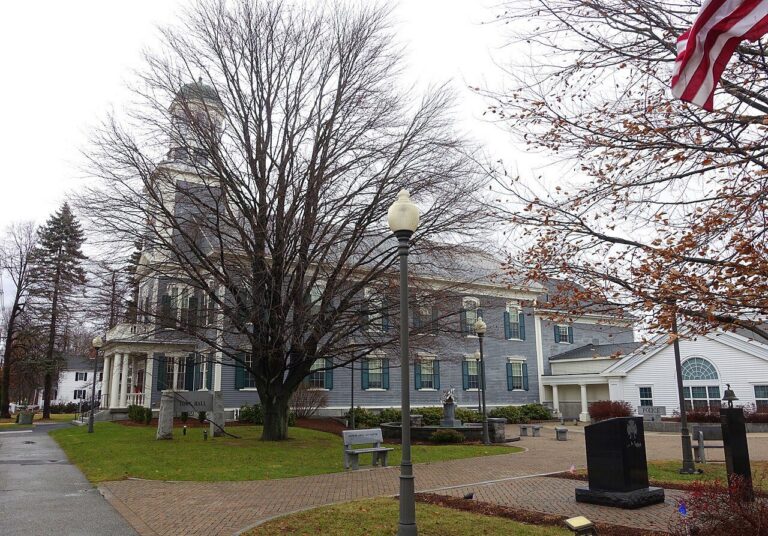
The 2023 American Community Survey places Westford’s median housing year at 1983.
That townwide midpoint can guide questions about repair records and later alterations. It cannot identify the materials, movement, or load path at one address.
Foundation Problems, Inspection Points, and Possible Repairs in Westford
| What you are seeing | What 603 inspects | Possible repair |
|---|---|---|
| Cracks and openings are changing near one settled area | Map connected symptoms before checking bearing below the affected zone | Deep pier support may fit if the measurements confirm bearing failure |
| The wall leans toward the basement | Document deflection while reviewing masonry condition and water management | Repair may focus on restraint, drainage, rebuilding, or a combination |
| Joists deflect where they meet a beam, wall, or support | Define damaged material and identify what must be held during repair | Supplemental support may fit when the existing beam line is inadequate |
| A slab has changed elevation near another structural element | Compare the repaired area with measurements from adjacent walls and floors | The crack should be routed to its own repair only after diagnosis |
These are decision paths, not diagnoses for a Westford house.
Put the visible clue in the right lane
Brace totals differ
Compare wall length, spacing, and connection details.
Column locations disagree
Trace the beam load and footing at every proposed point.
Pier counts do not match
Ask each bidder to mark the supported foundation section.
One bid only says crack repair
Confirm whether the wall is stable before comparing it with structural work.
Start with the treated area, not the total
Put each proposal beside the same basement sketch. Highlight the wall, beam, post line, or footing section that each contractor plans to touch.
A smaller number may cover fewer feet or fewer supports. A larger number may include access and restoration that another quote leaves out.
Make every quantity visible
Count braces, straps, columns, piers, and replaced timber lengths. Ask what measurement chose each location and what could change the count.
A lump sum is easier to trust when you can connect it to real components. If a unit has no location, ask why it is there.
Compare outcomes in plain verbs
Sealing stops water through a stable opening. Bracing limits wall movement. A column carries floor load. A pier transfers weight from a footing.
Those methods are not interchangeable. The estimate should say stabilize, support, replace, seal, or lift instead of promising a general foundation fix.
Find the work outside the structural line
Temporary support, selective openings, engineering, permits, utility moves, debris, and finish repair can add real cost. Check whether each item is included or excluded.
An allowance is not a final price. Ask when it becomes firm and what evidence you will see before it changes.
Read warranty boundaries before the duration
A long warranty may cover one treated wall section or a limited settlement tolerance. It may not cover finishes, water, adjacent areas, or later alterations.
Mark the exact covered area on the drawing. Then compare years, access requirements, and maintenance across the same kind of repair.
Do not buy more repair than the evidence supports
A stable crack may need sealing or monitoring rather than a full wall system. One damaged beam end may not require replacing the entire line.
We will tell you when a smaller answer fits. The right bid should solve the measured problem without borrowing fear from the rest of the house.
Keep the winning Westford estimate useful
The final version should include changes you agreed to, actual quantities, and photographs of the installed work. It should still match the area you agreed to repair.
Save it with the invoice and warranty. If another concern appears later, you can see whether it sits inside or outside the earlier work.
Ask what could make the price move
Concealed damage, unknown footing size, utility conflicts, or a wider repair boundary can change a structural job. The estimate should name the likely unknowns.
It should also explain how you see the evidence and choose what happens next. A surprise condition is not a blank check.
Compare the repair before the financing
Monthly payments can make two projects look similar even when the treated areas and total costs are different. Compare the repair itself before the payment plan.
Once the scopes match, financing terms can be useful. They should not hide unit counts, exclusions, or a much larger final price.
Look for the sentence that says when not to proceed
A responsible proposal allows inspection findings to narrow the job. It should not treat every crack, slope, or old patch as proof that hardware is needed.
Ask what result would lead to monitoring or focused crack repair. That answer tells you whether the contractor is diagnosing or selling a system.
Bring one question to every bidder
Choose a direct question about the same wall, beam, or footing and ask every contractor to explain it. Compare how each answer connects evidence to repair.
Clear reasoning is easier to trust than confident jargon. You should understand the choice well enough to explain it after the salesperson leaves.
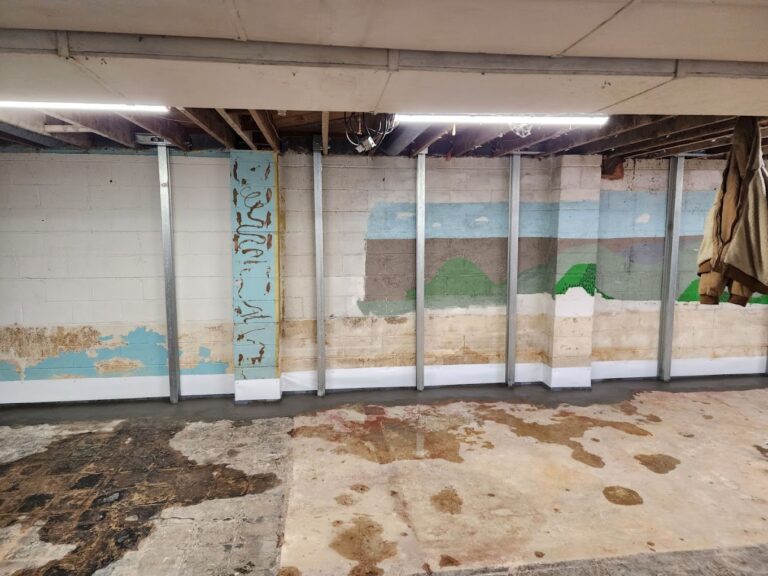
How pier selection fits this finding. Two Westford pier bids are comparable only after both identify the same settling footing section. Push piers use the structure’s weight for reaction as they are driven; helical piers advance by rotating helical plates into bearing material. House weight, footing condition, site access, and the written design determine the suitable system. A proposal that names a pier type without those inputs is not yet a normalized repair scope.
Normalize the Westford slab finding before comparing prices
A quote should say whether it addresses a basement floor surface or a slab that supports the building. That distinction comes before the total. In Westford, measurable displacement, continuing crack change, or movement shared with a supported wall can justify a structural slab evaluation. Each contractor should then describe the same observed area and intended result. The inspection may support monitoring, focused crack repair, stabilization, or replacement; blank assumptions should not silently expand the work. Use the slab foundation repair overview to compare like-for-like scopes when the concrete itself belongs to the load path.
Westford foundation repair prices and limits
Wall stabilization
Steel power braces are $1,300 each. Carbon-fiber straps are $850 each. Treated wall stabilization carries a 25-year warranty within written tolerances.
Floor support
Lally columns range from $1,300 to $2,500 each. Treated support work carries a 10-year settlement warranty. Footings and timber repair are priced separately.
Helical piers
The first three piers are $2,700 each. Later units are $2,200 each. Engineered pier work carries a 25-year warranty on the treated footing section.
What those numbers do not decide
Price does not choose the method. Wall shape, floor framing, bearing, footing evidence, access, and the intended result still need an inspection.
Westford inspection worksheet
- Use one plan. Give every bidder the same location labels.
- Normalize quantities. Separate fixed, unit, and allowance work.
- Compare outcomes. Write the intended result beside each item.
- Reconcile the final count. Match drawing, invoice, photographs, and warranty.
Westford foundation questions
Can I compare proposals by total price?
Only after quantities, boundaries, outcomes, and exclusions match.
Why might pier counts differ?
The bidders may define a different supported section or bracket layout.
Does a brace price include finish work?
Only the written proposal can answer that.
What does the free inspection provide?
603 measures the condition and gives a written estimate that states exactly what will be repaired.
What 603 brings to the inspection
603 is licensed and insured, has worked in more than 5,000 homes, and self-performs helical-pier installation and structural lifting.
The inspection and estimate are free. We normally send the written quote within 24 hours. We will also say when monitoring or a smaller repair fits.
Why Homeowners Choose 603 for Foundation Repair
The review and repair imagery below provide practical proof for a Westford homeowner deciding who should inspect the structure.
Get the Westford load path checked
We will measure the structure and explain the repair boundary in writing.
Sources: U.S. Census Bureau, 2023 ACS 5-year table B25035. The city image caption links its Wikimedia Commons source and license. 603 supplied service, pricing, warranty, and operating information. Work imagery shows a 603 repair method. See Structural and Foundation Repair or the Foundation Crack Repair service.