



Is your Atkinson slab actually moving, or just wearing at the surface?
A basement floor within another foundation may not carry the building.
Connected wall, door, and floor changes deserve measurement of the load path.
A dropped patio or drive belongs in concrete repair unless the house also moved.
A load-bearing slab diagnosis starts with numbers. Record crack widths at several points, measure elevation differences across the slab, and check whether cracks are stable or opening. Look for connected symptoms: sticking doors, wall cracks, or gaps at the sill plate. A crack that is only a hairline and unchanged for years tells a different story than a crack that has widened since last season. In Atkinson, a homeowner can track these measurements over months. The goal is not to label every crack as structural. The goal is to separate a slab that is moving from one that is simply curing, shrinking, or wearing at the surface.
A worn finish is not a reason to rebuild the foundation. If the basement floor has a low spot but the wall and post supports are sound, a narrower surface repair or monitoring may be enough. We look for a gap opening at the wall base, a crack that changes width, or a post connection that has shifted. Those findings change the conversation. A driveway edge is a separate concrete job; it should not inflate a structural slab estimate.

Support and cosmetic leveling are not the same repair. Cosmetic leveling may improve a surface that is uneven but not carrying structural load. Support work addresses a slab that is moving because of a loss of support or a load path problem. ACI RAP-11 discusses slabjacking assessment, and ACI RAP-7 discusses horizontal concrete repair preparation. The method should follow the measurements: crack movement, elevation change, and connected symptoms. If the slab is stable, cosmetic leveling may be reasonable. If it is moving, a design professional may need to review the support condition before any repair is chosen.
ACI’s structural-slab distinction is general technical guidance, not a specification for this house.
Atkinson’s Building Department lists alterations among work that needs a building permit and says to ask the inspector about a particular project. That matters if an inspection leads to changing support under a wall or column. First we need to find out what the slab actually carries. A surface crack and a proposed structural alteration are different scopes; the town page cannot classify your house from a photograph.
Read the Atkinson source. We check the approval path against the proposed scope.
A patch can cover a crack while the support underneath keeps moving. We check the wall and post connections before proposing a method. Water entering near the slab edge may also need its own diagnosis. The written estimate should say whether we are fixing a concrete surface, stabilizing support, or asking a design professional to evaluate the structure. Do not pay for a structural repair because a floor looks rough; do not settle for a cosmetic patch when a bearing point is changing.
Finished basement walls can hide the slab edge where movement matters most. Stored items may block the crack ends or a post base. Before we price work, we need access to those points and a way to compare elevations across the room. We also note any water path that could be driving movement. If a wall or column support must change, that proposed structural work gets its own review; an outdoor landing does not answer the question inside the house.
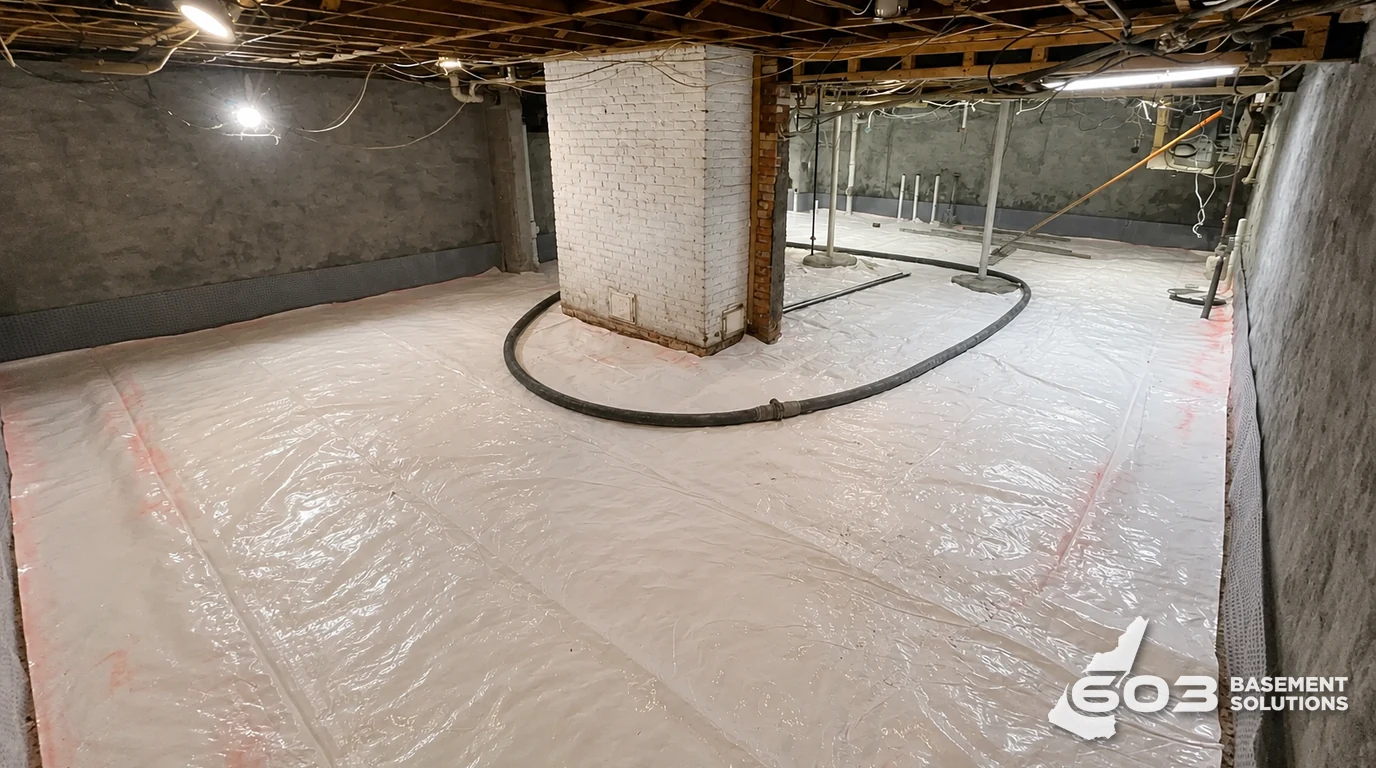
The estimate should name the measured crack, the reference points, and any connected wall or post symptoms. It should state whether the floor is only a finish surface or whether a bearing area is part of the repair. If that remains uncertain, write the uncertainty down and obtain the appropriate structural review before committing to a method. A separate exterior concrete price belongs on a separate line. That lets you compare like with like.
No work is a valid decision. If measurements show a stable slab with no connected symptoms, monitoring may be reasonable. A homeowner can track crack widths and elevation over months. If the slab is not moving, cosmetic leveling may be a smaller option. If the slab is moving, a design professional may need to review the support condition. Do not promise piers, epoxy, lifting, or a repair outcome. The honest path is to measure first, then decide. In Atkinson, a private concrete landing is not automatically the same scope as work at the road. Keep the structural question separate from exterior flatwork.
Measure crack widths and elevation changes over time. Look for connected symptoms like sticking doors or wall cracks. If the slab is stable and symptoms are not worsening, monitoring or cosmetic leveling may be reasonable. If it is moving, a design professional may need to review the support condition. A written estimate should separate structural work from exterior flatwork. Keep that exterior scope separate from the structural repair scope. That separation helps you compare bids and decide what work to do now. Ask what each price includes before you sign.
Show us the concrete and we will tell you what is worth fixing, what can stay, and what still needs checking.

