



A sloping slab might be a structural warning or just a cosmetic dip. How do you decide?
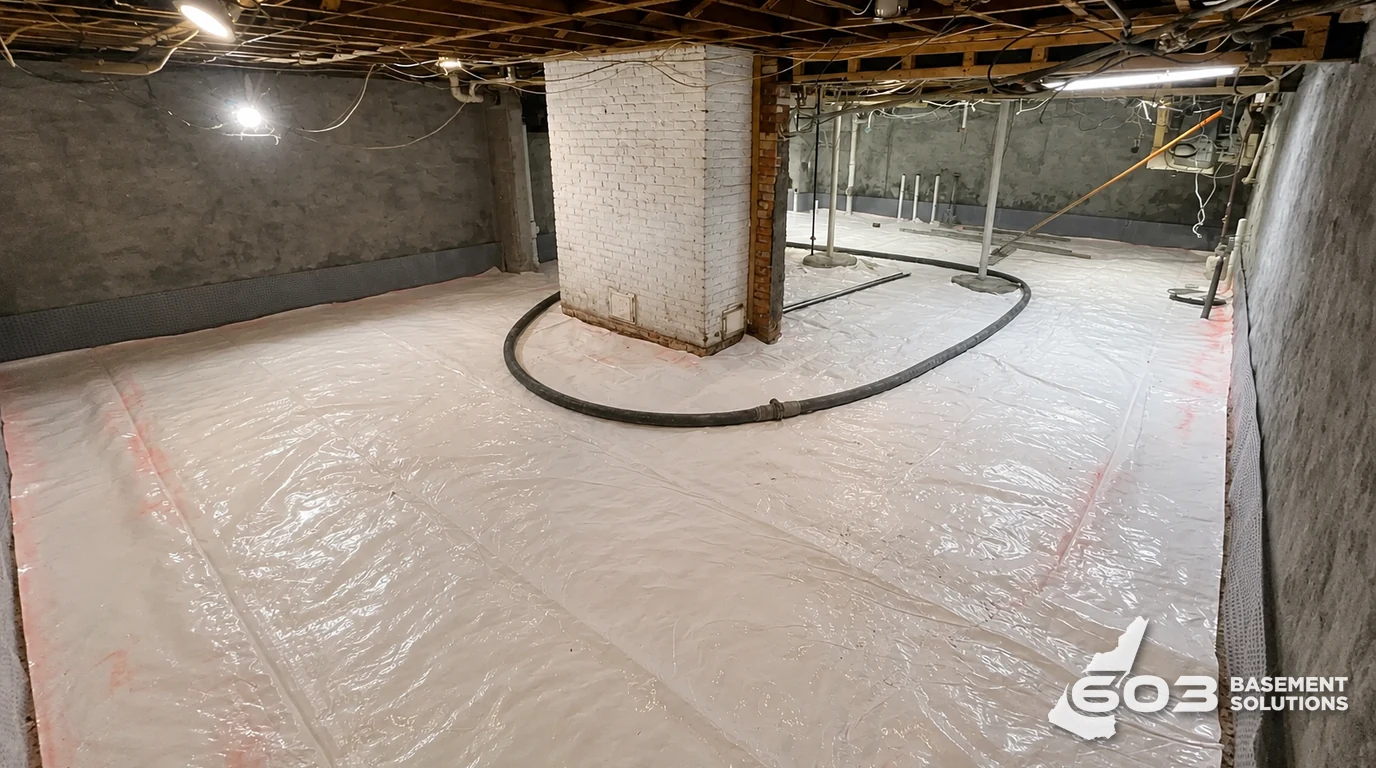
A basement floor within another foundation may not carry the building.
Connected wall, door, and floor changes deserve measurement of the load path.
A dropped patio or drive belongs in concrete repair unless the house also moved.
A load-bearing slab or foundation system is not judged by a single crack. We look for movement patterns: elevation changes across the slab, separation at walls, door gaps that appear or widen, and cracks that step or widen over time. Measurements matter. A laser level or string line can show how much a slab has dropped or tilted. We compare those numbers with what the structure is supposed to do. A hairline crack in a garage floor may be cosmetic. A slab that has settled near a load-bearing wall may need a different conversation. The goal is to separate normal curing and shrinkage from active movement. If the measurements are stable, monitoring may be reasonable. If they are changing, we need to understand why before recommending any repair.
Not every uneven slab needs structural work. A nonstructural basement floor or a garage slab that is not carrying the house can sometimes be left alone or leveled for appearance. That is different from a slab that transfers loads to the foundation. If the slab is part of the load path, cosmetic leveling does not restore support. It may just hide a symptom. We explain the difference in plain terms. If the movement is minor and stable, we may recommend monitoring with a few marked crack gauges or a floor elevation record. If the slab is still supporting the structure and the movement is not affecting doors, walls, or drainage, a smaller repair or no repair may be the honest answer. The decision should match the function, not the fear.

There is no single method for every slab. The right approach depends on what is moving, how much, and what the slab is supporting. We may consider underpinning, slabjacking, or other support options, but only after measurements show a structural need. ACI RAP-11 discusses slabjacking assessment, and ACI RAP-7 covers horizontal concrete repair preparation. Those are references, not a menu we promise to follow. We do not claim a specific product, brand, or outcome. If the slab is stable and the issue is cosmetic, leveling may be enough. If the foundation is settling, a design professional may need to evaluate the load path. The method should come from the diagnosis, not from a sales script. We will tell you when we do not know and when another professional should be involved.
ACI’s structural-slab distinction is general technical guidance, not a specification for this house.
Dover’s Inspection Services FAQ says permit submittals for building work can include foundation and framing plans. That is pertinent when a slab repair changes how a wall, column, or footing is supported. A shallow surface patch is a different conversation. We map the affected bearing points before saying which documents or approvals a particular Dover job needs.
Read the Dover source. We check the approval path against the proposed scope.
Some slab problems are not repair problems. They are drainage, soil, or water table issues that need a different trade. If water runs toward the foundation, a slab repair will not fix the source. If a failing retaining wall or a broken sewer line causes the movement, that is outside our scope. We also cannot promise a repair will stop all movement. Concrete moves. Soils change. A repair may need monitoring after it is done. The honest answer is sometimes that the cause is outside the slab itself. We will tell you when that is the case.
Inside the house, the hard limits are the bearing points, not the driveway grade. We map where walls or posts meet the floor and whether the slab has pulled away from them. Finished flooring can hide cracks, while plumbing and utilities can limit access to a repair area. We also look for water that may be entering at the perimeter. Those observations determine what can be inspected now and what needs an engineer or limited opening before a method is chosen.
A useful estimate starts with measurements, not a price. We record elevations, crack widths, and any door or wall symptoms. We note what is structural and what is cosmetic. The written estimate should say what is included, what is excluded, and what still needs to be verified. We do not promise a specific outcome, warranty, or lifespan. The estimate should help you compare options: monitor, repair a smaller area, or plan a structural repair. If the numbers do not support a repair, the estimate should say so. That is a valid result.
Sometimes the best recommendation is no work. If the slab is stable, the cracks are not widening, and the structure is performing, monitoring is reasonable. We can mark cracks, record elevations, and set a date to recheck. If the movement is minor and cosmetic, a smaller repair may be enough. We will not push a structural repair when the measurements do not support it. We will also tell you when we cannot make the call alone. A design professional may need to evaluate the load path. The decision sequence is simple: measure, compare, and choose the smallest action that matches the condition. No work is a legitimate outcome.
You cannot tell from a crack alone. We measure elevation changes, crack movement, and connected symptoms like door gaps or wall separation. If the slab carries load and the movement is active, it is structural. If it is a nonstructural floor and the movement is stable, it may be cosmetic. We do not promise a repair outcome. The next step is a measured inspection so you can decide with facts.
Show us the concrete and we will tell you what is worth fixing, what can stay, and what still needs checking.

