



A low slab near a ditch is a water question first, not a lifting question.
A basement floor within another foundation may not carry the building.
Connected wall, door, and floor changes deserve measurement of the load path.
A dropped patio or drive belongs in concrete repair unless the house also moved.
Start with measurements, not opinions. A load-bearing system can show movement through a widening crack or a floor that changes level. A sticking door or a new wall-base gap gives us another point to check. A cosmetic basement floor may crack and still carry nothing. A structural slab carries load, so the question is whether support is changing. We compare current readings to prior readings when available. If you have no prior numbers, we take a baseline and note the date. A pattern of measurements over time tells a more useful story.
Not every slab symptom calls for repair. Hairline shrinkage cracks in a nonstructural floor may stay as they are. A small entry landing that has settled slightly may be a drainage and trip-hazard question, not a foundation question. What needs attention is a load-bearing slab that is moving, a foundation wall that is rotating, or a floor that is losing support under a bearing point. We separate cosmetic leveling from support repair because they solve different problems. Leveling a floor surface without addressing the cause can hide a water path or a soil issue. The decision is about function and safety, not appearance alone.
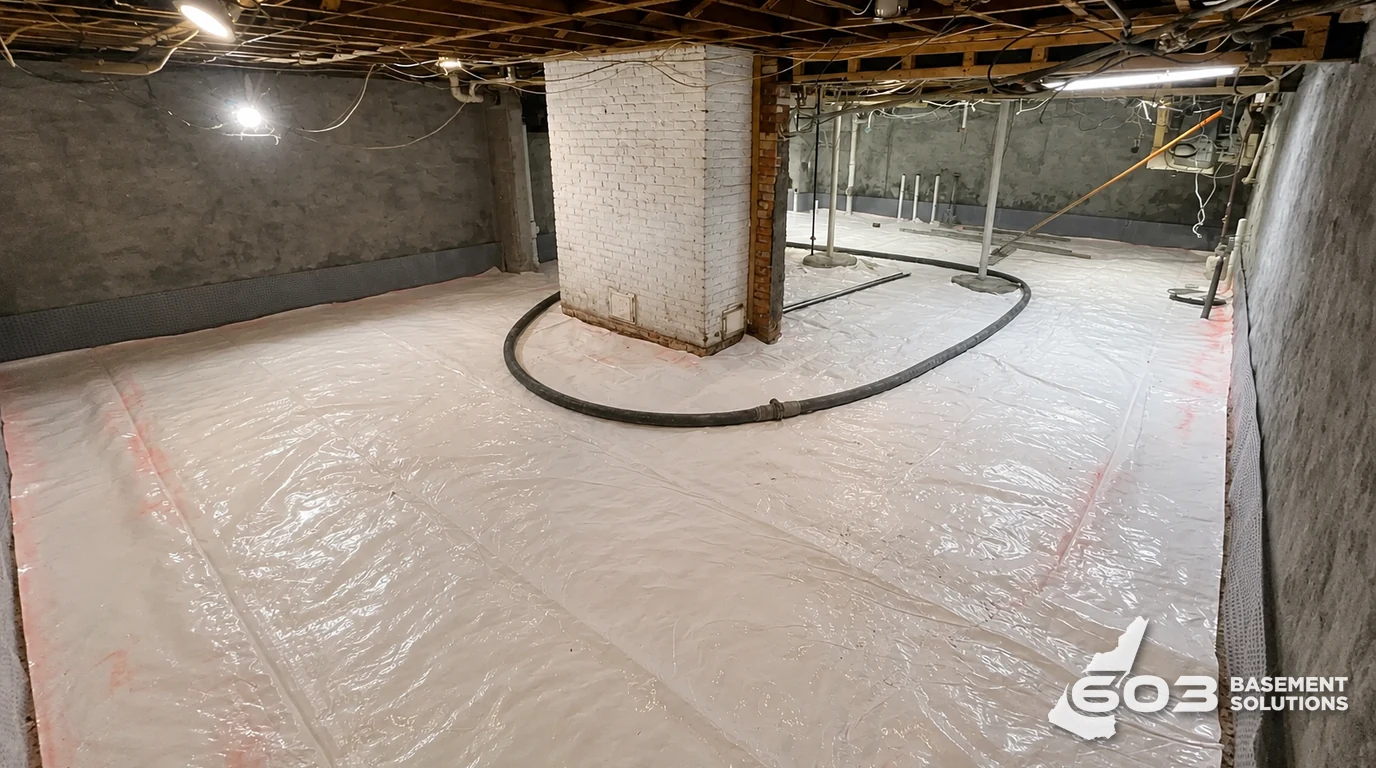
Method selection follows diagnosis. If the slab is stable and the issue is a surface irregularity, a cosmetic approach may be enough. If the slab is a load-bearing system and support is changing, the repair has to address support. ACI RAP-11 discusses slabjacking assessment, and ACI RAP-7 discusses horizontal concrete repair preparation. We do not promise piers, epoxy, lifting, or a repair outcome before the cause is understood. If water is driving the movement, drainage work may come before or instead of concrete work. The right sequence is cause first, method second.
ACI’s structural-slab distinction is general technical guidance, not a specification for this house.
Hampton Falls’ building FAQ directs structural construction and repair questions to its building-permit process. It cannot tell us whether a particular basement slab carries the house. We first trace the slab edge, any wall or post bearing points, and the movement pattern. If the proposal changes support, we define that work for the inspector before it begins.
Read the Hampton Falls source. We check the approval path against the proposed scope.
Some conditions fall outside a slab repair scope. A failed septic line, a broken water service, or a drainage issue may need a different trade. If the slab is moving because a slope or ditch sends water toward the house, a lift can raise the surface without fixing the water path. That is a shortcut around a drainage problem. We also cannot verify soil, water table, or geology from a visual inspection alone. If movement is active and the cause is unclear, a design professional may need to review before any repair is priced. That is not a delay. It is how you avoid paying twice.
Water at the floor wall joint can make a slab problem look larger than it is. We check where it enters and whether the slab, the wall, or both have moved. A wet floor by itself does not prove the foundation support has failed. If the wall remains stable and the slab only needs a surface repair, a structural job is hard to defend. If support is changing, the water path and the proposed structural work both belong in the written plan.

A useful estimate starts with a measurement plan. We record crack locations and widths, floor elevations at fixed points, and any door or wall symptoms. We note the date and the weather conditions. If you have prior readings, we compare them. The written estimate should state what is included, what is excluded, and what still needs review. It should not promise a product, a brand, a price, a warranty, or a lifespan. If the cause is not clear, the estimate may be for monitoring or for a design professional review instead of a repair. That is a legitimate outcome. A clear scope beats a fast number.
Sometimes the right answer is no work. If measurements show the slab is stable and water is managed, monitoring may be reasonable. If the issue is a cosmetic basement floor or a small entry landing, a smaller scope may be enough. If the low edge is beside the ditch and water is the driver, drainage work may come before any concrete repair. We are willing to say you may not need a repair. The decision sequence is simple: establish whether movement is active, identify whether water is involved, and separate support repair from cosmetic leveling. If the cause is unclear, get a design professional before committing to a method.
Look at measurements over time, not one crack. A load-bearing slab that is moving may show changing crack widths, out-of-level floors, or sticking doors. A cosmetic basement floor can crack and still carry nothing. If water is reaching the foundation, that path needs to be understood before any repair height is promised. If movement is active and the cause is unclear, we may need a design professional to review it before choosing a method. You want the cause identified first, so the repair matches what the slab is actually doing.
Show us the concrete and we will tell you what is worth fixing, what can stay, and what still needs checking.

