



A slab that carries your house is not the same as a basement floor that just looks uneven.
A basement floor within another foundation may not carry the building.
Connected wall, door, and floor changes deserve measurement of the load path.
A dropped patio or drive belongs in concrete repair unless the house also moved.
Start with measurements, not opinions. Record crack width at the same points, floor elevation relative to a fixed reference, and any change in door or wall alignment. A nonstructural basement floor can crack and still carry nothing. A load-bearing slab that has moved may show wider cracks, a slope that changes over months, or separation where it meets walls. Take photos with a tape measure in frame. Note whether the movement tracks with seasons or water. If readings are stable across two visits, the case for structural repair weakens. If they change, the question shifts to support and the need for a design professional.
Hairline cracking without measured movement may call for a record rather than a repair. We check the slab, wall and support points together. If the floor is separate from the building’s load path and remains dry, a cosmetic imperfection may stay as-is. If a column base or wall has shifted, the question changes. We will not fold an unrelated outdoor concrete panel into the structural estimate just to make the job bigger.

Cosmetic leveling addresses appearance or a trip hazard. Support repair addresses how load moves from the structure into the ground. They use different evaluation criteria. ACI RAP-11 discusses slabjacking assessment, and ACI RAP-7 covers horizontal concrete repair preparation. For a load-bearing slab, the decision should follow measured movement and load path. For a nonstructural floor, the decision can follow flatness and drainage. Mixing the two in one bid hides the real question. Ask which scope your measurements actually support before you compare methods or prices.
ACI’s structural-slab distinction is general technical guidance, not a specification for this house.
Hudson’s Inspectional Services FAQ names work affecting structural safety and removal of bearing support as examples that need building review. A floor crack by itself does not tell us whether either is involved. We check what bears on or beside the slab and where movement appears. If support work is proposed, the written scope can then go to the town for the correct permit decision.
Read the Hudson source. We check the approval path against the proposed scope.

A slab repair does not fix a drainage problem, a failing foundation wall, or a soil condition that keeps moving. If water is the driver, repairing the slab without addressing water may be temporary. If the movement is in the foundation wall or footing, a slab-only scope is incomplete. Structural cracks may need a design professional to evaluate load path. ACI RAP-1 discusses structural concrete cracks. Some conditions require engineering review or city involvement before repair. Be wary of any bid that promises a specific outcome without measurements. A repair that ignores the cause can look fine and still move again.
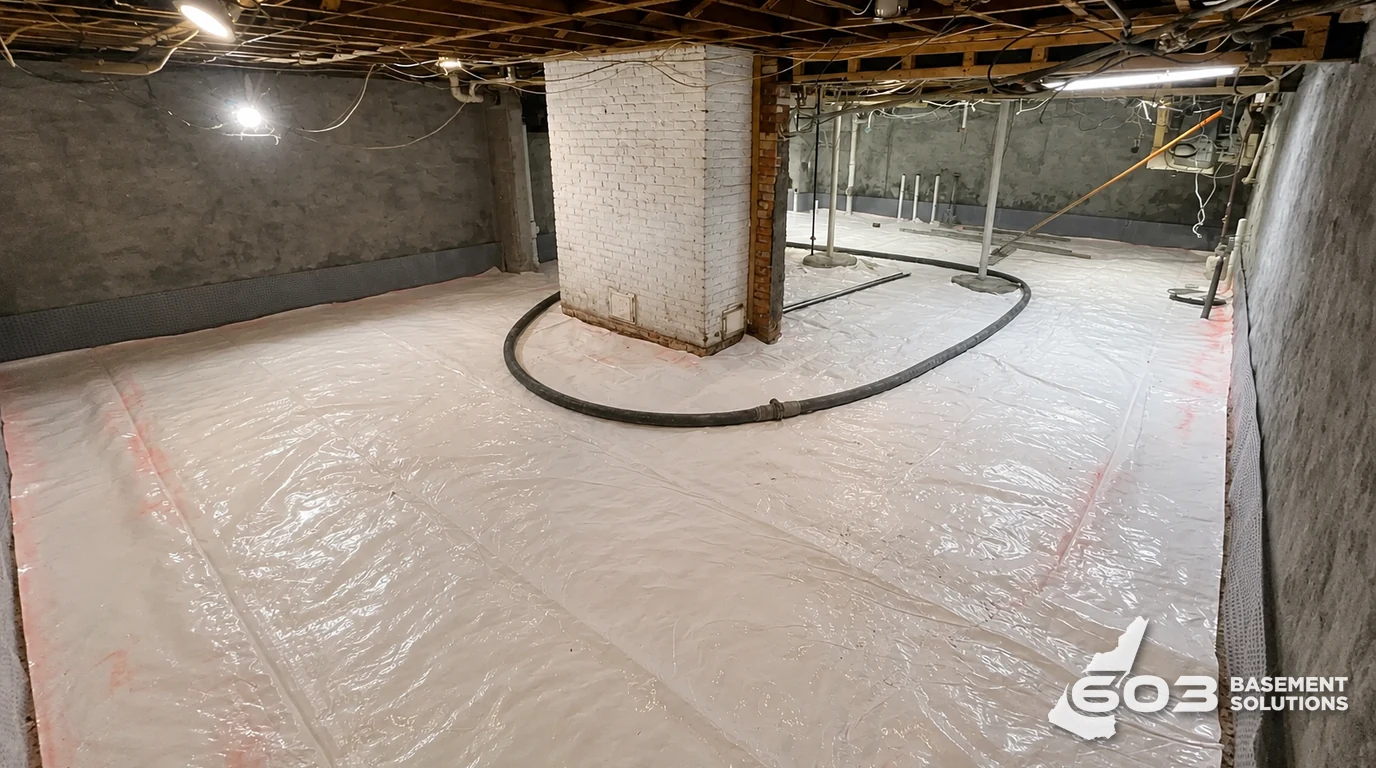
A finished basement can hide the slab edge and a post base. We ask what can be seen, where a measurement can be repeated, and whether water is reaching the affected area. Low headroom or stored items can limit the inspection, so the estimate must name any area we could not assess. A concrete repair is not a substitute for finding out what carries the load.
A written estimate for a load-bearing slab should list the measurements used, the observed symptoms, and the proposed scope. It should state whether the work is support repair or cosmetic leveling, and what is excluded. If exterior flatwork is involved, keep it in a separate line item. The estimate should say what will be monitored and when. It should not promise piers, epoxy, lifting, or a repair outcome. A clear scope lets you compare bids on the same basis and decide whether the work is needed at all.
If measurements show no active movement, monitoring is reasonable. Set fixed reference points, record crack widths, and recheck after a wet season and a dry season. If the slab carries load but is stable, repair may add risk without benefit. If the issue is a nonstructural floor and the unevenness is cosmetic, a smaller scope or no work may be honest. If movement is active, or if a wall or footing is involved, bring in a design professional before choosing a method. The decision sequence is measurement, then cause, then scope. Skipping to a method is how homeowners pay for work that does not match the problem.
Measure first. Record crack width, floor elevation against a fixed reference, and any wall separation. If those readings are stable over two visits, the slab may only need monitoring. If they change, or if a foundation wall is involved, a design professional should evaluate support before any repair. Cosmetic leveling and support repair are different scopes, so ask which one your measurements actually support.
Show us the concrete and we will tell you what is worth fixing, what can stay, and what still needs checking.

