



A floor crack meeting a wall crack is a reason to inspect both, not a diagnosis by itself.
When a Lynn basement floor crack meets a wall crack, the first decision is whether either bearing element has moved. The meeting point is a clue, not proof that the floor is the foundation. 603 Basement Solutions maps both cracks, measures the wall and floor independently, and traces the framing load to the wall or footing before proposing a repair. A floor patch can be enough for a sound structure; it will not fix a wall that is shifting.
We record where the floor crack stops, whether one side is higher, and whether it follows an old drain or utility cut. We then examine the wall crack’s direction, width, displacement and moisture. A line on the wall may come from a material joint, old repair or movement; none should be decided by shape alone. We compare repeatable measurements at the wall, corners, openings and floor rather than saying the two lines must share one cause because they touch.
The framing above matters. We look for a beam or post bearing near the affected wall and check whether the connection, floor above or door openings show change. A basement floor slab may sit on prepared ground and remain nonbearing while the perimeter wall carries the house. We need to know whether the load path has changed, not merely whether the surface is cracked.
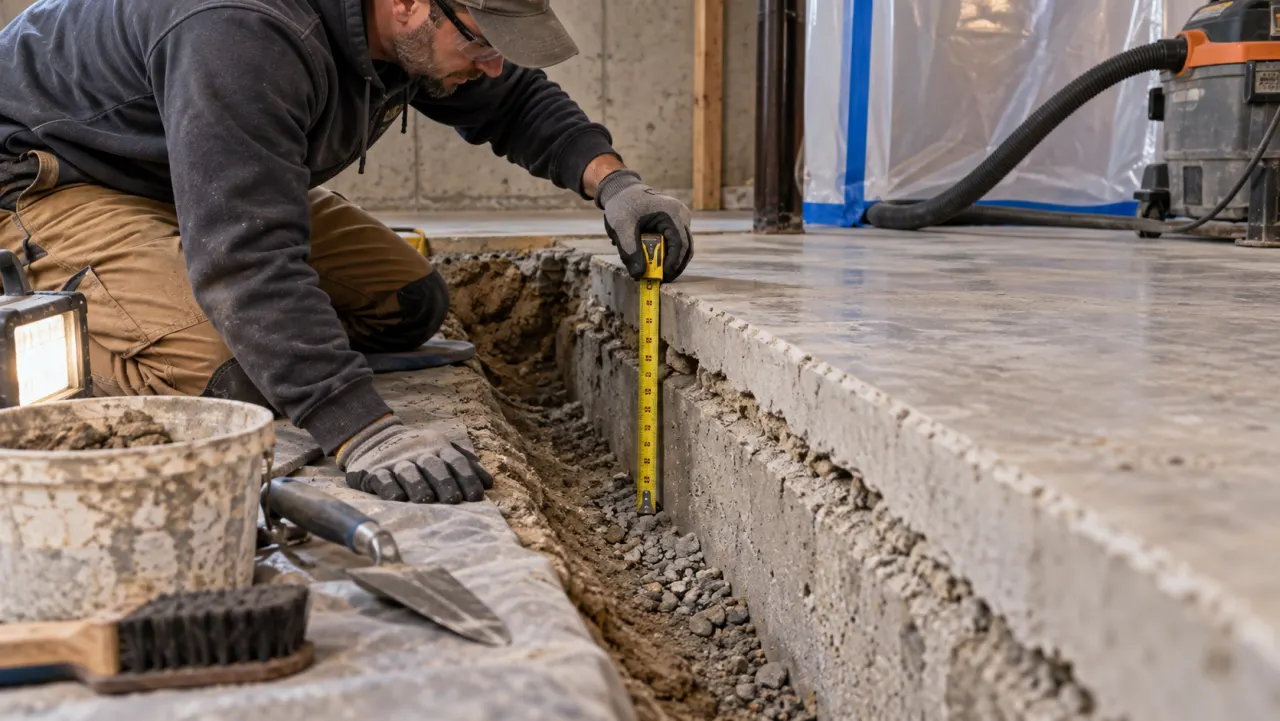
Floor coverings, finished walls, storage and old plumbing can hide the original concrete. A patched trench can look like a structural separation. We ask for prior renovation photos or drawings when available. If an opening is required to see a footing or wall base, the location and safety sequence should be defined. We do not cut at a loaded support or excavate beside a wall on a guess.
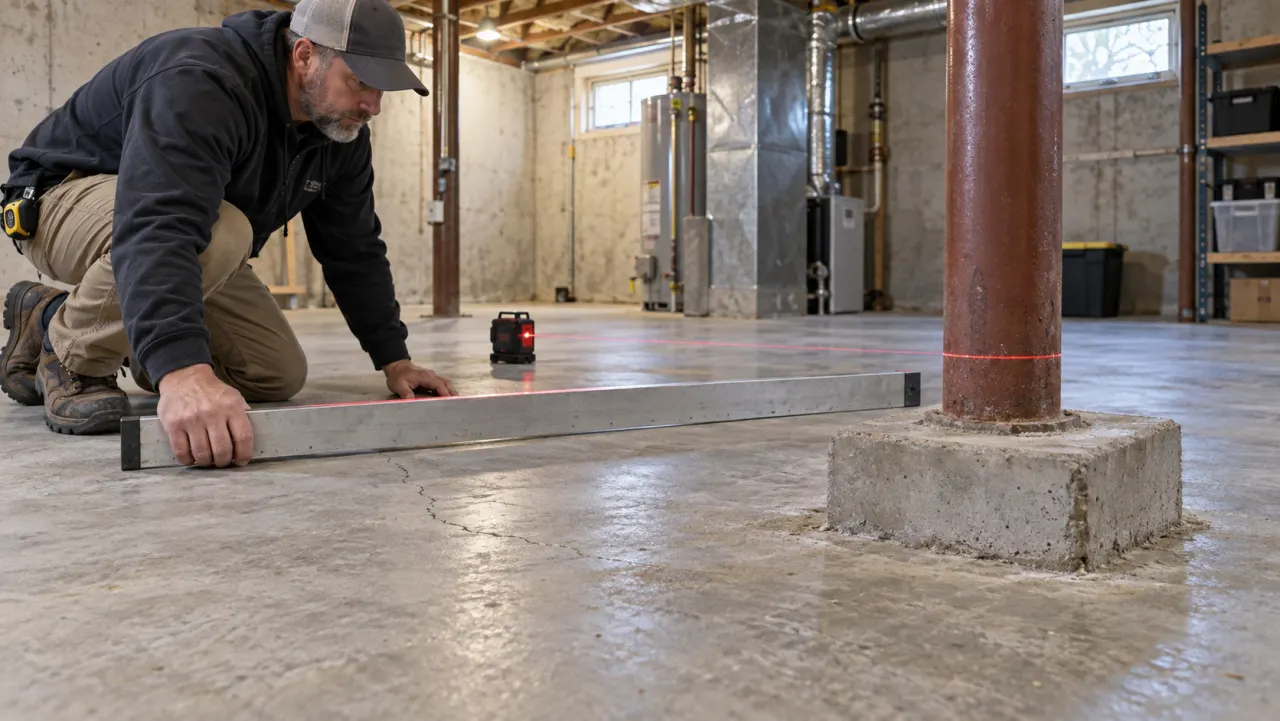
ACI’s residential concrete guide treats slabs, footings and foundation walls separately. Its categories guide the inspection; they do not reveal a Lynn property’s concealed construction. A sound but damaged floor surface may fit concrete repair. A separate exterior panel that has dropped may fit concrete leveling. A failed nonbearing basement floor may warrant new slab pouring after the base, utilities and moisture route are addressed.
If the wall, footing or column bearing is displaced, those floor treatments cannot restore the load path. The job becomes structural and foundation repair with an appropriate professional assessment and, where needed, engineered design. We would identify the element that moved and how the proposed method stabilizes it. A pier, brace or replacement wall is not selected just because an intersection looks dramatic in a photo.
Water must also be separated from movement. An open floor-wall joint can admit water while the support is stable. Conversely, a moving wall can be dry. We trace entry and runoff paths before combining waterproofing and structural line items. A new floor poured against an unresolved wet wall may hide the observation the homeowner needed most.

The City of Lynn Inspectional Services Department handles building-related applications and inspections. If a proposal changes a load-bearing wall or footing, we would describe the actual scope to that department for its project-specific process. Lynn Engineering’s street-opening application addresses public-way work such as sidewalks and aprons; it is not the authority for deciding whether an interior slab crack is structural. We do not claim that every floor patch requires a building permit.
Before pricing, ask which part of the problem is observed and which remains uncertain. An estimate can include measured crack and elevation information, an optional targeted opening, and a decision point before permanent structural work. It should state whether utilities, floor finishes or wall coverings limit the diagnosis. This protects the homeowner from a confident quote built on an unseen support detail.
If the cellar has had several water or plumbing repairs, we would map each patch and drain before interpreting the new floor line. A repair trench can meet a wall at the same place as a moisture stain without proving the footing moved. We ask whether the wall crack widens above the patch, whether the wall is displaced, and whether water follows the same route after rain. That gives a way to distinguish two coincident conditions from one shared cause. The answer may change which trade should act first.
If the wall and bearing remain sound and the floor defect is stable, a local surface repair or monitored condition may be more sensible. Monitoring should use marked locations, dated images and clear reinspection triggers. It is not an excuse to leave an actively moving wall alone. If there is measurable displacement in a bearing element, we would escalate to the right structural professional instead of hiding it behind a floor patch.

Google review · Customer experience
Chris Allder ★★★★★
“I have an old field stone foundation that needed some repair and due to some settling in one corner there was crumbling. They repaired the damage and took care of other trouble areas as well as installing a lally column to prevent further settling. Great job and all of these guys are friendly and always respond to your calls right away.”
Ask which element carries the house, whether the floor crack is in that element, what wall measurements show and what evidence ties the symptoms together. Ask what happens if a targeted opening shows an independent footing or an old utility trench. If structural work is still recommended, ask how temporary support and permanent bearing will be checked.
Send 603 photos that show the entire wall, floor, beam and nearby posts, along with dated close-ups of both cracks and any leak history. We will treat the intersection as a question to investigate, not a diagnosis to sell from, and explain the smallest work that addresses the measured problem.
Show us the affected concrete. We will explain what we measured, what can stay, and which scope fits the house.

