



The floor, the wall, and the door have to tell the same story before we call it a foundation repair.
A basement floor within another foundation may not carry the building.
Connected wall, door, and floor changes deserve measurement of the load path.
A dropped patio or drive belongs in concrete repair unless the house also moved.
A crack in a basement floor may be nothing more than a shrinkage crack in a nonstructural slab. The same crack in a slab that carries posts, walls, or equipment is a different problem. We ask what the concrete supports and where that load goes. We look at the slab-to-wall connection, post bases, and any evidence of movement at openings. The floor finish can hide the slab, so we ask what was there before. If the crack is only in a floor surface and the structure has not changed, the answer may be much smaller than slab foundation repair. The Manchester address and its building type must be observed, not guessed from a town average.
One tilted room does not tell us which support moved. We want to know whether a crack is opening, whether one side sits higher, and whether nearby doors or windows have changed. We photograph and measure from fixed points so a later visit can compare the same places. If a wall, slab, and door all change together, the structural concern is stronger. If the marks are old and stable, we may advise monitoring before construction. We also check drainage and visible water paths, but will not claim an unseen soil condition is the cause without evidence. Repeatable measurements keep the decision tied to what the building is doing, not to a one-time snapshot.
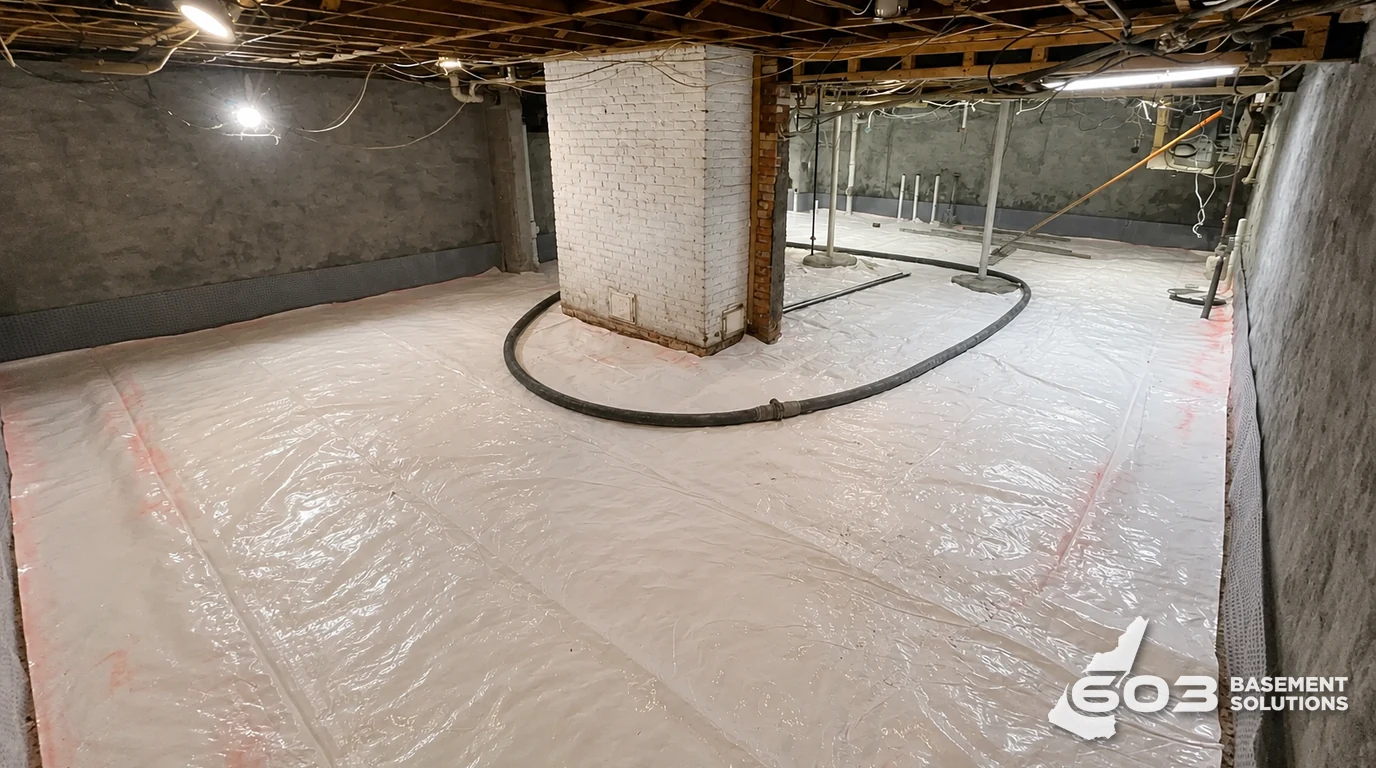
Support and appearance are not the same goal. A slab that has settled but still carries its load may need monitoring or a cosmetic fix. A slab that has lost support under a post or wall may need structural stabilization. We do not promise piers, epoxy, lifting, or a repair outcome before the inspection. ACI’s structural-crack guidance says the cause and need for structural repair must be established before an epoxy injection is selected; a moving crack can make that method unsuitable. The same logic applies to a whole slab. We first decide what the concrete supports. A small stable defect, an active settlement pattern, and badly broken concrete cannot share one generic fix.
ACI’s structural-slab distinction is general technical guidance, not a specification for this house.
Manchester’s Building Division handles plan review, permit approvals, and inspections for building work; the specific route depends on the defined structural proposal. For a load-bearing slab, the scope must be defined before the city can route it. That means separating structural work from cosmetic floor leveling or outdoor flatwork. The general building page is a starting point, not a ruling on your address.
Read the Manchester source. We check the approval path against the proposed scope.

Not every slab problem requires replacement. A stable, nonstructural crack in a basement floor may be left alone or treated as a water issue. A settled slab that still supports its load may be monitored. But if the slab carries a bearing wall or post and has moved, the repair may involve support work, excavation, or partial replacement. That can be outside a simple concrete pour. We also flag conditions that need a design professional: significant settlement, structural cracking in walls, or a repair that changes the load path. Manchester’s Building Division handles plan review, permits, and inspections for building work, but the specific route depends on the defined structural proposal. We define the scope before anyone assumes an approval.
Access, headroom, utilities, and water all affect what can be done. A slab in a finished basement may require cutting and removal before we can see the support. A slab near a utility line may need careful hand work. Drainage that sends water under the slab can keep a repair from lasting. We look at downspouts, grading, and visible water paths. We do not infer soil, water table, or geology from the town name. If the site cannot support a proposed method, we say so. The written scope should name the affected area, access limits, and any separate water or crack treatment. That keeps the estimate tied to the actual site, not a generic package.

You should leave knowing which observation started the concern, what 603 checked, and what remains concealed. The written Manchester scope should name the affected slab area, expected support objective, access and restoration, and any separate water or crack treatment. It should not promise a perfectly level room if only stabilization is feasible. We include the measurements we took and the limits of the inspection. If we recommend monitoring, the scope should say what to watch and when to call back. If we recommend repair, the scope should separate structural work from cosmetic work. That way you can compare bids on the same defined problem, not on a vague promise to fix the foundation.
If measurements do not show an active structural issue, we can recommend monitoring or a narrower repair. That is a better use of the visit than selling the largest method on the menu. A stable crack in a nonstructural floor may need nothing more than a moisture check. A settled but stable slab may need only a cosmetic patch. We will not promise a specific pier or lift result before the inspection. If the evidence points to a structural problem, we say so and explain why. If it does not, we say that too. The goal is a decision you can defend, not a repair you cannot justify.
A new surface cannot stabilize a moving load-bearing slab. We identify the load and cause before deciding whether repair or replacement is justified. If the crack is only in a nonstructural floor, a surface repair may be enough. If the slab carries a building load and has moved, we may recommend monitoring, a focused structural repair, or replacement. The written scope will state what we found and what remains uncertain.
Show us the concrete and we will tell you what is worth fixing, what can stay, and what still needs checking.

