
A slab that carries the house and a floor that just looks bad are two different problems.
A basement floor within another foundation may not carry the building.
Connected wall, door, and floor changes deserve measurement of the load path.
A dropped patio or drive belongs in concrete repair unless the house also moved.
Start with measurements, not opinions. A laser level or string line across the slab can show whether one area has dropped relative to another. A crack that is wider at one end, a door that drags, or a wall that has pulled away from the floor can all point to movement below. In a hypothetical Raymond home, a front landing might show a trip edge at one joint while the basement slab stays flat, which suggests two separate issues. ACI RAP-1 discusses structural concrete cracks, and ACI RAP-7 discusses horizontal repair preparation. The goal is to decide whether the slab is still carrying load or has lost support.
Not every slab problem needs structural repair. A nonstructural basement floor that is cracked but level and dry may only need monitoring or a cosmetic patch. A driveway approach or patio slab is exterior flatwork and should stay out of a structural quote unless it is tied to the foundation. In a hypothetical Raymond property, a front landing with a raised joint might be a separate trip hazard from a load-bearing slab that has settled. The useful question is whether the slab is part of the load path. If it is not, support work is not the right scope. Keeping those categories separate protects you from paying for structural work on a surface problem.

Support work and cosmetic leveling are different jobs. Support work addresses how load moves from the structure into the ground. Cosmetic leveling addresses a surface that is uneven but still supported. ACI RAP-11 discusses slabjacking assessment, which is one way to evaluate whether lifting is appropriate. It is not a promise that lifting is the answer. A slab that has settled uniformly with no wall separation may be a candidate for monitoring. A slab with a wide structural crack and a dropping corner may need a design professional. We do not promise piers, epoxy, lifting, or a specific outcome. The method follows the measurement, not the other way around.
ACI’s structural-slab distinction is general technical guidance, not a specification for this house.
Raymond’s building and code process distinguishes building alterations from work in the street. That distinction matters when a homeowner asks whether a cracked interior floor is a foundation problem. First establish whether the slab carries a wall or post. Then document the movement and proposed work. A driveway approach belongs in a separate flatwork discussion. We would confirm any town review requirement only after the structural scope is defined; the symptom alone does not establish a permit decision.
Read the Raymond source. We check the approval path against the proposed scope.

Some conditions fall outside a concrete repair scope. If the movement comes from a failing foundation wall, a soil issue, or a water problem, patching the slab will not fix it. A repair that ignores the cause can fail again. If a repair requires breaking into a street approach, that is a separate question and not part of a structural slab quote. We can identify that early. The honest move is to stop and bring in the right professional when the symptom points away from the slab itself.
Every slab sits in a specific site. Access for equipment, slope away from the house, and where water goes during a storm all affect what can be done. In a hypothetical Raymond home, a slab near a walkout might have different drainage than one under a full basement. Existing cracks, previous patches, and the condition of the joint layout matter. NRMCA CIP6 discusses planned slab joints, which helps explain why some cracks follow a joint and others do not. We look at those constraints before recommending a scope. A repair that ignores drainage or access can create a new problem. The site visit is where those limits get written down.
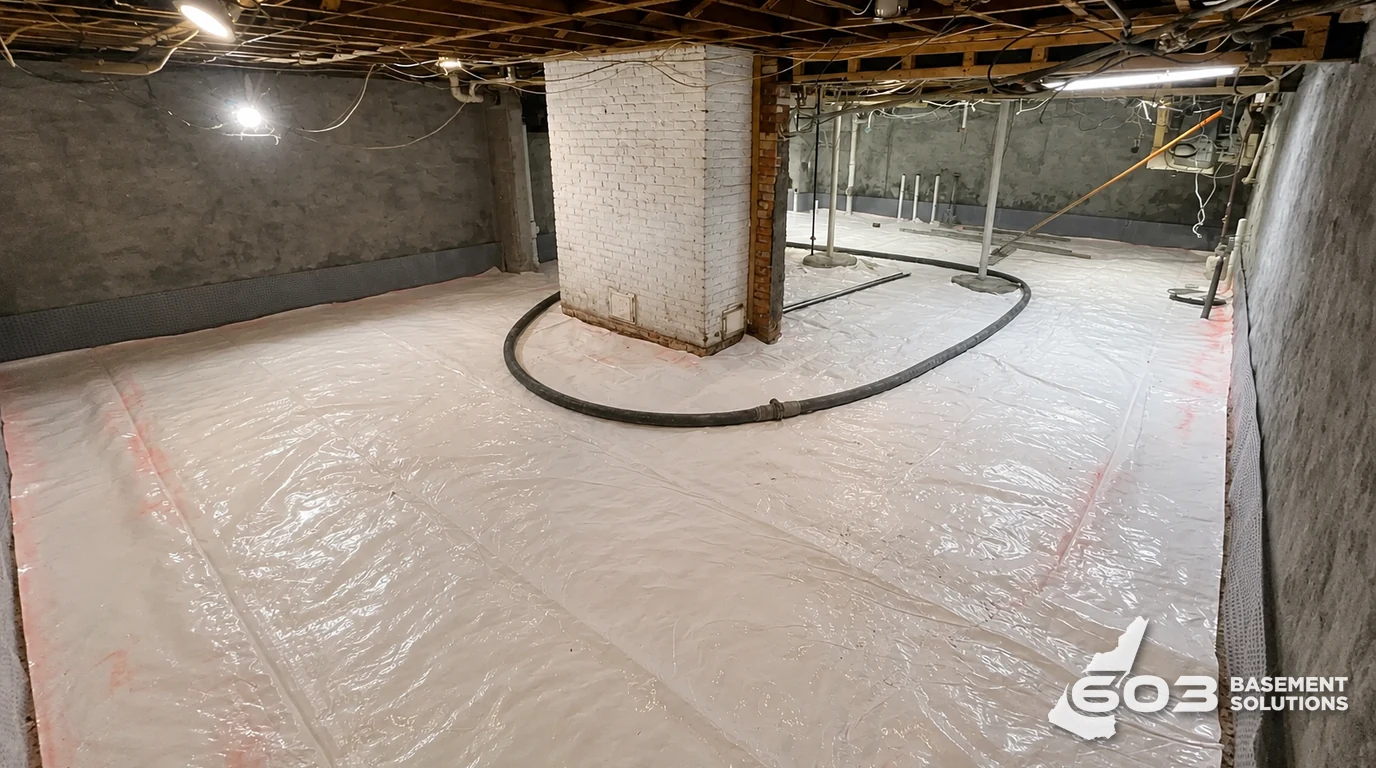
A useful estimate starts with measurements. You should see the elevations taken, the joints mapped, and the cracks described by width and location. The scope should say what is structural and what is cosmetic, and it should list what is excluded. If a town-side question exists, it should be named as a question, not buried. In a hypothetical Raymond property, an estimate might note that the front landing joint is a trip hazard but separate from the load-bearing slab. That separation is the point. We do not claim a specific price, warranty, or method in advance. The written scope is the record you can compare against other bids.
Sometimes the right answer is no work. If the slab is stable, the cracks are dormant, and the connected symptoms are cosmetic, monitoring may be reasonable. A crack gauge or a photo log over a few months can show whether movement is active. In a hypothetical Raymond home, a basement floor with hairline cracks and no wall separation might not need structural repair. A smaller scope, such as sealing a joint or patching a trip edge, may be enough. We are willing to say that. The decision should follow the measurements, not a sales target. If nothing is moving, you may not need us.
Look at what moves with the slab. If a wall, post, or door frame is affected, that points to support. If only the surface is uneven and everything else is stable, it may be cosmetic. Measurements over time help. A site visit can map joints and elevations, then separate structural work from leveling. We do not promise a repair outcome before that.
Show us the concrete and we will tell you what is worth fixing, what can stay, and what still needs checking.