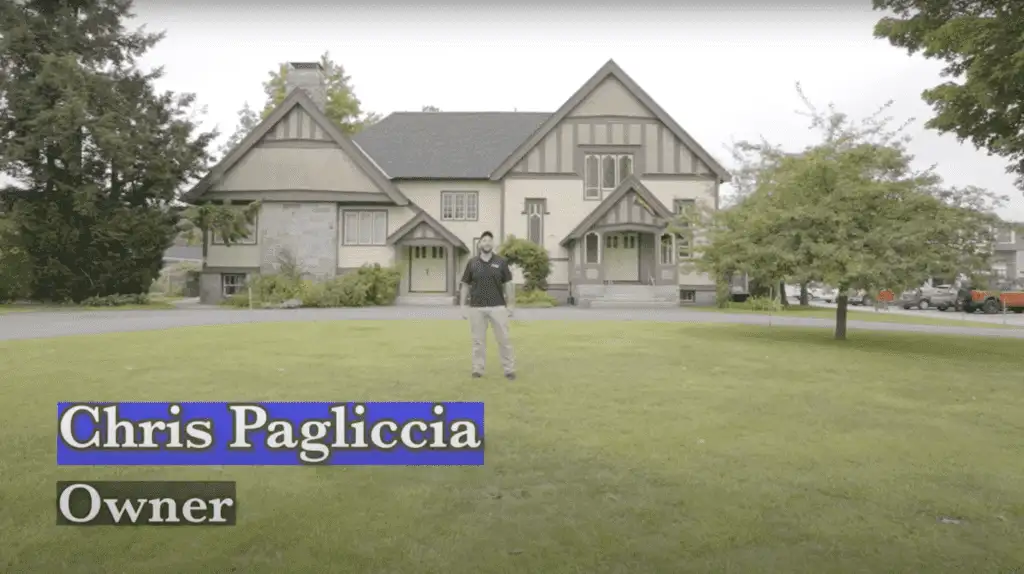

A dropped slab might be movement or just a bad pour. Here is how to tell before you spend.
A basement floor within another foundation may not carry the building.
Connected wall, door, and floor changes deserve measurement of the load path.
A dropped patio or drive belongs in concrete repair unless the house also moved.
Start with the affected slab and its load path. Measure elevations from fixed points, note crack width at repeatable locations, and check whether a bearing wall, post, or door opening has changed. A nonbearing basement floor can look uneven without moving the house. If the slab carries part of the structure, record whether movement continues before recommending support. The baseline should include dated photos and what could not be seen behind finishes; an isolated crack is not a complete diagnosis.
Not every slab needs a full rebuild. If measurements show no change over several months, monitoring may be reasonable. Small cracks that are not widening and do not affect support can sometimes stay as-is. Partial repairs might address a local trip hazard or a cracked edge without touching the load-bearing system. The key is separating cosmetic leveling from support. A slab that has dropped uniformly and carries no structural load may only need cosmetic attention. A slab that supports a bearing wall or structural post needs a different review. Heavy equipment alone does not make it a foundation. Ask what is being supported before agreeing to any work. The answer decides whether you are maintaining a surface or stabilizing a structure.
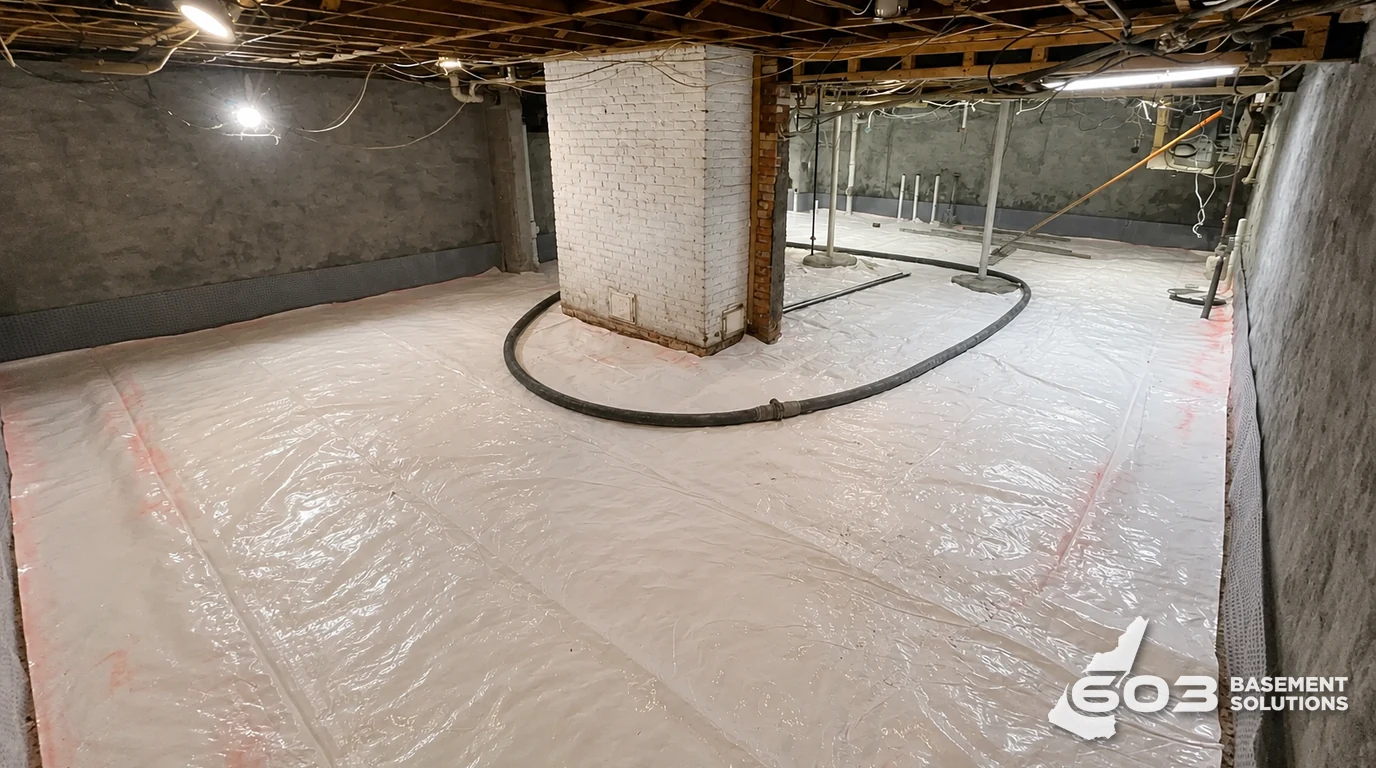
Support and cosmetic leveling are different goals. Cosmetic leveling tries to improve appearance or drainage at the surface. Support repair tries to address how loads transfer to the ground. ACI RAP-11 discusses slabjacking assessment, and ACI RAP-7 discusses horizontal concrete repair preparation. For a load-bearing slab, the method depends on what is moving and why. A design professional may need to evaluate soil, drainage, or structural connections before any repair is chosen. Do not accept a method before the cause is understood. The right sequence is diagnosis, then engineering review if needed, then a scope that states what will and will not be repaired.
ACI’s structural-slab distinction is general technical guidance, not a specification for this house.
Salem’s Inspectional Services permit page provides building applications and an online-permitting route. That makes a defined scope important for foundation work. A proposal should identify the bearing slab or footing and the measurements supporting the diagnosis. It should say whether a design professional is needed. We can then confirm the applicable review path with the town. A Salem address does not, on its own, determine the repair method or permit requirement.
Read the Salem source. We check the approval path against the proposed scope.
Some problems fall outside a load-bearing slab repair scope. Outdoor flatwork, such as a driveway entrance or patio, may involve drainage or access issues that a structural quote should not absorb. Basement floor slabs that are not load-bearing are a separate concern. If a repair is sold as a road-access project, you may pay for work that does not address the structural slab. Other risks include hidden voids, poor drainage, or soil movement that continues after a repair. If the cause is not addressed, a repair may not last. Ask what is excluded and what could change the scope before signing.
A foundation slab may be hidden by flooring or partitions and crossed by plumbing, wiring, or radiant heat. Access and temporary support must be considered before specifying demolition or injection. If water is present, trace it separately rather than assuming the crack is the cause. We record the limits of what can be observed and avoid promising a structural result until the bearing points and movement have been established.

A written estimate for slab and foundation repair should state what was measured and what was excluded. Ask for elevation readings, crack width notes, and photos with dates. The estimate should name the areas included and any areas left out, such as driveway entrances or basement floors. Do not accept a price that mixes structural repair with cosmetic leveling or outdoor flatwork. If the estimate does not explain how movement was established, ask for that explanation. A clear scope helps you compare options and decide whether monitoring is enough. The goal is a decision you can defend, not a promise of a specific outcome.
If repeat measurements remain stable and the slab is not carrying a building load, monitoring may be preferable to structural repair. A small nonbearing floor patch might address wear but should not be represented as stabilization. Mark reference points and compare dated photos. New separation at a bearing wall, continuing elevation change, or a shifting post would change the recommendation and justify a closer structural assessment.
Start with measurements: elevation differences, crack width changes, and whether posts or walls have moved. If the slab carries a load and is still moving, a design professional may need to review. If it is stable and not load-bearing, monitoring or cosmetic work may be enough. Keep outdoor flatwork and street-entrance concerns separate from the structural scope. Ask for a written estimate that states what was measured and excluded.
Show us the concrete and we will tell you what is worth fixing, what can stay, and what still needs checking.