



A cracked floor beside a basement column needs a beam and footing check before a structural sale.
A cracked basement floor beside a steel column in a Somerville house does not tell us what carries that column. It may stand on a separate footing under the floor. It may be part of another designed support detail. The floor around it may only be a walking surface. 603 Basement Solutions follows the beam load down, measures the column and floor, and checks old work records before recommending a structural repair. If the support is sound, you may need no pier or structural slab work at all.
We look at what the column holds and whether the beam sits squarely on it. Gaps, altered shims, damaged connections and a changed floor elevation are observations worth recording. They are not a diagnosis by themselves. We also ask when the crack appeared. Did it follow a renovation, an opening cut for plumbing or a long period of slow change? Photos taken before a remodel can be more useful than a close-up of the crack today.
The floor must be mapped separately. We mark crack ends, width and any vertical step. We compare elevations at repeatable points around the column, the walls and other supports. An old saw cut or patch may explain a straight line without explaining an upstairs door that now sticks. The two observations should not be mashed into one story merely because they occur near each other.
The concrete can cover a footing, utility, old drain or previous patch. We do not know the footing size, condition or bearing from a photograph. If the load path remains uncertain, a targeted opening may be justified, but only with a plan to keep the support safe. We would not saw around a column that might be loaded and call that an inspection. An engineer or qualified structural professional may need to define temporary support and a permanent repair sequence.
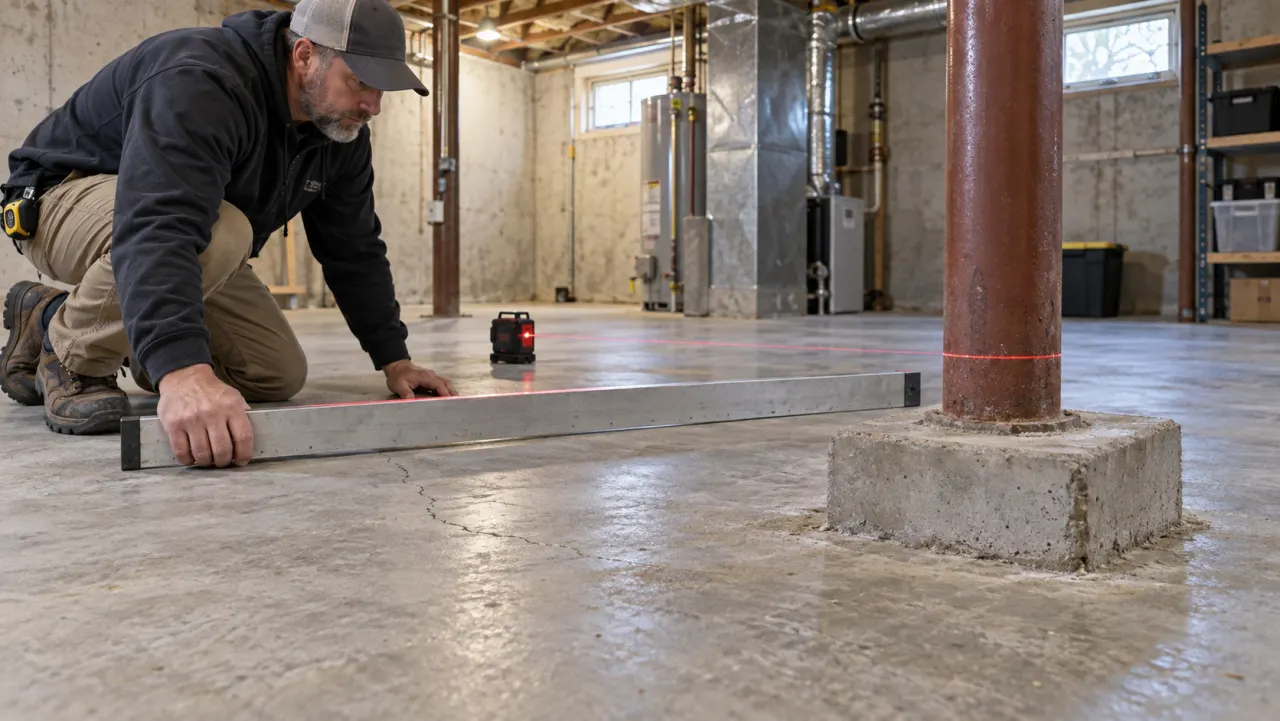
ACI’s slab-on-ground explanation distinguishes floors carried by soil from slabs intended to transmit loads. ACI’s residential concrete guide treats footings, walls and slabs as separate subjects. Neither document tells us what is beneath your Somerville column. We have to establish that on site. A crack in a nonbearing floor can be real and worth fixing without meaning the house is sinking.
If a stable surface is chipped, concrete repair may address the damaged area after its cause is understood. If a separate sound panel has settled, concrete leveling can be evaluated without treating the column as a lifting point. A floor that has widely failed may call for new slab pouring with a base and moisture plan. None of those surface jobs restores lost bearing at a column footing. If the bearing itself has changed, structural and foundation repair becomes the lead scope.
A new pour can hide the old crack and still leave the beam unsupported. A pier or other support system is not justified by a crack alone. We explain which element carries load, what evidence shows movement, and which repair would actually change that condition. No fixed product is chosen from a city name.

Somerville’s Building Division handles building plan review and inspections. It tells owners to contact its inspectors if they are unsure of the permit route. That matters if the proposal changes a structural support or requires an investigative opening. We would define the intended work and ask the city about the appropriate review. We are not claiming that every floor crack needs a permit or that a particular house has passed inspection.
In a finished cellar, access can be the hard part. A beam may disappear into a ceiling and a column base may be boxed in. We first ask what can be opened without damaging utilities or occupied space. A useful estimate states what can be concluded from visible measurements, what cannot, and the decision that an opening is meant to settle. That is better than a quote that quietly assumes the concealed footing is sound.
We compare the old and current framing plans if they exist. A removed wall, shifted post or new opening can redirect load even when the floor was not touched. The important evidence is where that load now lands. If drawings are missing, measurements and a controlled opening may be the only way to answer it. We would separate that investigation from any promised repair, because its result may change the design. A homeowner should not pay for a new slab merely to find out whether an old renovation was sound.
If monitoring is chosen, mark the same points and photograph them with dates. An engineer can say what change would trigger action if the support is uncertain. Monitoring is not a substitute for shoring a visibly failing column. It is an option only when the observed condition and professional judgment allow it. The quote should spell out that boundary, so “wait and see” is not a vague way to leave you with an unsafe support.
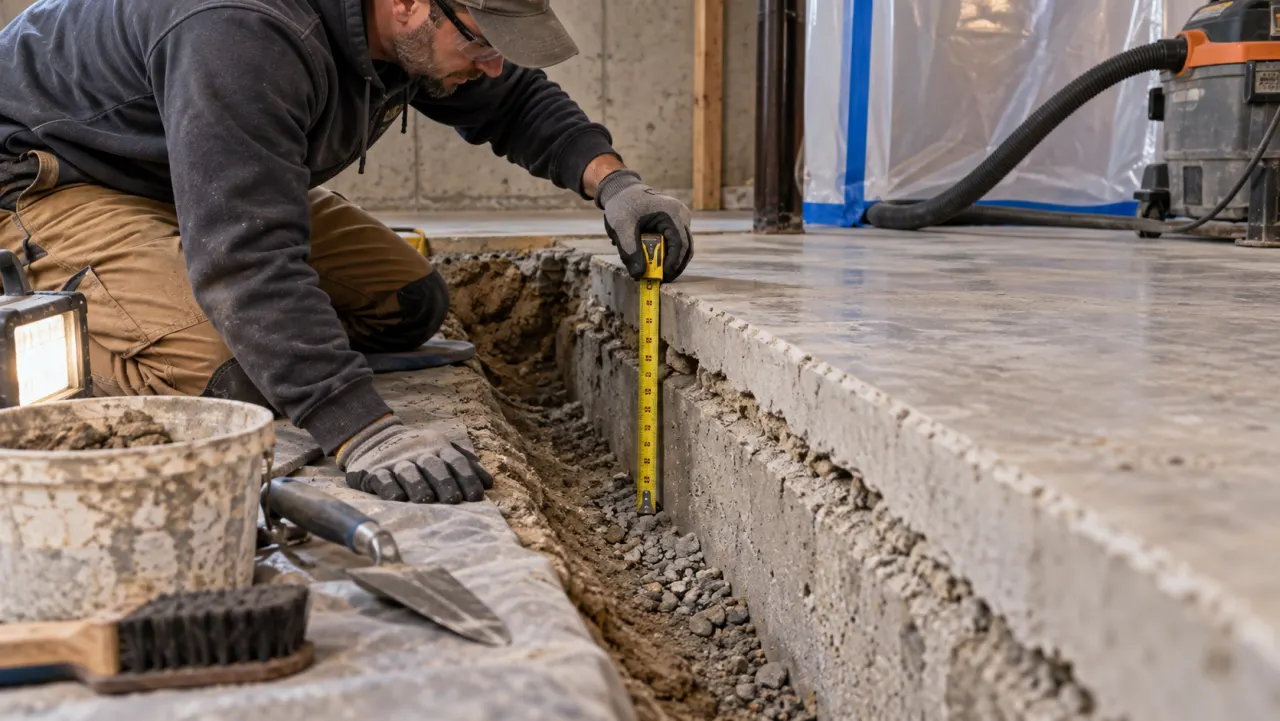

Google review · Customer experience
Scott Sieper ★★★★★
“Great job with our foundation project. We had 4 piers installed to prevent further settling and interior concrete leveling work done in the basement. Highly recommend. Would do business with again.”
Ask where the beam load travels, how the column base is supported, and which measurements will be repeated. Ask whether previous renovations changed the support path. If a footing is found, who assesses it? If it is sound, what modest floor-only work is left? If it has moved, who designs temporary support and verifies the finished load path? The written scope should separate diagnosis, access, stabilization, floor restoration and municipal review.
Do not buy structural slab work because the floor looks uneven in a single photo. Do not let a cosmetic patch conceal a worsening beam gap. Send 603 wide shots showing the beam, column, wall and surrounding floor, plus any dated renovation photos. We will start with what carries the house. Then we can tell you whether the crack is a surface job, a structural warning, or a condition to monitor.
Show us the affected concrete. We will explain what we measured, what can stay, and which scope fits the house.

