



A floor crack near a steel column needs a beam and footing check before a structural sale.
A crack in a Wilmington basement floor near a steel column does not prove the house has a failing slab foundation. If the beam above the column has a gap or the column base appears to have moved, however, the support path deserves attention before anyone fills the crack. 603 Basement Solutions looks at the beam, connections, column, footing evidence and surrounding floor separately. A nonbearing floor may need monitoring or concrete repair; a bearing point that has lost support needs a structural plan. Neither conclusion can be reached from a close-up of the crack.
We ask what the steel column supports. Which beam bears on it, and which floor framing bears on that beam? We note any gap between beam and column cap, rusted or altered connection, leaning column or change in door and floor behavior above. A beam gap can have more than one cause, including an altered post, framing shrinkage or support movement. We do not call it settlement without measuring the rest of the system. Photographs taken from the same location over time can help distinguish a recent change from a long-standing detail.
At floor level, we measure crack width and offset at repeatable points and see whether the line continues across the room or stops at an old patch. We check the column plumb and compare nearby floor elevations. The top of a concrete floor may hide a separate column footing; it may also hide a thickened area or previous repair. We look for plans and accessible construction details. If the detail remains unknown, a qualified structural professional may need to specify the investigation. A sawcut around a loaded base is not a casual first step.
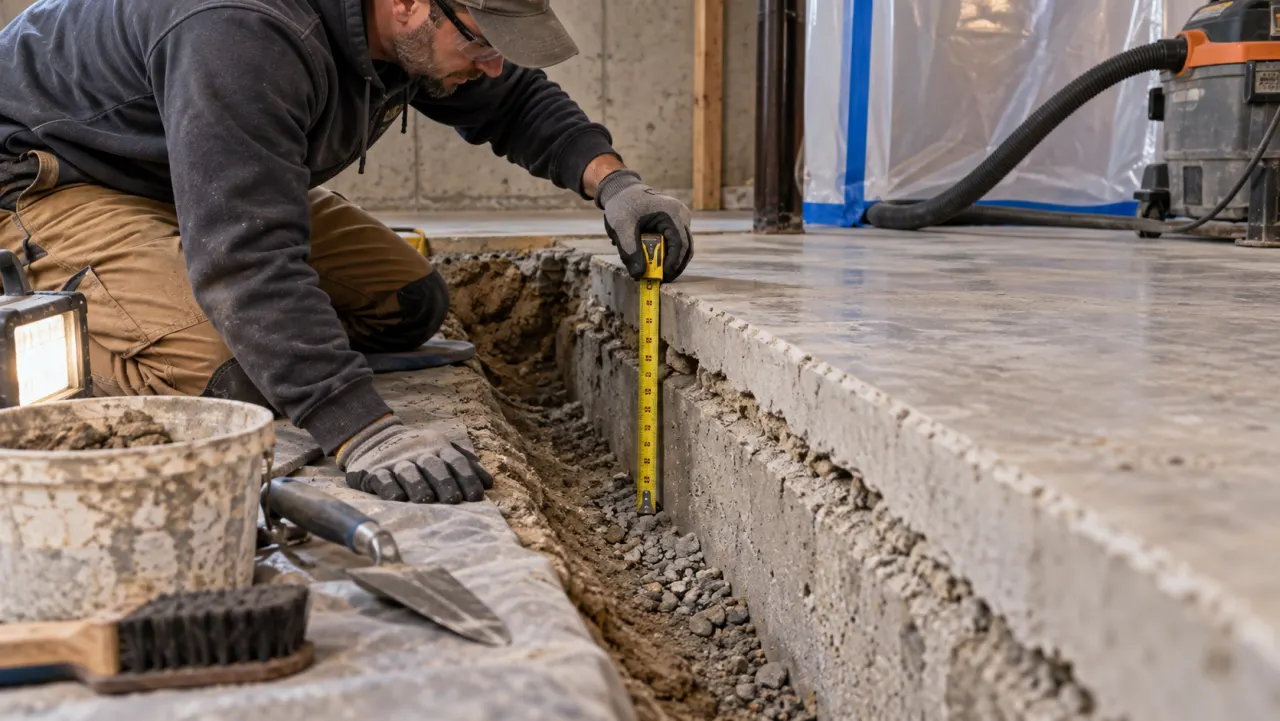
If exposing concrete is justified, the proposal should state exactly what the opening will reveal and how the beam will remain supported. Utility lines, a finished basement and previous slab work affect access. A small targeted opening can answer a bearing question without selling an entire new floor. If records and non-invasive measurements show no structural concern, opening the slab may not be warranted at all.
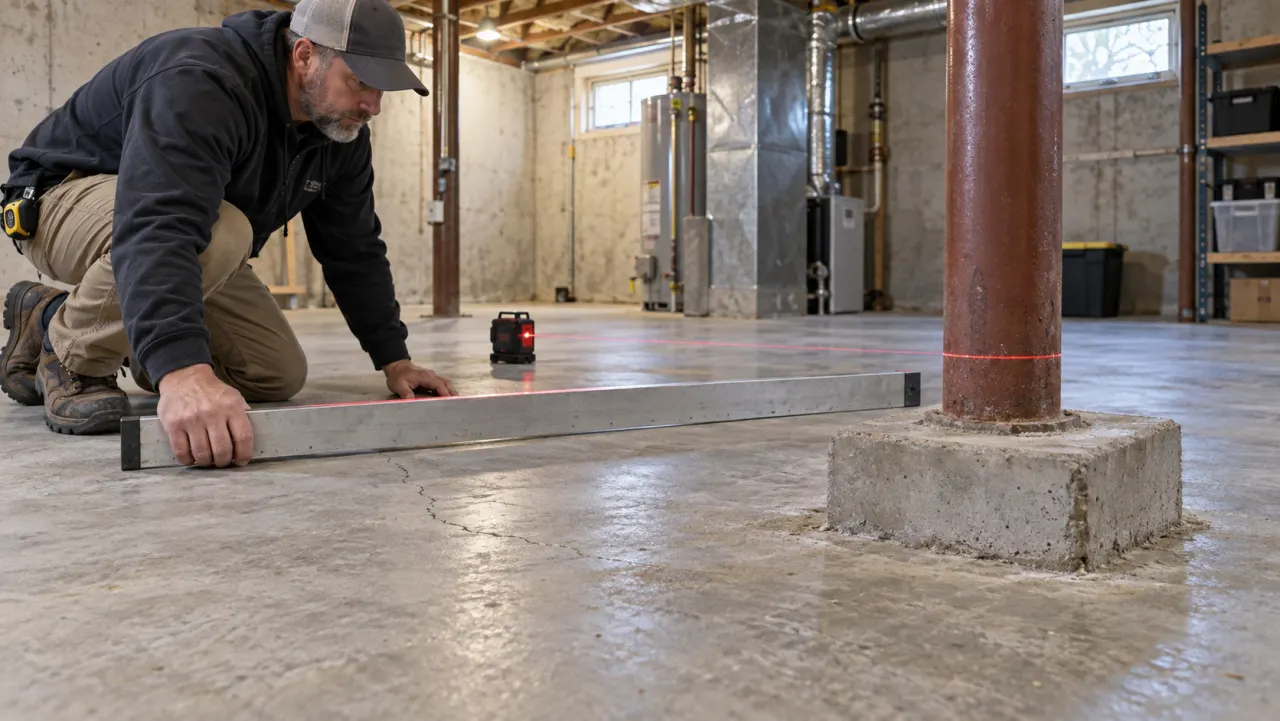
ACI’s slab-on-ground FAQ separates soil-supported slabs from slabs that transmit structural loads. ACI 332.1-18 addresses residential slabs and footings generally. Neither source can tell us what is under this Wilmington column. A floor crack can be a shrinkage or base problem while the footing remains sound. Conversely, a small surface mark may accompany a meaningful change at the column’s bearing point. The repair target follows the verified load path, not the largest visible crack.
If the column footing needs work, the estimate must identify how support will be maintained during investigation and repair, who designs the remedy and what measurements trigger it. We do not prescribe a pier count, bracket, grout or injection from a city page. A floor overlay or new slab pour cannot by itself restore a deficient footing. Structural and foundation repair is the relevant owner service when the bearing system needs assessment.
If the support is sound, the floor can be considered on its own terms. A bounded chip or stable crack might call for concrete repair. An intact dropped panel could be evaluated for concrete leveling only after confirming the lift will not affect the column. A widespread floor failure might justify replacement, with the column and footing isolated and protected. The least disruptive valid scope depends on the evidence, not on the service name in a search result.
A damp line beside the column might involve a floor crack, wall-floor joint or plumbing. We ask when it appears, whether it follows rain, and whether a service line crosses the area. Basement waterproofing addresses a verified water path, not an unstable beam. Likewise, drying the room does not prove that the column is adequately supported. We record moisture, framing and floor evidence separately so one symptom does not stand in for another.
We also ask about prior basement finishing or floor replacement. Old excavation around a post may explain a patch outline; it does not establish that today’s footing has failed. The inspection should distinguish observed conditions, owner history and concealed unknowns. The proposal should make the same distinctions, especially if a discovery allowance is required after the floor is opened.

Google review · Customer experience
Aimee Workum ★★★★★
“The initial inspection was extremely thorough. Liam took the time to inspect not only our basement, but the entire house. He was very knowledgeable and provided helpful feedback on additional items we should keep an eye on.
The Phase 1 support installation went smoothly. The lead installer was also highly knowledgeable and took the time to answer all of our questions, including those beyond the scope of the installation and related to Phase 2.
Overall, we are very pleased with 603 Basement Solutions and plan to use them again for Phase 2 in the future.”
The Wilmington Building Inspector’s applications page lists building and demolition forms. Once the actual beam, column, footing and floor scope is clear, we confirm the applicable local process rather than asserting that every cracked floor requires a permit. The source is an administrative route, not evidence that a Wilmington property has a particular footing, soil or construction era.
Ask a contractor to identify the element carrying the beam, what changed, and what would disprove a structural diagnosis. A useful written scope distinguishes floor-surface work, targeted investigation, temporary support, permanent repair and restoration. If a hidden condition changes the design, the homeowner should know who makes that decision before demolition begins. That is more valuable than a single line item called “slab repair.”
Do not buy piers or a full floor replacement because a stable crack happens to point toward a steel post. Do not cover a changing beam gap with patch material. If the column, beam and footing remain sound, limited repair or monitoring may be the right answer. If support has changed, address it before cosmetic concrete. Send 603 wide photos of the beam, column cap and base, full room, crack and any dated comparison. We will explain what the evidence supports and what still needs to be opened or engineered.
Show us the affected concrete. We will explain what we measured, what can stay, and which scope fits the house.

