



Coordinate a basement pipe move beside a post without confusing walking-floor restoration and loaded footing repair.
A Winthrop homeowner planning a basement post-pad repair at the same time as a plumbing relocation needs a scope and responsibility map before opening the floor. A building permit path and licensed-trade permit path may differ; neither resolves the hidden bearing question. 603 Basement Solutions should trace the beam load, map the pipe, measure the post and walking floor separately, and use a controlled exposure when the footing boundary is unknown. If bearing is sound, the repair may be limited to the pipe and walking slab. If loaded soil or concrete is compromised, stop before backfill and develop a structural detail.
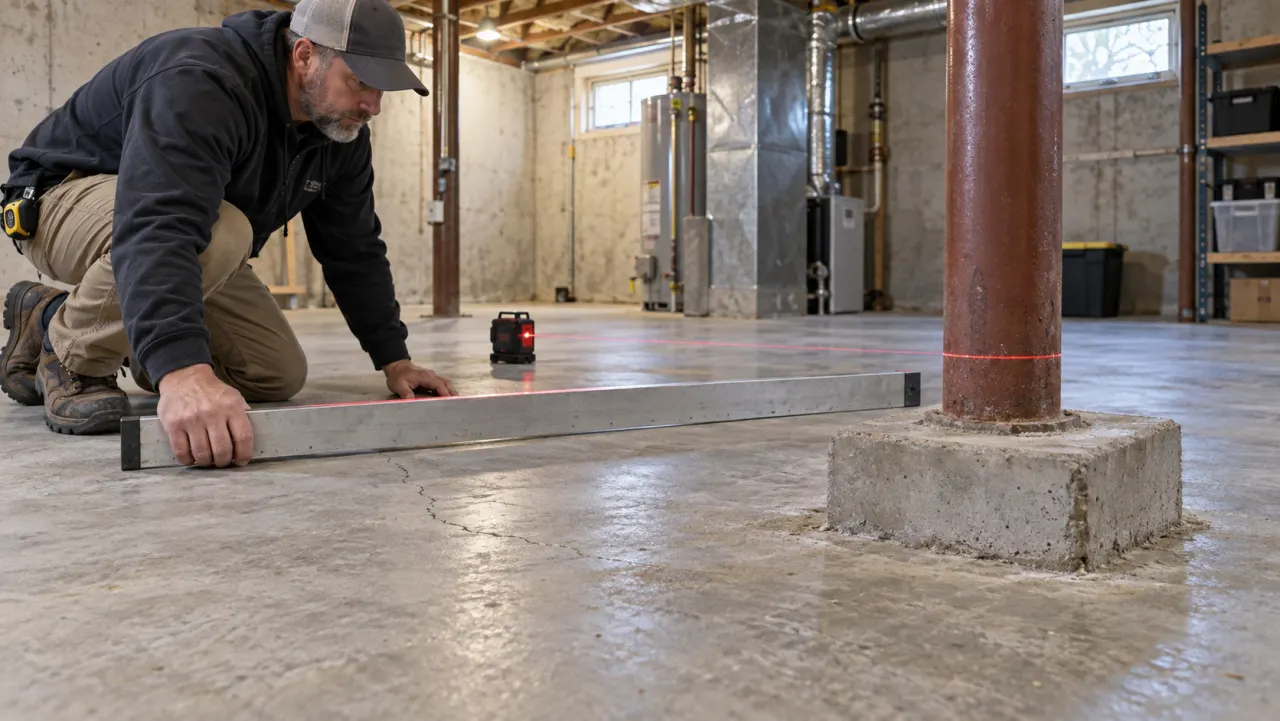
Put the beam, post, wall, suspected footing and proposed pipe trench on the same sketch. The visible post base does not show how far its buried pad projects. A later floor pour may hide the pad edge. A pipe route that appears clear at the surface can disturb soil beside the footing; proximity alone does not mean bearing has already failed. Locate other utilities before sawing and agree on how the post will be protected if the opening reaches loaded concrete. The contractor should be able to say what it will not cut without further direction.
Take fixed-point floor readings and separate beam and post measurements before work. Photograph crack width, post contact, water and old patches with a ruler. Ask when the pipe problem started and whether the beam or doors above changed over the same period. A walking floor can sink over a trench backfilled poorly while an independent post remains stable. A post can move even if the floor was recently resurfaced. These outcomes require different contracts. Do not describe both as “the slab settling” without identifying the loaded element.
Define an investigation stage with a stop-work rule. The first opening should reveal whether the floor abuts an independent pad, whether a void is confined to walking-floor base, and whether the pipe can be moved without disturbing support. If the condition is unclear, the response is not to make a larger unplanned cut. It is to reassess the support, utility route and possibly temporary bracing. Name the person who interprets unexpected findings and the person who can authorize a revised structural scope.
Photograph floor thickness, base, footing edge, water, voids and pipe depth with a scale before backfill. Keep a location drawing with the image set. If the pad is sound and post measurements are stable, the structural option can be canceled and the job narrowed. If soil is missing beneath loaded concrete, the post has a new gap or the beam is changing, pause closure and obtain structural direction. A smooth patch cannot verify buried bearing after the fact.
Coordinate the pipe work and structural work as separate stages. A licensed plumber may need a trade inspection of the route while the building scope may require its own approval or observation if loaded support is altered. Do not assume one signoff answers the other question. Ask the department which stages apply to the defined job and do not conceal required work early. If an owner pulls an eligible building permit, that choice does not authorize the owner to issue a plumbing permit. The record should say who did each part of the work.
ACI’s slab-on-ground FAQ distinguishes a soil-supported floor from concrete transmitting a building load. A bounded utility cut through sound walking concrete may need concrete repair after pipe and base restoration. A separate sound dropped panel might qualify for concrete leveling if the support and drainage are suitable. A broadly failed basement floor could require concrete slab pouring with defined base, moisture, joint and curing details. None of those outcomes alone strengthens an independent post footing.
If the post pad, bearing wall or its soil is deficient, move to structural and foundation repair. The design may include temporary support, a revised footing, soil and water correction or another engineered load transfer. Do not select a pier system from a trench length or one crack. Ask what will carry the beam after repair and how its condition will be measured. An old floor slope may remain even after support is stabilized, and a new level floor may not improve a moving post. Define the intended outcome before price.
A pipe leak can erode fill beneath floor or pad. Perimeter seepage and condensation can wet the same area without causing settlement. Follow the timing and route of water. Fix an active leak before restoring base, and separately evaluate whether loaded soil was affected. Do not buy underpinning for a wet spot without evidence of support failure; do not buy only waterproofing where a pad is visibly undermined. Put utility, water, walking floor and footing findings on separate lines.
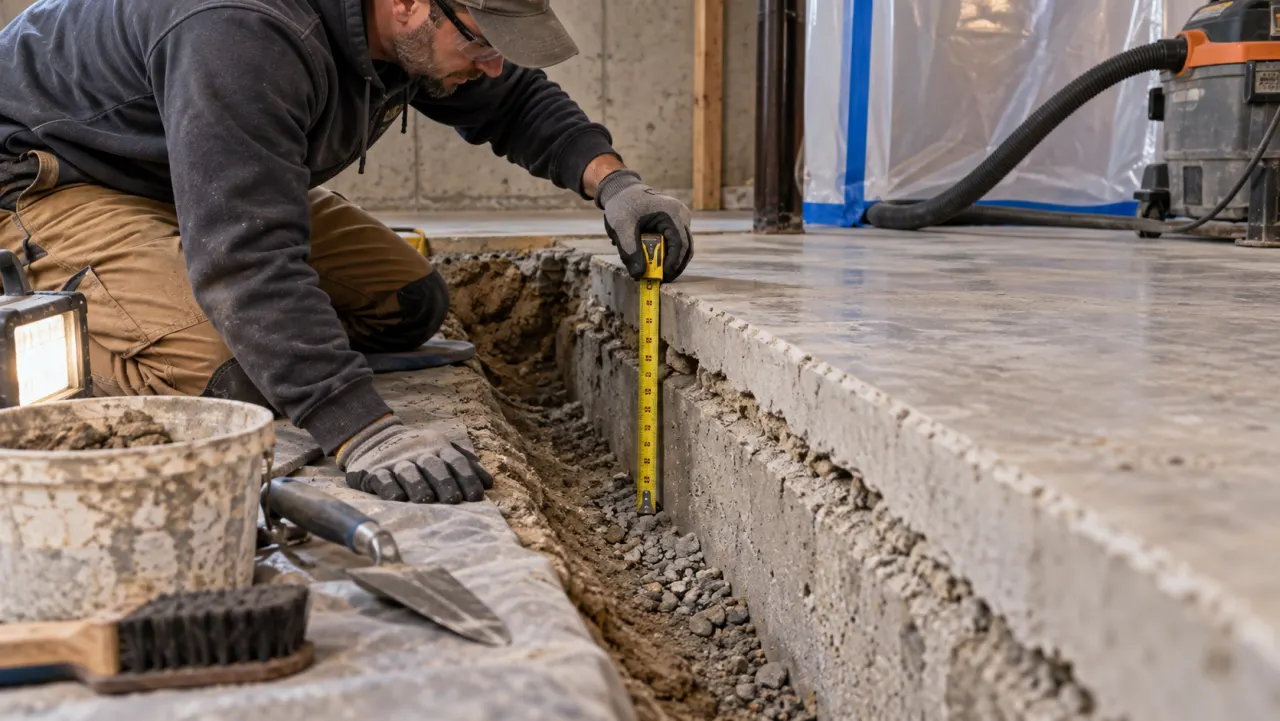
Ask for a utility map, load-path sketch, floor and framing baseline, opening limit, protection of the post, stop-work condition and who interprets exposed findings. Price an intact-support path and a deficient-support path, with a measured trigger for the latter. Include backfill, compaction, vapor-layer repair, concrete placement and curing, inspections as applicable, access, dust control and final photographs. A pipe-only bid and a footing bid are not alternatives until their assumptions are reconciled.
Avoid an open-ended allowance for “foundation surprises.” If the support is sound, structural work should be removable. If a loaded pad is damaged, the floor-only plan should pause. Require the contractor to explain which materials will be left untouched and how the area will be protected before it can be used again. A crack-free guarantee for ordinary concrete is not realistic; a measurable performance scope is more useful.

Winthrop’s Building Permit Information says a permit must be obtained before constructing or altering a structure. It describes a homeowner exception for qualifying owner-occupied one- or two-unit dwellings, while plumbing, gas and wiring permits are issued only to licensed trades. These are general rules, not a claim that every small floor patch needs a building permit. Bring the specific post-pad and pipe scope to the department and ask how the building and trade stages should be coordinated.
An owner-managed project can still require a qualified person to assess a loaded footing. If the exposure changes the planned structural work, document it and clarify the revised approval or inspection before closure. Keep permit and trade records with photographs of the open condition. They show what was reviewed; measurements and field exposure show what was present at this repair.
Do not buy underpinning because a pipe trench is near a post if the pad and framing are stable and only walking concrete was cut. Do not buy only a patch if loaded soil is missing or the post is losing contact. If neither state can be established, buy the limited test first. Ask 603 what result would make it cancel a structural recommendation. A credible contractor should be willing to recommend a smaller job when bearing is sound.

Google review · Customer experience
Dan Brunelle ★★★★★
“Rich and Chris did a phenomenal job on the estimation process, Angel and his team were professional and efficient. I would recommend this company!”
Bring the proposed pipe route, leak history, old floor photos and a wide view showing the beam and post. Mark the trench and crack locations. Do not dig beside a loaded pad yourself. Ask 603 to provide separate utility, floor and footing findings, temporary-support and inspection triggers, and conditional prices for the two outcomes. The point is to leave the house with a documented load path and a working pipe, not merely with a closed floor.
Show us the affected concrete. We will explain what we measured, what can stay, and which scope fits the house.

