
Quick Answer
603 Basement Solutions handles foundation movement and support problems in Waltham, Massachusetts for foundation movement, wall displacement, framing deflection, column concerns, and failed sill material. Inspection determines whether the answer is deep support, wall restraint, framing support, replacement wood, a limited crack repair, or monitoring. The next step is a free inspection followed by a written estimate.
Check the structure without making the house harder to use
A crack, low floor, or questionable post deserves a structural answer. It also sits in a basement where people use the stairs, do laundry, reach utilities, and store belongings.
We trace the load first. Then we explain what access a repair would actually need and what can stay usable while the work happens.
What Waltham’s townwide housing number can tell us
Waltham’s median housing year is 1962 in the 2023 American Community Survey. That citywide figure does not identify occupancy, construction, or repair history at one address.
The useful facts come from your house. We look at what changed, what remains firm, how the rooms connect to framing below, and which areas the household needs every day.

Foundation Problems, Inspection Points, and Possible Repairs in Waltham
| What you are seeing | What 603 inspects | Possible repair |
|---|---|---|
| One outside corner appears lower than the rest | Follow the settled section from rooms above to its contact with the ground | Monitoring remains an option when current movement is not established |
| A stair-step pattern appears with wall displacement | Document deflection while reviewing masonry condition and water management | Repair may focus on restraint, drainage, rebuilding, or a combination |
| Doors bind above a low support line | Trace joists through beams, posts, connections, and supporting footings | A new footing or column may be paired with beam and sill repair where needed |
| A vertical, horizontal, or stair-step line raises concern | Compare the repaired area with measurements from adjacent walls and floors | Repointing, drainage, or stabilization answer different fieldstone conditions |
603 confirms the failed component before pricing work at a Waltham property.
Typical Foundation Repair Pricing
Current helical-pier pricing gives homeowners a commercial reference point. For current foundation-repair work, 603 prices the first, second, and third helical piers at $2,700 each. Later piers are $2,200 apiece, while a typical Massachusetts structural piering project costs $12,000 to $18,000 or more.
That formula does not price wall reinforcement, structural wood, columns, slabs, or crack work. See the helical pier cost guide for worked pier-count examples; the free Waltham inspection supplies the actual written scope.
Start with what you can see
A door recently began rubbing
Check the floor and support below before adjusting the door.
Laundry makes the floor vibrate
Separate ordinary vibration from a static support problem.
A post sits beside a busy path
Inspect its load and bearing before discussing relocation.
The wall line looks different
Measure the whole wall instead of judging one mark.
Trace the symptom before planning access
We measure the room and follow joists, beams, posts, walls, and bearing below. We carry readings into a stable area instead of stopping at the obvious low spot.
Only after that do we know whether the repair needs a small opening, temporary support, wall access, or no disruption at all.
Keep support and floor movement separate
A column can improve support while an old slope remains. Trying to flatten the floor may affect tile, trim, doors, cabinets, or plumbing.
If adjustment is considered, we explain the modest target and stopping conditions. You can choose support without buying a promise of perfect level.
Fit the repair into ordinary use
We show which stair, utility, laundry area, or storage path is affected and for how long. Belongings only need to move from the actual work route.
At the end, the structure is checked against the promised result and the household areas are returned to safe use. Those are plain, separate checks.
Start with the room you are trying to keep usable
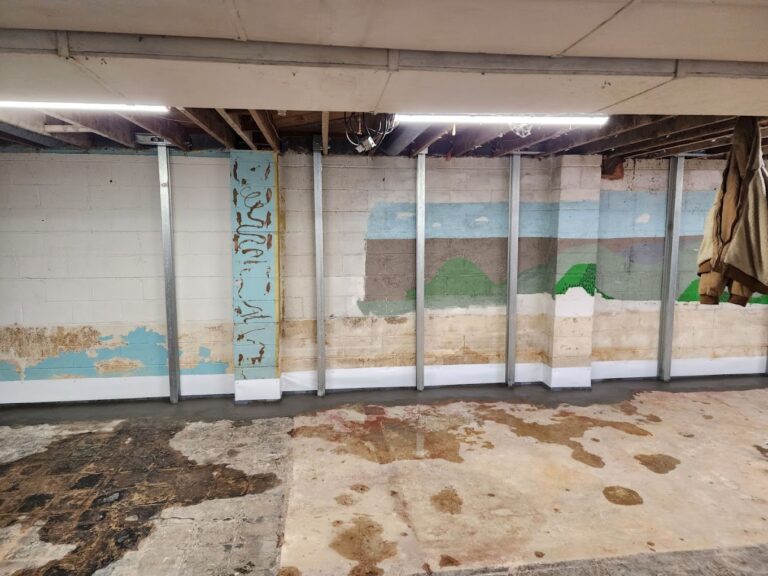
Tell us what must stay open while the repair is being considered. That may be a basement stair, laundry, electrical panel, storage path, or a room used every day. Then show us the crack, low floor, bowed wall, or support that caused the call. The house still has to work while its structure is checked.
That does not change the repair decision, but it can change access and the order of work. We look for a route that protects the household without placing equipment or stored items in the way of a loaded support.
What the symptom may mean
A sticky door and a sloping floor may point to one support line, or they may be unrelated older conditions. A wall crack may need sealing, bracing, or only watching. We do not combine symptoms until measurements show they belong to the same load path.
This is also where we may tell you the smaller answer. If the structure is firm and the mark is stable, monitoring can be more useful than opening a finished room or installing a system.
What 603 checks in an occupied Waltham home
We trace the concern from the room to the framing below. We check joists, beams, posts, wall shape, footing areas, connections, and nearby utilities. We record doors and finishes that could respond if a floor or wall is adjusted.
Before work, you should know which areas need access, whether a utility is affected, and what can remain in place. The written quote should keep those practical details beside a clear description of the structural work.
When the house can keep doing what it is doing
A period of watching may be reasonable when the supports are sound, measurements are stable, and ordinary use is not changing the condition. We can mark cracks and floor points so the next comparison is based on more than memory.
Call sooner for sudden floor movement, a leaning post, lost bearing, a rapidly opening crack, or a door that changes over days rather than years. Leave the area visible and avoid tightening or patching before the inspection.
Make the Waltham visit easier on the household
Clear a safe path to the concern, but leave the crack, post, beam, and nearby finishes visible. Tell us which stair, laundry area, panel, or storage route must stay usable. We can inspect around daily life without pretending the house is an empty jobsite.
Write down what changed and when. A door that began rubbing last week deserves a different first look from a floor that has felt the same for ten years.
If several people use the space, one homeowner can walk us through it. We do not need names or a communication chart. We need the symptom, the rooms connected to it, and permission to reach the visible structure safely.
We can also explain how the work would affect the day, not only the structure. You should know whether stairs, laundry, utilities, or stored areas need to change and for how long. A practical plan lets the household prepare without turning ordinary access into technical jargon.
Laundry vibration, a heavy storage shelf, or normal foot traffic can make a floor feel different without showing structural movement. Tell us when you notice the sensation and whether it happens only during use. We check the static structure first and keep those everyday effects in context. This helps prevent a harmless vibration from being turned into a repair recommendation while still taking a true loss of support seriously.
Check a Waltham slab without turning the room into a work zone
A finish crack or uneven floor in an occupied Waltham room may sit above a basement surface, not a building-supporting slab. We begin with accessible wall, floor, and door references and identify whether the concrete carries any of that load. Displacement, continued crack change, or corresponding movement at a bearing point can justify a focused opening or deeper review. The least disruptive defensible outcome may be monitoring or crack repair; confirmed structural movement can lead to stabilization or replacement. The slab foundation repair service describes that latter path while keeping protection, access, and restoration inside the written boundary.
If the floor or beam needs support
We follow the Waltham floor load through joists and beam to the post base and bearing below. A new column is useful only when it sits under the load that needs help. 603 lally columns usually cost $1,300 to $2,500 each, and the treated support area has a 10-year settlement warranty.
If the wall is moving inward
We measure the full wall before choosing braces or straps. Power braces cost $1,300 each and carbon-fiber straps cost $850 through 603. The treated wall carries a 25-year warranty within the stated limits. A stable leaking crack may need a smaller crack-repair scope instead.
If the footing section needs support
How pier selection fits this finding. A rubbing Waltham door helps locate a change, but piers require confirmed settlement at the footing. Push piers use the existing building for installation resistance, whereas helical piers advance by their helical plates. Building weight, footing condition, tight access, and the repair design decide between them. The occupied-room route and the structural finding should be coordinated without letting daily inconvenience choose the method.
Before your Waltham inspection
- Show what changed. Point to the door, floor, crack, wall, or support and say when you noticed it.
- Keep the route open. Clear a safe path, but leave the symptom and nearby finishes untouched.
- Identify stable rooms. A normal-feeling area gives floor and wall readings useful context.
- Ask for the smaller answer. We will say when monitoring or a focused repair fits better than a system.
Waltham foundation questions
Can the basement stay usable during an inspection?
Yes. We need a safe path and access to the concern, not an empty floor.
Does vibration mean the floor is failing?
Not by itself. We check the static support and connections.
Will a new post level the room?
Not automatically. Support and adjustment are different choices.
What if the readings are stable?
Monitoring may be the most sensible next step.
What 603 brings to the inspection
603 is licensed and insured, has worked in more than 5,000 homes, and self-performs helical-pier installation and structural lifting. The inspection and estimate are free. We normally send the written quote within 24 hours.
We will tell you when the house needs a smaller repair or a period of monitoring. If work is proposed, the scope should name the treated area, quantities, outcome, exclusions, and warranty.
Why Homeowners Choose 603 for Foundation Repair
603’s customer feedback and field documentation below give Waltham owners concrete evidence to weigh with the written scope.
Get the Waltham load path checked
We will measure the structure, explain the repair boundary, and give you a written scope you can compare.
Sources: U.S. Census Bureau, 2023 ACS 5-year table B25035. The city image caption links its Wikimedia Commons source and license. 603 supplied the confirmed service, pricing, warranty, and operating information. Work imagery shows a 603 repair method. See Structural and Foundation Repair or the Foundation Crack Repair service.