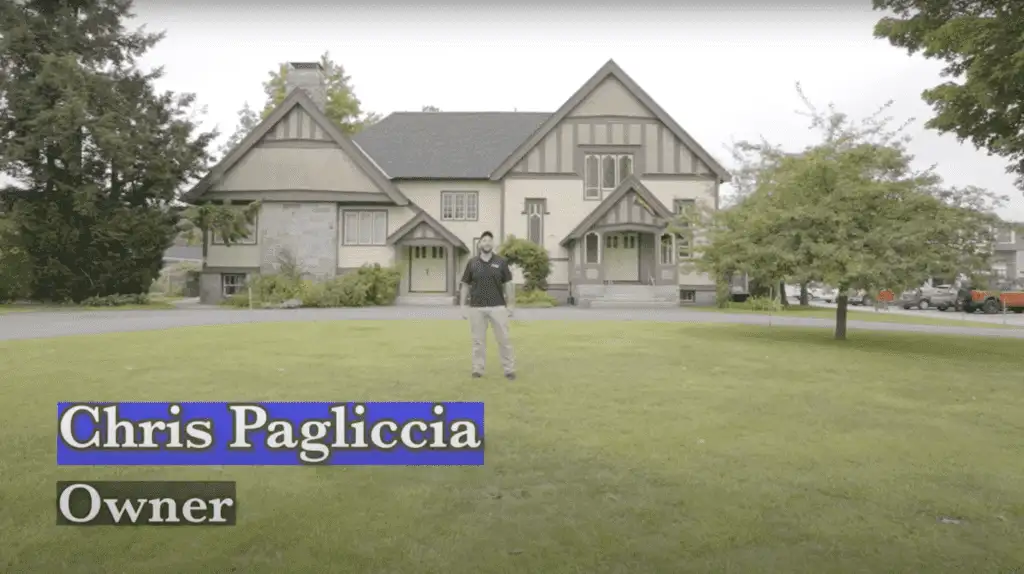
Driveways
Sunken sections, rough transitions, and edges that catch tires or snow equipment.




Uneven concrete repair across NH, ME & MA
One slab sitting higher than the next? We check whether the concrete is still sound enough to save. If it is not, we tell you what makes more sense.
Concrete leveling corrects a slab section that has dropped. 603 checks that the concrete is worth saving, identifies what the project needs, and ships the right solution for the condition in front of us.
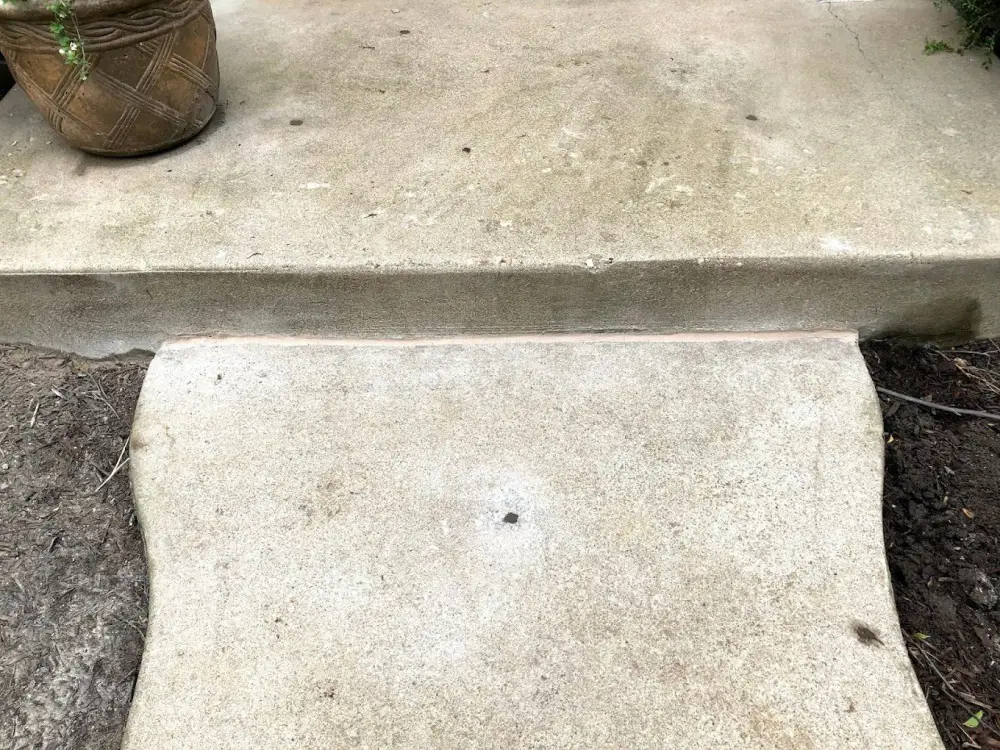
An uneven edge can catch a toe, hold water, or make a driveway feel rough every time you cross it. Covering the edge does not fix why the section moved. We inspect the condition of the concrete and the area around it first.
This service is for concrete that may still have useful life left. If the slab is badly broken, crumbling, or part of a problem under the house, we will recommend the more honest route. We do not force every uneven slab into one method or sell the same repair before we understand the cause.
Concrete leveling is part of our concrete repair services. Poly leveling is one possible method for a suitable slab. A walkway and a building foundation are different jobs; if the building is moving, start with foundation repair.
The visible lip is the result. The repair starts with the support and conditions around the slab.
A section can drop when the material below it no longer supports the concrete evenly. Water moving toward the area, erosion, disturbed fill, drainage changes, or a void below part of the slab may all be relevant. The pattern matters. One low corner tells a different story from several panels changing together.
New England weather adds another variable. Repeated freezing and thawing can change the ground around exposed concrete, especially where water collects. That does not mean every winter crack needs leveling. It means we look beyond the edge you can see before deciding how to correct it.
We also check where the concrete meets the home. A dropped walkway near a step is different from a basement floor that moves with walls, doors, or framing. If the symptoms point to a building-support problem, the right starting point is slab foundation repair, not a surface-only answer.
The slab condition decides whether leveling is a fit. Common places worth checking include:
Sunken sections, rough transitions, and edges that catch tires or snow equipment.
Raised joints and low sections near steps, doors, or paths around the home.
Sections that dropped, collect water, or no longer meet the surrounding surface cleanly.
Uneven panels around the pool where access and slab condition still allow a repair.
Local settlement or mismatched sections that are separate from structural foundation movement.
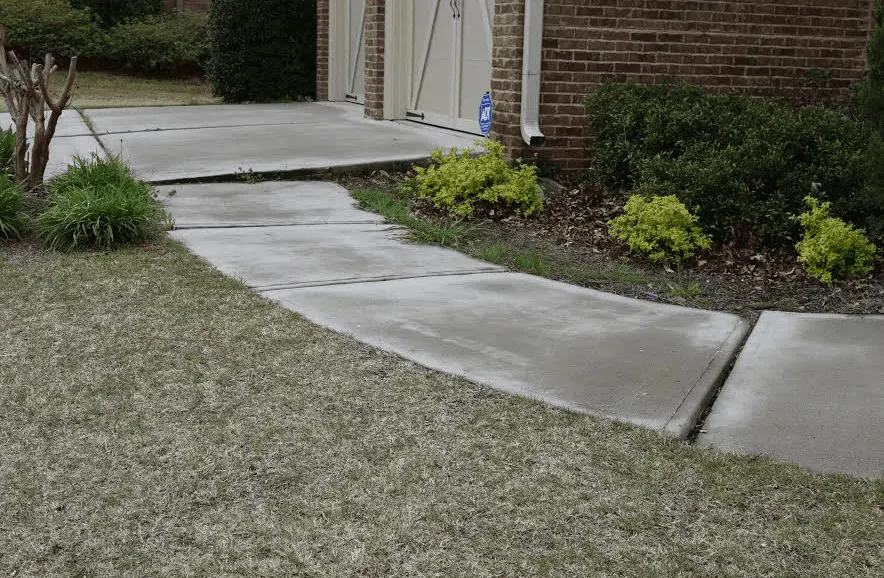
Cracks do not automatically rule leveling out, but their pattern and severity matter. A stable section with a limited crack may still be serviceable. Concrete that is breaking into independent pieces cannot be made whole by correcting its elevation.
We would rather recommend new or replacement concrete slab pouring than sell you a short-lived leveling fix on concrete that is already done. If neither service fits, we will say that too.
The service promise is the result: a repair plan matched to the slab, the cause, the surrounding structure, and the way you need to use the area.
Homeowners often arrive with a method name because that is what they found in a search. We start one step earlier. Is the slab still sound? Is the change local? Is water likely to keep undermining the area? Does the concrete meet a door, stair, garage, wall, or another fixed elevation that limits how it can move?
Those answers determine the scope 603 writes. The recommended solution may be a leveling repair, a focused concrete repair, replacement, structural work, or no immediate work. We explain the choice in plain language and put the actual scope in the proposal. That is more useful than promising one technique for every driveway, walkway, patio, or floor before seeing it.
The same rule applies to the finish. Leveling is meant to correct the position and function of existing concrete. It does not make worn concrete new, erase every stain, or guarantee that old cracks disappear. We identify the result the proposed work is intended to deliver before the job starts.
| Service | Best fit | What decides it |
|---|---|---|
| Concrete leveling | An existing settled slab that may still be sound enough to save | Condition, movement, access, and cause |
| Slab foundation repair | An existing slab that supports a building | Movement under the building and the repair plan |
| Concrete slab pouring | New construction or concrete that is beyond a focused repair | Use, load, drainage, base, and project design |
If you are unsure which one you have, that is normal. The free inspection is meant to sort it out.
Concrete-leveling price depends on slab size, the number of sections, access, concrete condition, and what caused the movement. We quote it after we see it.
A single walkway panel and several driveway sections are different jobs. So are an intact slab and concrete that is breaking apart. The inspection and estimate are free, and the written quote comes within 24 hours.
We do not use a national square-foot range as a 603 quote. The written proposal reflects the actual measurements, access, preparation, repair plan, and any related work confirmed during the inspection. Any warranty that applies to the selected solution is stated in that proposal.
Concrete leveling fixes a slab section that has sunk below the spot where it should sit. The slab first has to be in good enough shape to keep using.
It can be when the concrete is mostly intact and settlement is the main problem. Replacement is usually the better call when the slab is badly broken, crumbling, or no longer worth saving.
No. Concrete condition, access, the cause of movement, and nearby structures can rule it out. We inspect those points before recommending the service.
603 does not choose the repair from the search term alone. We inspect the slab and surrounding conditions, then ship the right solution for that project. The written proposal identifies the work we recommend for your concrete.
A slab that supports a building needs a structural foundation assessment. That is different from leveling a settled walkway, patio, or driveway section.
603 does not have an approved flat price for this service. We measure the affected sections, check the concrete, and provide a written quote after a free inspection.
That depends on the slab condition, the cause of movement, and the approved repair plan. We will put any service-specific warranty in the written proposal rather than promise a blanket term online.
Leveling addresses position and function. Existing cracks, chips, discoloration, and surface wear may remain unless the written scope includes separate repair work. We explain the expected result before work begins.
We inspect the slab before recommending a lift. These local guides explain the decisions for three NH service areas:
We will inspect the settled sections, check the surrounding area, and tell you whether leveling makes sense. If replacement or a structural repair is the better call, we will say so.