
Quick Answer
Call a foundation professional when a crack, sticking door, sloping floor, or separating section of the house is changing. Helical piers may fit when inspection confirms settlement and the load needs support on deeper bearing. They are meant to stabilize the treated area. A controlled lift is a separate goal and is not promised on every house. 603 Basement Solutions offers a free inspection and written estimate across New Hampshire, southern Maine, and northeastern Massachusetts.
Signs Your Foundation May Be Settling
- A diagonal or stair-step crack keeps changing.
- Doors and windows changed as one section of the house moved.
- A floor slopes toward an outside wall or settled corner.
- A chimney, porch, or supported section has pulled away.
- Trim, ceilings, or floors opened at the same part of the house.
One symptom does not prove settlement. A door can stick for ordinary reasons, and a stable crack may need a much smaller repair. We compare the clues and measure the structure before recommending piers.
When Helical Piers Fit, and When They Do Not
Helical piers may fit
Movement is confirmed, a foundation section needs support below the failed area, and the footing, load, and access work with a helical system.
Another repair may fit
A stable crack may only need injection. A bowing wall needs wall stabilization. A failed sill, beam, or lally column needs a framing and support repair. No confirmed movement may mean monitoring first.
Good foundation work starts with the diagnosis. We will tell you when the house does not need piers.
What Happens During a Foundation Inspection
- We ask what changed and when you first noticed it.
- We inspect the foundation, footing area, framing, and supported rooms.
- We measure the movement and trace the load path.
- We separate settlement from cracks, wall movement, and interior support problems.
- We explain the repair options and the intended result.
- We provide a written estimate. The inspection and estimate are free.
How 603 Installs Helical Piers
- The crew confirms the repair locations and access.
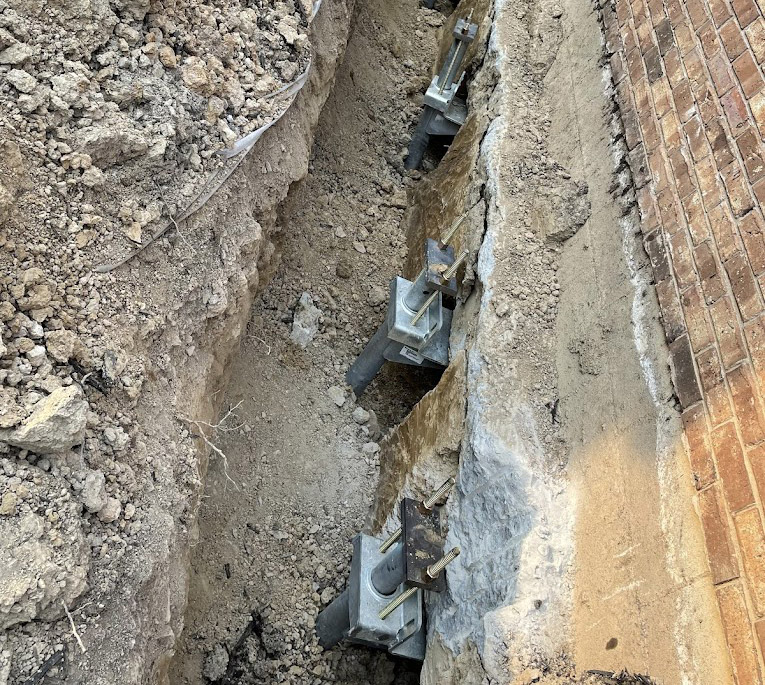
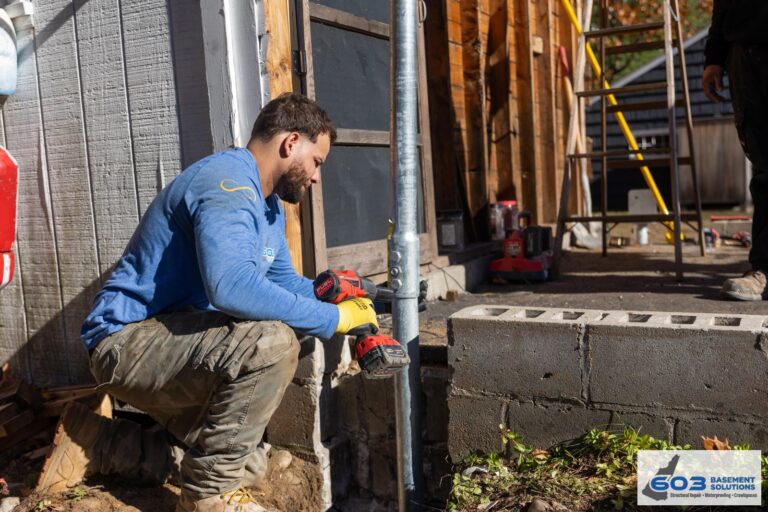
- Each steel pier is rotated into the ground while installation resistance is recorded.
- A bracket connects the pier to the foundation.
- The load is transferred to the installed piers.
- The crew stabilizes the treated area or performs the approved controlled lift.
- The finished work is documented and covered by the applicable warranty.
Helical Pier Cost
603’s current foundation-repair price is $2,700 per pier for the first three, then $2,200 for each additional pier. A typical New Hampshire structural piering job is $12,000 to $18,000 or more. Pier count moves the total most. Access, load, repair scope, and any controlled lift also matter. The helical pier cost guide shows worked totals.
Stabilization and Lifting Are Different
Stabilization is meant to stop additional movement in the treated area. Lifting tries to recover some position where the structure allows it. Older finishes, plumbing, tile, framing, and years of movement can limit what should be lifted. The proposal should say which result the job is designed to deliver.
Why Homeowners Choose 603 for Helical Piers
- 603 self-performs helical-pier installation and structural lifting in-house.
- The inspection and written estimate are free.
- Helical-pier work carries a 25-year engineered-performance warranty.
- The scope states the treated area and whether the goal is stabilization or lifting.
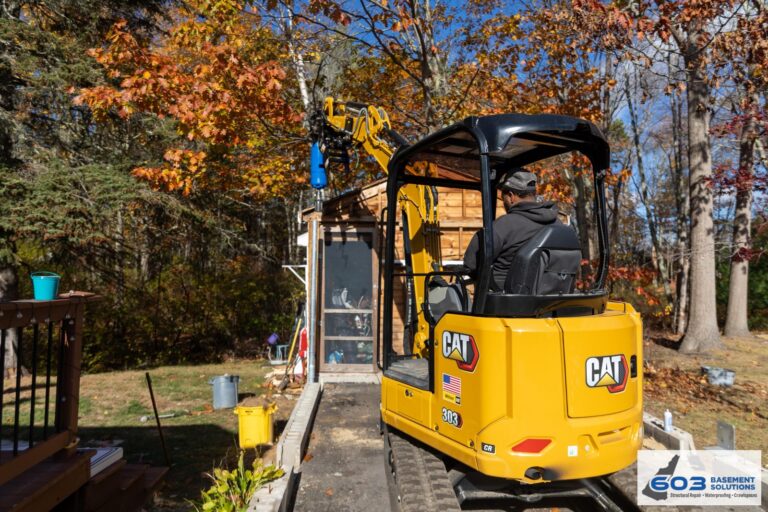
- The photos on this page show actual 603 installation work.
Google review ★★★★★
adauri rosario de jesus
“I contracted 603 basement solutions to do helical pier systems to stop my foundation from sinking into the ground any further. They showed up with a beautiful CAT excavator and did incredible work. By far my favorite experience working with a contractor, they communicated well, they were professional, and they actually cared about every concern I had. I’d recommend them to anyone.”
Helical Piers vs Push Piers
A helical pier rotates into the ground using installation equipment. A push pier advances by reacting against the weight of the building. The right system depends on the load, footing, access, and repair plan. See the helical and push pier comparison for the longer explanation.
Frequently Asked Questions
Do cracks always mean I need helical piers?
No. A stable isolated crack may only need crack repair. Piers are considered when inspection confirms settlement and a deeper support is needed.
Can helical piers lift a foundation?
A controlled lift may recover some position where the structure allows it. Stabilization and lifting are different goals, and the proposal should state which one applies.
How long is 603’s helical-pier warranty?
603’s helical-pier work carries a 25-year engineered-performance warranty.
Does 603 install the piers itself?
Yes. 603 self-performs helical-pier installation and structural lifting in-house.
For the broad service, see Helical and Push Piers. If the concern is a stable opening rather than settlement, start with Foundation Crack Repair.
Find out what moved
We will inspect the house, explain the repair, and tell you if piers are not the answer.