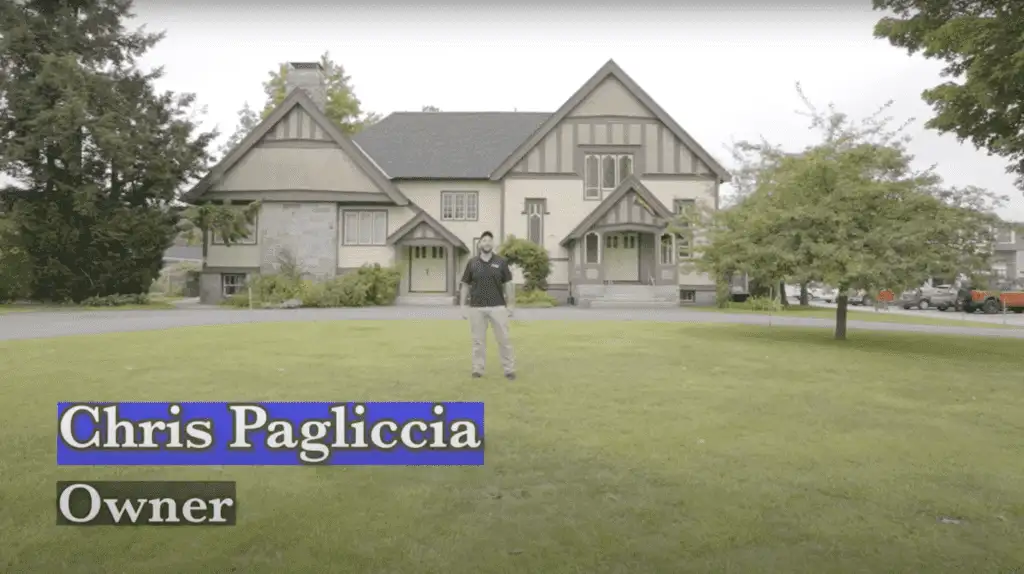

Maine does not get talked about as a radon state the way New Hampshire does, but the gas does not stop at a state line, and Sanford homes test high often enough that we treat it as routine, not an edge case. Downtown Sanford’s mixed building stock, slabs, basements, and crawl spaces from different eras all within a few blocks of each other, means the right system genuinely varies house to house.
Certification, cost, and the test itself
- Certified installer required by law, we hold that certification (RMS-113966) and are licensed and insured
- Most installs run $1,950 to $2,250, full range $900 to $6,000
- $50 test fee, credited toward the job if you move forward with mitigation
- A short-term test itself takes 2 to 4 days to get a result
Matching the system to the foundation
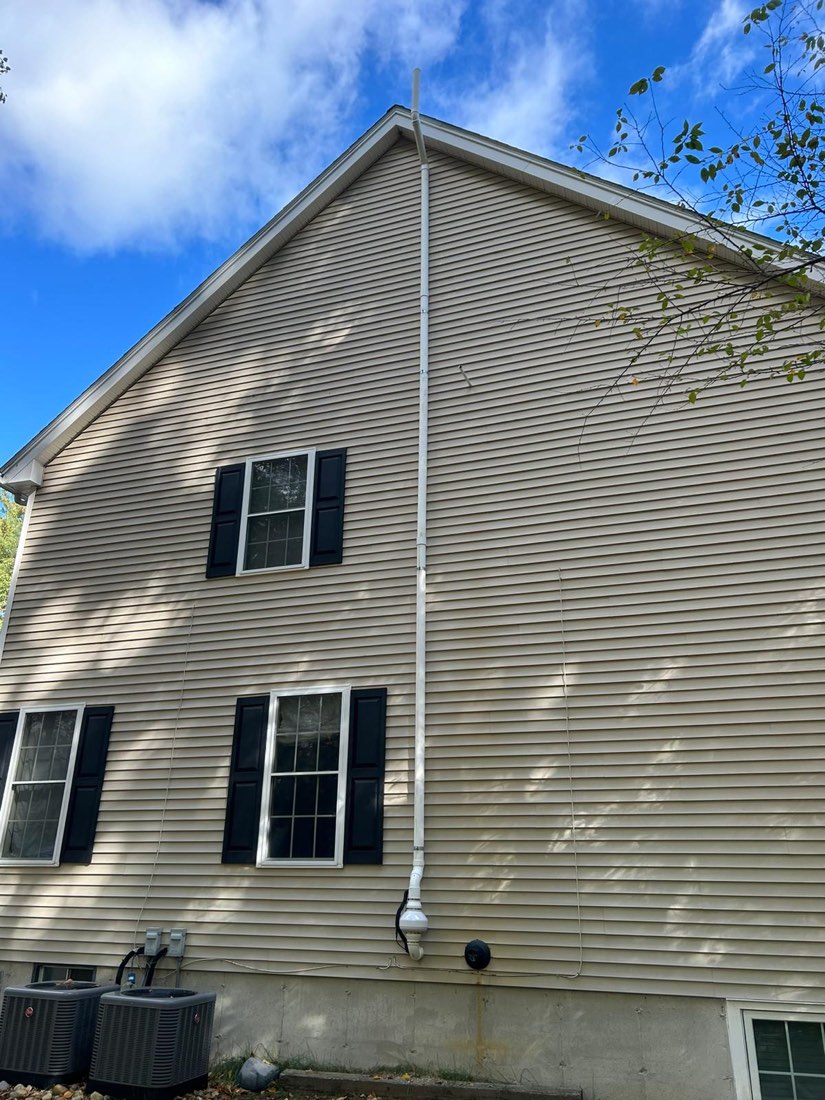
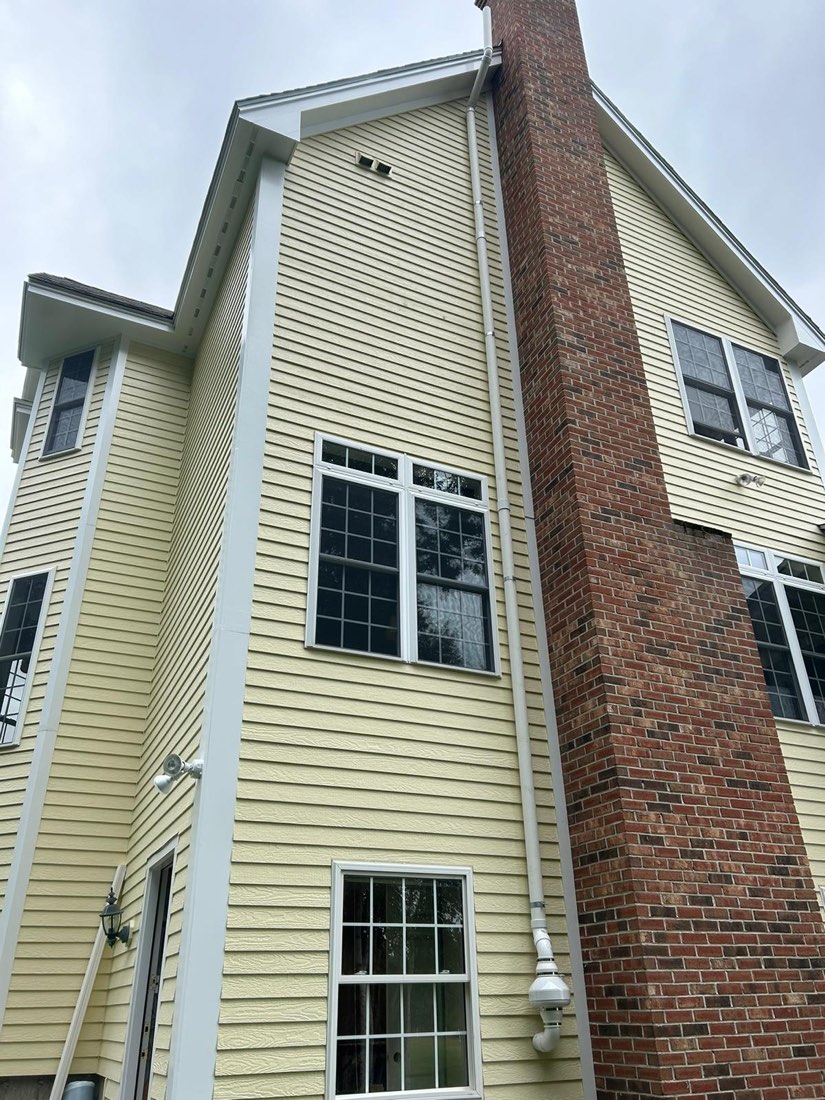
A slab-on-grade home gets one core hole through the concrete and one suction point beneath it. A full basement gets the same approach through its floor. A crawl space needs something different: a sealed membrane over the exposed dirt, with the suction point drawing from underneath that membrane instead of a slab. We identify which one your house actually has before we design anything, we do not assume from the outside.
What the numbers on your test actually mean
The EPA’s action level is 4.0 pCi/L. It recommends aiming for 2.0 pCi/L where practical. The national indoor average sits around 1.3 pCi/L, so a result meaningfully above that average is worth a second look even under the official action level.
Short-term test or long-term test
A short-term radon test runs 2 to 7 days with the house closed up and gives a fast screening number. A long-term test runs 90 days or more and gives a more accurate annual average, because radon levels shift with the season and with how sealed up a house gets for heat. Most homeowners start with a short-term test since it is faster and cheaper. If that number comes back close to the EPA’s 4.0 pCi/L action level rather than clearly above or below it, the long-term test is worth the extra time before committing to a system. If it comes back well above 4.0, there is generally no reason to wait on a second test before mitigating.
Frequently asked questions
Is radon actually a problem in Maine, or mostly a New Hampshire thing?
It shows up in Maine regularly. We test and mitigate Sanford homes on a normal, ongoing basis, this is not a service we occasionally extend across a state line.
Will I hear the fan running?
Rarely. It runs continuously and most people stop noticing it within days.
What does the warranty cover?
Ten years on system integrity and components, not a specific radon reading unless that is written into your job.
How fast can you get to us once we have a result?
Usually within a week or two of the call.
What a recent customer said
Very knowledgeable and responsive to any questions for our radon mitigation. The actual onsite team on day of installation was fantastic, and saved us money. Follow up radon testing passed with flying colors, highly recommended.
Lin Kampf, 5 stars, Google review
Talk to us before it gets worse
Free inspection, free estimate, and a written quote in your hands within 24 hours.
EPA radon action level and national indoor average. 603 Basement Solutions radon certification RMS-113966. Review quoted verbatim, public Google review.
Common questions about radon
- What is a mitigation system for radon?
- What is a radon test?
- What is the major source of radiation in our homes?
- What mask should I use to filter radon while installing a fan
- What should you do if you find radon in your home?
- What was your radon level before and after the mitigation system?
- Why are rain gutters sometimes used for radon mitigation systems?
- Why is radon more prominent in homes?
- Will portable home air cleaners reduce radon?
- Can asbestos block radon that’s outside? It is in my basement floor
- Can radon levels of 100 be mitigated effectively, and if so how much?
- Did you have radon mitigation done in your home? What things should you know first?