
Quick Answer
A settling foundation in Bedford may need helical piers when the original bearing soil no longer carries the load. Piers are advanced individually and documented before their brackets take load from the settled wall or footing. Piers do not solve every crack or floor problem, and the inspection determines whether another repair fits better. 603 currently charges $2,700 each for the first three piers, then $2,200 each. Start with a free inspection.
Helical Pier Installation in Bedford: What We Inspect
The pier type follows the building, not the brochure
Helical and push piers solve the same problem in opposite ways. One turns into the ground under its own power. The other uses the weight of the house as the thing it pushes against.
That difference decides which one suits a given structure. A lighter building can lift before a push pier reaches refusal, which is a real limit rather than a sales preference.
Why a Bedford median year proves very little
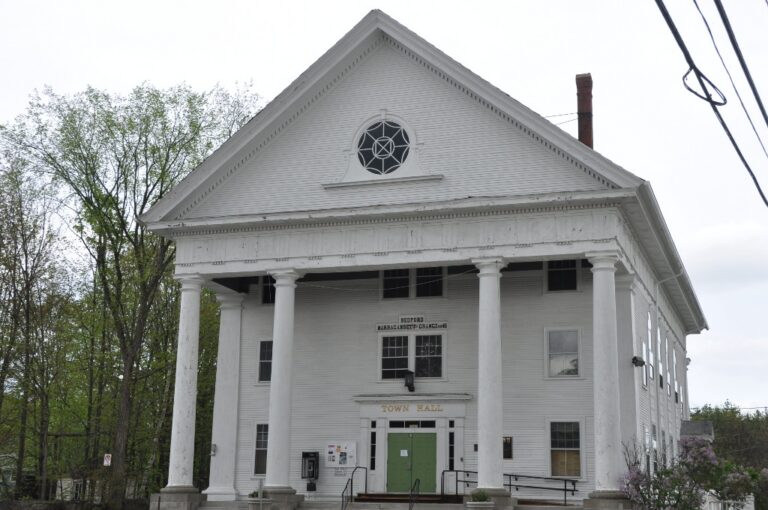
The 2023 American Community Survey records the median Bedford housing unit at 1990. Newer stock does not exempt a house from settlement, and it does not date any particular footing.
Recent construction can still sit over filled or disturbed ground. What the site records show matters more than the townwide year.
Signs Your Foundation May Need Helical Piers in Bedford
These signs justify a closer look, but none of them proves the repair by itself.
The house is single storey and light
Dead load may be too low for a push pier to reach refusal.
Access along the wall is tight
Equipment size can change the approach without changing the target.
Part of the load lands on an addition
Trace where the load actually arrives before placing brackets.
A slab area is involved
Slab support and foundation support are separate decisions with separate evidence.
The garage floor has dropped
Slab movement and foundation movement are separate findings.
When Helical Piers Are the Right Repair, and When They Are Not
When they may fit
- The load needs deeper support: The repair can transfer weight below the original foundation bearing.
- Bearing beneath the footing is failing: The structure needs support at a deeper and verified point.
When another answer may be better
- Movement has not been established: Monitoring can be more responsible than selling piers from one visual symptom.
- The problem sits inside the framing: A failing sill, beam, or support post calls for another structural repair.
How 603 Diagnoses Foundation Settlement in Bedford
The inspection follows the load rather than the complaint. We trace the affected rooms into the framing, the framing into its bearing, and the bearing into the footing below it.
Access gets measured at the same time. Wall clearance, gates, utilities and surfaces all shape which equipment can reach the work, and that shapes the plan.
The output is a written finding with the measured condition, the proposed method, the quantity, the location and the intended result. If any of those is missing, the estimate is not finished.
How 603 Installs Helical Piers in Bedford
- Trace the load path and document the part of the building that has dropped.
- Mark the repair locations, utilities, excavation, and equipment access.
- Install the shafts individually and record the evidence used to confirm bearing.
- Expose the connection point, confirm its condition, and attach the bracket.
- Transfer the load and perform only the stabilization or approved lift in the scope.
- Document completed locations and provide the applicable warranty.
Examples of Helical Pier Installation by 603 Basement Solutions
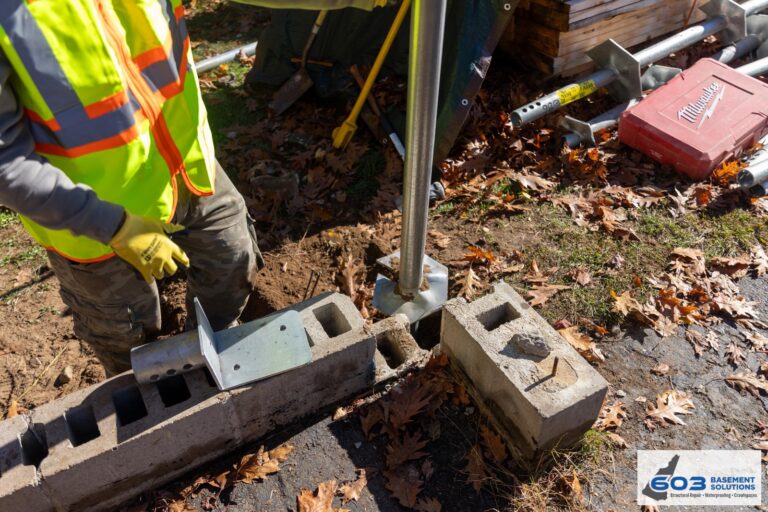
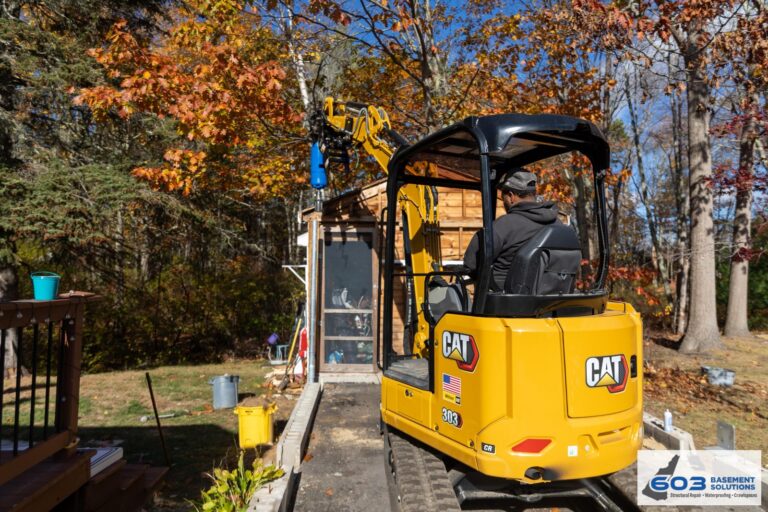
These photographs show real 603 crews and repair details. They explain the method without presenting the work as a verified Bedford project.
Foundation Repair Decisions for a Bedford Home
Ask why this pier type
The answer should reference the building. Structure weight, access, depth expectation and the condition of the footing all belong in it.
If the answer is that the contractor always uses one type, that is a statement about the contractor rather than about the house.
Check what the bracket is fastening to
A pier transfers load through a bracket into the footing or the wall. Damaged or shallow bearing at that point limits what any pier can do.
Ask what happens if the footing is found to be in poor condition once it is exposed. That contingency belongs in the scope, not in a conversation on the day.
Helical Pier and Underpinning Methods for Bedford Homes
Why a screwed pier suits an older house
Turning a shaft into place applies very little force to the structure during installation. Fragile masonry and light framing tolerate that better than being pushed against.
The connection is made afterward at the bracket, once the shaft has already found the bearing it needs.
When both types appear on one job
Different parts of a structure can call for different support, and a plan that mixes them is not inconsistent.
What matters is that the drawing says which method goes where, and why that section got the one it did.
Helical Pier Cost in Bedford, NH
The verified 603 schedule is $2,700 per pier for the initial three and $2,200 per pier after that. No town-specific total is implied. The inspected load path determines the proposed pier layout. Equipment access, footing repairs, surface restoration, and lift requirements sit outside the bare pier count.
See the helical pier cost guide for worked examples.
Foundation Stabilization vs Structural Lifting
The basic repair objective is stable support. Elevation recovery is a separate step that may not suit every building. Lifting can affect plaster, tile, trim, masonry, and rigid plumbing, so the plan must set a limit.
Why Homeowners Choose 603 for Helical Pier Installation
- The team that diagnoses the settlement also performs the helical installation.
- The written scope gives homeowners a concrete plan to compare.
- Helical work carries a 25-year engineered performance warranty under the written terms.
- Warranty language is tied to the installed piers and its stated conditions.
Helical Piers vs Push Piers
Helical piers rotate into the ground and do not rely on building weight to advance. Push systems borrow reaction from the structure, so the weight of the building becomes a design constraint. The choice follows the load, access, footing, and installation plan. Read the helical pier versus push pier comparison for the full decision.
What a Bedford Helical Pier Proposal Should Contain
A Bedford proposal should justify the pier type against this building. Structure weight, access along the wall, and the condition of the footing all belong in that reasoning.
It should locate every bracket and say what each one fastens to. Where the plan mixes pier types, it should show which parts of the structure get which support and why.
Questions to Ask Before Helical Pier Work in Bedford
- Ask for the pier type rationale. Require a reason that references this building rather than a general preference.
- Inspect the bracket location. Confirm what each bracket will fasten to and what condition it is in.
- Agree the footing contingency. Write down what happens if the footing is unsound when exposed.
- Keep access on the drawing. Equipment routes and restoration should be visible beside the structural scope.
Helical Pier Decisions to Keep Separate in Bedford
Is the load on the foundation, or on the slab?
A settling slab and a settling foundation look similar from a doorway. They carry different loads and take different repairs.
Is the pier type a decision, or a default?
If the reasoning does not reference this building, it is a habit rather than a choice.
Helical Pier Questions from Bedford Homeowners
Are helical piers better than push piers?
Neither is better in general. Helical suits lighter structures because it does not rely on the weight of the house to install.
Can both types appear on one job?
Yes. Different parts of a structure can call for different support, and the plan should say which goes where.
Do piers go inside or outside?
Both are possible. Access, the location of the settlement and the finished spaces involved all shape the choice.
Is there a warranty?
Helical work carries a 25-year engineered performance warranty on the installed piers.
Can piers go under a newer house?
Yes. Recent construction can still sit over filled or disturbed ground, and the age of the house does not settle the question.
What You Receive After a Bedford Inspection
The scope arrives with the pier type explained against this building. Weight, access, expected depth and the condition of the footing all appear in that reasoning.
Bracket locations come on a drawing rather than as a count. That drawing is what a second contractor should be asked to mark up as well.
Book a free Bedford inspection
We will establish what is moving, what is not, and what evidence supports either answer.
The housing year cited above is from the U.S. Census Bureau, 2023 ACS 5-year table B25035. Rates, warranty length and crew information come from 603 directly. Photographs show 603 work. Related pages: Helical and Push Piers for the method and the Structural and Foundation Repair hub for the service. Use Foundation Crack Repair in Bedford where the wall is not moving. Service Areas lists where we work.