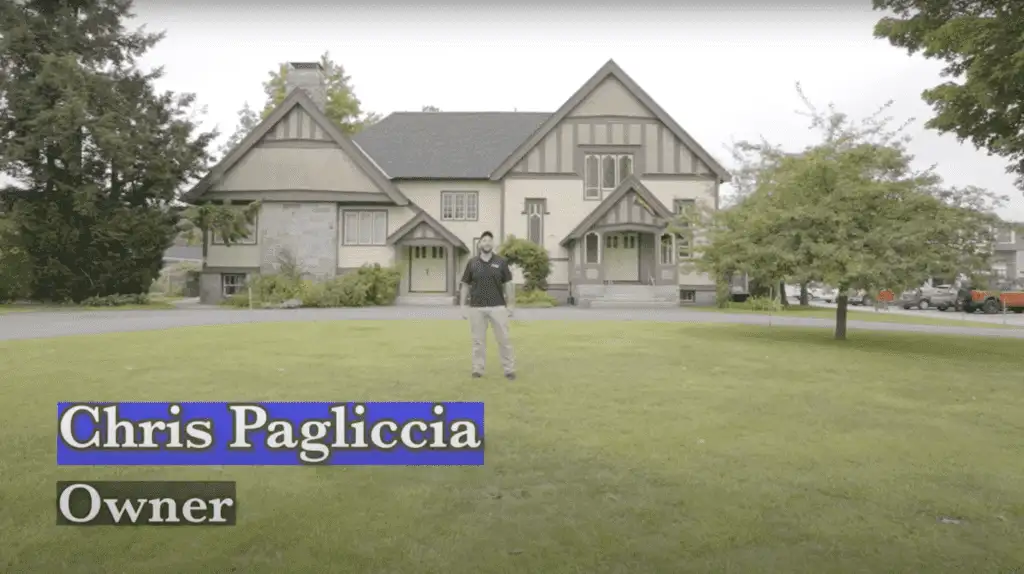
Two minutes at a time, we answer the basement and foundation questions New Hampshire homeowners actually ask. Wet basements, cracked foundations, crawl spaces, radon, the works. No sales pitch. We explain it the way we would standing in your basement, and we will tell you when not to spend the money.
A sump pump that keeps running usually means one of three things: a stuck float, a bad check valve, or a high water table doing its job. Here is how to tell which one you've got.
Your sump pump is running and running and it just will not shut off. Here is the short version. A pump runs when water in the pit lifts the float. So if yours never quits, one of two things is happening. Either water keeps coming back into that pit, or the float is stuck and never tells the pump to stop. Almost every time, it comes down to three things.
First one, and it is the easy one. The float is stuck. That float is the on-off brain of the whole setup. If it is jammed against the pit wall, or tangled on the cord, or buried in sediment, the pump never hears "we're dry, shut off." So unplug it, and check the float moves up and down clean. Clear the gunk out of the pit. Nine times out of ten that is a free fix right there.
Second thing. The check valve. That is a little one-way gate on the pipe going out. It stops the water you just pumped from falling straight back down into the pit. When it is missing, or worn out, or somebody put it in backwards, the water drops right back in, fills the pit, and the pump kicks on again. Look for an arrow on the valve. It should point up and away from the pump. Points down, it is backwards.
Third one, and this one is not broken at all. A high water table. This is a New Hampshire thing, especially on the Seacoast after snowmelt or a nor'easter. The ground around your house is full of water and it keeps feeding the pit. A healthy pump will run hard for a while and that is just the ground doing what the ground does. If it runs during a wet stretch and then settles down when things dry out, you are fine. If it never gets a break, even weeks after the last storm, that is when the water load on your foundation is worth a real look.
So before you buy anything, check the float and check that valve. That is most of them, and both are cheap. If the pump still won't quit and your basement keeps taking on water, that is the ground telling you it is time for a real drainage system, and that is what we do.
We're 603 Basement Solutions, out of East Kingston, working all over New Hampshire, Maine, and Massachusetts. If your pump won't stop and you want somebody to look, call us at 603-610-1770. Free inspection, and we'll tell you straight if you even need us.
Water comes in around the bulkhead door every hard rain. Why it happens and what actually stops it.
Water keeps showing up at the bottom of your bulkhead stairs. Here is the short version. It is almost always one of three spots. The cold joint where the bulkhead bolts onto your foundation, the rubber gasket on the door, or the drain at the bottom of the stairs. And the good news, most of the fix happens outside, and the first thing to check is free.
Your bulkhead is the most exposed spot on your whole basement. It sits below grade. It catches rain, snowmelt, all of it. So when it leaks first, you are not unlucky, that was always going to be the weak point.
Start at the bottom of the stairs. There is a drain down there. Think of that stairwell like a bucket, and the drain is the only way out. It clogs with leaves, sediment, a plug of ice in winter. Clear it. That is free, and it is the first thing we check when we show up.
Next, go outside, not to the door. Most basement water comes from the ground pooling against the foundation. So look at your grading. The dirt should slope away from the house, not toward it. And move your downspouts out past the foundation. That is cheap, and sometimes that is the whole fix.
Then the gasket. That is the rubber seal around the steel door. It is a consumable part. It dries out, cracks, goes flat after enough New Hampshire winters. An old door leaks even when the concrete under it is perfectly fine. A gasket is usually the cheapest part of a bulkhead to swap.
Last one, the cold joint. Most bulkheads got added years after the house was built, so where the bulkhead meets your foundation, you have two separate pours of concrete that never bonded. That seam is one of the most common places we find water. If your leak runs right along that line, that is your spot, and that one is worth sealing right.
Here is the honest part. Work it cheapest first. Drain, grading, gasket, then the joint. Do not seal up the inside before you handle the water outside, that just traps it. If you have gone through all of that and water is still coming in, then it is time to tie the bulkhead into a real drainage system, and that is what we do.
We're 603 Basement Solutions, out of East Kingston, working across New Hampshire, Maine, and Massachusetts. If your bulkhead keeps letting water in, call us at 603-610-1770. Free inspection, and we will start you with the cheap fixes first.
Everyone asks why we fix wet basements from the inside instead of digging up the yard. Here's the honest answer.
Everybody asks us the same thing. Why do you fix a wet basement from the inside instead of digging up the yard? Here is the honest answer. For most New Hampshire basements, an interior drain tied to a sump pump is the proven fix, and it is the cheaper one and the less messy one. Digging up the outside is the expensive exception, saved for a few specific jobs.
The two methods solve the same problem from opposite sides of the wall.
Interior handles the water after it reaches the foundation. We cut a channel in the concrete around the inside edge of the basement, lay a drain pipe in gravel under the slab, and run it all to a sump pit. The pump lifts the water out and away from the house. We add a wall vapor barrier and a dehumidifier to handle the damp air. All of it happens inside, so your yard, your driveway, your deck, they stay right where they are. That is our Forever Dry System.
Exterior stops the water before it hits the wall. A crew digs all the way down to the footing around the outside of the house, cleans the wall, coats it with a membrane, usually drops in an exterior drain, and backfills. It treats the wall from the outside, the way it got done when the house was built.
Both can keep a basement dry. Where they split is cost and mess. An interior system covers most wet basements in a reasonable range. Exterior excavation starts up where interior tops out and climbs from there, past thirty thousand dollars on a lot of jobs, because now you are paying for machines, hauling dirt, and putting your yard back together. Interior is a few dusty days in the basement. Exterior is your whole yard torn open.
So when is exterior the right call? When the outside coating has failed, when a wall needs real structural repair from outside, or on a new build before the dirt goes back. Those are real cases and we will tell you when you are in one.
Here is the part I want you to hear. For a typical wet Seacoast basement, interior is the default. Do not let anybody sell you the dig you do not need. If somebody is quoting you excavation for a basement that just seeps at the floor, get a second look.
We're 603 Basement Solutions, out of East Kingston, working across New Hampshire, Maine, and Massachusetts. Want to know which one your basement actually needs? Call us at 603-610-1770. Free inspection, and we will tell you straight.
That stuff on your basement wall is either salt or mold, and telling them apart tells you how worried to be.
There is something on your basement wall and you want to know if you should worry. Quick way to tell them apart. White, chalky, gritty, and it dissolves when you wet it? That is salt, we call it efflorescence. Green, black, or fuzzy, and it smells musty? That is mold. And mold is really just a water problem. Fix the moisture and you fix the mold.
The EPA says it flat out. No mold grows without water. Control the moisture, you control the mold. That is actually good news for a worried homeowner. Spores float in the air everywhere, inside and out. They do not do anything until they land somewhere damp and start growing. So a basement mold problem is a basement water problem wearing a costume.
Why do New Hampshire basements get it? A few reliable reasons. Freeze and thaw all winter opens little cracks, and spring snowmelt seeps right in. A high water table on the Seacoast pushes water at the walls. Old fieldstone foundations wick moisture straight through the stone. And here is the one that surprises people, humid summer air hits a cool basement wall and condenses, no leak needed at all. That is why a dehumidifier earns its keep year round, not just in a wet spring.
Now the health part, and I am going to keep it honest, no scare tactics. For a lot of people, mold is a mild irritant. Stuffy nose, scratchy throat, itchy eyes. Who should actually take it seriously? Anybody with asthma or a mold allergy, and anybody immune-compromised or with a lung condition. If that is someone in your house and you have got a musty, damp basement, that is your signal to deal with it sooner rather than later. For symptoms, talk to a doctor. We are a basement crew, not a doctor's office, so we will stick to the water.
Here is what I do not want you to do. Do not scrub the mold, spray some bleach, and call it done while the wall is still wet. It comes right back. Candles and fans do not fix water either. Dry the space and the mold has nowhere to live.
We're 603 Basement Solutions, out of East Kingston, working across New Hampshire, Maine, and Massachusetts. If your basement smells musty or you are seeing mold come back no matter what you do, call us at 603-610-1770. Free inspection, and we will find the water feeding it.
Every New England winter, frozen ground pushes on your foundation. What that does and what to watch for.
New crack in the basement every January. Front door sticks until April. The slab by your bulkhead has tilted. That is frost heave, and it is coming back every winter. Here is the surprising part. It is not water expanding when it freezes. It is layers of ice growing down in the soil and lifting everything on top of them.
Those layers have a name, ice lenses. As the cold pushes down into the ground over a long New England freeze, thin sheets of ice form in the soil and they pull more water up from below to keep growing. Thicker and thicker. And as they grow, they lift whatever is sitting on them, your slab, your steps, your footing.
For that to happen, three things have to line up at once. You need fine, silty soil, the kind that wicks water up like a sponge. You need a steady water supply from below, a wet spot or a high water table. And you need real cold reaching down into the ground. Here is the useful part, take away any one of those three and the heave loses its engine.
And that is exactly why New Hampshire gets it bad. We have got the deep winters. We have got the high water table, especially near the coast. And we have got a lot of older homes on shallow or fieldstone foundations that never reached below the frost line. Modern code puts footings down below that line on purpose, so the freezing ground can not get underneath them. Old houses often sit right up in the danger zone.
So what do you actually do? You can not cancel winter, and you can not move your house. What you can do is pull the water leg out from under it. That means good drainage carrying water away, a sump pump that works, and the right backfill against the foundation. Clean coarse gravel does not wick water the way silt does, so it starves the ice lens.
Here is when to stop watching and call. One crack that showed up once and never moved, that is probably fine, keep an eye on it. A new one every winter, or one that is getting wider season to season, that is the ground moving your foundation, and that gets an inspection.
We're 603 Basement Solutions, out of East Kingston, working across New Hampshire, Maine, and Massachusetts. If your foundation moves every winter, call us at 603-610-1770. Free inspection, and we will tell you if it is frost heave or something else.
Two ways to hold up a settling foundation. Which one fits your house, and why it comes down to soil.
You called a few foundation companies about your settling house, and one said screw piers, one said helical piers, and one said helical piles. So which is best? Trick question. They are all the same thing. Same steel part, same job. The name just depends on the contractor's habit and what part of the country they learned in.
Picture a big steel shaft with screw-shaped plates near the bottom. A crew turns it down into the ground with a machine, like driving a giant screw, until it hits soil firm enough to hold your house. Then they bracket it to your foundation, and the weight of the home shifts off the loose dirt up top and onto that solid ground down deep. House sinking? That is the fix.
Now the names. That one part gets called screw piles, screw piers, ground screws, helical piles, helical piers, helical anchors. Two little things clear up the confusion. Pier versus pile is just regional habit, it is not a different product. Foundation crews around here lean toward pier. Engineers and folks up in Canada lean toward pile. And screw versus helical? Those both describe the same spiral shape on the shaft. So a screw pier and a helical pier are pointing at the exact same steel.
Which means when one company quotes screw piers and another quotes helical piers, you are looking at the same engineered fix. What actually differs between those bids is not the name. It is how many piers your house needs, how deep they have to go to reach firm soil, and who is doing the work.
At 603 we install them at twenty seven hundred dollars a pier for the first three, then twenty two hundred a pier after that. And they carry a twenty five year engineered warranty that transfers to the next owner if you sell.
So do not get talked in circles by the wording. When you compare estimates, ignore whether they wrote screw or helical, and compare the number of piers, the depth, and the crew standing behind the work.
We're 603 Basement Solutions, out of East Kingston, working across New Hampshire, Maine, and Massachusetts. If part of your house is settling and you want to know how many piers it really needs, call us at 603-610-1770. Free inspection, and we will give it to you straight.
Sticking doors, stair-step cracks, sloping floors. Which signs are cosmetic and which mean call somebody.
Not every crack means your foundation is failing. So which ones actually matter? The ones that say the ground under your house is moving. A crack running sideways across a wall. Stair-step cracks in block or brick that keep widening. Any crack past about a quarter inch, or one that is growing. A wall bowing inward. Doors that suddenly stick, floors that slope. Some of those you can watch for a season. Some mean call somebody now.
Let me rank them the way we treat them, from watch-it to act-now.
The one we worry about most is a horizontal crack, running side to side across the wall. That means the soil outside is pushing in harder than the wall can hold. That is not watch-and-wait. Get it looked at.
Stair-step cracks climb the mortar joints in block or brick. An old one that never moves may have happened years ago and stopped. One that is widening, one you can fit a coin into, the wall is still moving.
And here is the rule that matters most. Width and movement beat length every time. A hairline you can barely catch a fingernail in is usually nothing. Once it opens past a quarter inch, or you can watch it grow season to season, the foundation is telling you something. Easy test, mark the ends of the crack with a pencil and date it, or stick a strip of painter's tape across it, and look again in a month. If the mark moves or the tape tears, that is active movement. Active movement gets an inspection.
A wall that is bowing or leaning in is the serious one. That is what a horizontal crack warns about, one stage later, and it does not fix itself. Depending how far it has gone, the fix is carbon fiber straps, wall anchors, or steel beams.
Sticking doors and sloping floors go together. When a house settles unevenly it racks a little out of square, and you feel it first in the doors. In an old New Hampshire home a soft, sloping floor usually traces back to the basement, a rotting sill or a rusting lally column sinking into the slab. Most of it comes back to our freeze-thaw winters and a high water table working on old foundations.
Here is what I will tell you honest. One hairline that has looked the same for twenty years, leave it be. One that is growing, that is enough on its own. You do not need every sign on the list.
We're 603 Basement Solutions, out of East Kingston, working across New Hampshire, Maine, and Massachusetts. Seeing a crack that worries you? Call us at 603-610-1770. Free inspection, and we will tell you if it is cosmetic or moving.
Old New England homes sit on stacked fieldstone. When the mortar goes, here's what it means and what it costs.
You have got an old stone foundation and the mortar is turning to sand you can brush out with your hand. Good news first. A crumbling fieldstone foundation can almost always be repaired, and most of the time you do not replace the whole wall. The stones are not the problem. It is the mortar between them, breaking down after a century of New England moisture and frost.
Let me back up on what a fieldstone foundation even is. It is a wall built from rocks gathered out of the local fields, stacked and set in mortar, instead of poured concrete or block. It was the standard around here for homes built before the mid nineteen hundreds. Exeter, Portsmouth, Dover, Kingston, houses seventy five, a hundred, a hundred and fifty years old, a lot of them still sit on these walls. The stone is tough and lasts forever. The mortar holding it together is the weak link, and it wears out far faster than the rock.
So what do you watch for? Mortar you can rake out with a finger or a screwdriver, turning to powder. Stones that have shifted, loosened, or dropped out. And sections of wall that are starting to bulge or bow inward.
Caught early, the fix can be as simple as repointing, which means raking out the old dead mortar and packing in fresh, plus getting the water under control that caused the decay. Let it go, and that same wall can move on to bowing sections, sliding stones, and in a bad case a partial collapse. So early matters here.
When a wall needs more than mortar, we reinforce it. Carbon fiber straps run about eight hundred fifty dollars each to lock a bowing wall. A power brace runs around thirteen hundred. If the wall is actually settling, that is where piers come in. Point is, there is a repair for each stage, and it is almost never rip the whole thing out.
Here is what I want you to be careful about. If somebody looks at an old stone wall and immediately quotes you a full rebuild, get another opinion before you spend that. Most of these walls get saved with repointing, reinforcement, and fixing the water. And the water is the root of it, so whatever you do to the stone, dry the wall out too or you are just going to be back here.
We're 603 Basement Solutions, out of East Kingston, working across New Hampshire, Maine, and Massachusetts. Got an old stone foundation losing its mortar? Call us at 603-610-1770. Free inspection, and we will tell you what it really needs.
A dirt crawl space breathes moisture into your whole house. Why an ignored one rots the place from underneath.
That crawl space under your house, the one nobody ever goes into. If it has got standing water or damp soil, a musty smell drifting up into the rooms, mold or white powder on the wood, sweating pipes, or soft floors above it, that is an unhealthy crawl space. And almost all of it traces back to one thing. Moisture that never dries out. The good news is almost every bit of it is fixable by controlling that moisture.
Start with the floor. A bare dirt or gravel crawl space floor is a moisture source all by itself. Ground moisture rises straight up out of the earth, all day, every day, unless something covers it. The EPA says it plain, put a cover over the dirt in a crawl space to stop moisture coming up from the ground. The Department of Energy gets specific, a six mil poly vapor barrier across the floor. That is the fix for a dirt-floor crawl.
Now New Hampshire piles on. A high water table on the Seacoast keeps the soil damp year round. Spring snowmelt makes it worse. And a lot of older homes in Exeter, Portsmouth, Dover sit on a bare dirt or fieldstone crawl that was never sealed. Where the space actually takes on water, not just damp air but real water, a barrier alone will not cut it. You need drainage and a sump to move that water out.
And here is why an ignored crawl space is not just a crawl space problem. That damp air does not stay down there. It rises up into the rest of the house, carrying the musty smell and feeding mold and rot in your framing. An unhealthy crawl space can rot the house from underneath and make your family feel sick, and you would never think to look down there for the cause.
Let me save you some money on the wrong fixes. Candles, plug-in air fresheners, a fan running in the corner, none of that touches the problem. The smell is the moisture talking. Dry the space, seal the floor, and the smell and the mold have nowhere to live.
We're 603 Basement Solutions, out of East Kingston, working across New Hampshire, Maine, and Massachusetts. If your crawl space is wet or the house smells musty, call us at 603-610-1770. Free inspection, and we will get down there and look.
Before you picture the movie room, here's what finishing a basement really includes, starting with staying dry.
You are picturing the finished basement. The movie room, the guest suite, the home gym. Before any of that, here is what basement finishing actually starts with, and it is not drywall. In a New England home it starts with getting the space dry. Then comes framing, insulation, electrical, permits, the right flooring, an egress window if it is going to be a bedroom, and plumbing if you want it.
Dry first. I can not say it loud enough. Finishing a wet basement is the most expensive mistake you can make. Trapped moisture rots the new framing, warps the flooring, and grows mold behind the drywall where you can not even see it. So the room you just paid for has to come back apart to fix it. We waterproof first with the Forever Dry System, then we finish. There is a warranty reason too. If a finishing crew shoots a nail through your waterproofing, that damage is not covered, so you want one crew that knows where the system runs.
Once it holds dry through a wet New Hampshire spring, now you build. Framing sets real walls off the foundation so you have got a room instead of bare concrete. And insulation is where a New Hampshire basement is different from one down south. We are in the cold zones, so the wall insulation spec is higher, and getting it right is the difference between a warm room and one that bleeds heat into the ground all winter.
Now the one people skip and regret. If any room down there is going to be a bedroom, it needs an egress window, a real way out in a fire. That is code, and it is safety, not an upgrade. A little hopper window does not count. New Hampshire runs the international residential code statewide, and it wants a net opening of five point seven square feet. On a real job, cutting an egress through the foundation runs our range of eight to fifteen thousand, depending on the well and the grade. A rec room that is not a bedroom may not need one, but a permit and an inspector confirm that for your layout.
Which brings me to permits. A real finish is permitted, inspected work, wiring and heat brought up to code. Not a weekend project. Skipping the permit is the kind of thing that surfaces years later when you go to sell. And if you want a bathroom down there, do it now while the walls are open, it is far cheaper than cutting back in later.
We're 603 Basement Solutions, out of East Kingston, working across New Hampshire, Maine, and Massachusetts. Thinking about finishing your basement? Call us at 603-610-1770. Free inspection, and we will start with whether it is dry enough to build on.
You can't see, smell, or taste radon, and yes it's dangerous. The EPA calls it the second leading cause of lung cancer. Here's why it collects in basements, why New Hampshire homeowners should test, and what to do.
You can't see radon. You can't smell it. You can't taste it. And yes, it is dangerous. The EPA calls it the second leading cause of lung cancer in the whole country, and the number one cause for people who never smoked a day in their life. Up here in New Hampshire, our granite bedrock makes basements a prime spot for it. The only way to know your number is a test.
Let me back up on what radon even is. It is a radioactive gas that comes from uranium breaking down in the soil and rock under your house. It seeps up through cracks in the slab, through the floor wall joint, up around the sump, through gaps where pipes come in. And it collects in the lowest part of the home. In New Hampshire that is almost always the basement.
Here is the scary part, and it is why people ignore it. You will never notice it. No smell, no color, no taste. A house with a dangerous radon level looks and feels exactly like a house with none, right up until the day it shows up on a test. There is no warning sign to catch. That is the whole problem with it.
Why is it dangerous? Breathing it in over years damages the tissue in your lungs. Outside, radon scatters into the open air and stays low, no big deal. Inside your basement it has nowhere to go, so it builds up and just sits there in the air you breathe. And New Hampshire granite puts out more of it than most of the country, so we see high homes all over the Seacoast.
Now here is what I do not want you to do. Do not panic, and do not go ripping anything out. You do not need a system the moment you hear the word radon. You need a test. That is it. A test tells you your number, and most of the time it settles the whole thing. If it does come back high, the fix is a fan and pipe setup that pulls the gas out from under the slab and vents it up above the roof, away from the house.
We're 603 Basement Solutions, out of East Kingston, working across New Hampshire, Maine, and Massachusetts. Want to know your radon number? Call us at 603-610-1770. We can test it, and if it is high, we handle the mitigation too. Free inspection either way.
Radon is measured in pCi/L, and the EPA says fix a home at 4.0 or above. There's no truly safe level, but here's how to read your number and when to act.
You got a radon test back and now you are staring at a number, wondering if you should worry. Here is the short version. Radon is measured in something called pico-curies per liter, pCi/L for short. The EPA says fix your home at 4.0 or above. There is no truly safe level, but most homes sit under 2, and 4 or higher is where you act.
Let me make that number make sense. Picocuries per liter is just how much radon is floating in the air of your basement. The higher the number, the more of it you are breathing. Under 2, you are in good shape. Between 2 and 4 is a gray zone, worth keeping an eye on. Hit 4 or above and the EPA says do something about it. That is the line.
Now, the danger with radon is not one big dose. It is the slow one. Even a low level, breathed in over years, nudges up your risk of lung cancer. So the number matters because it tells you how hard the air is working against you, day after day.
How do you get the number? A test. Two kinds. A short-term test runs a few days, two to seven, and gives you a quick snapshot. A long-term test runs 90 days up to a year and gives you a truer average, because radon moves around with the seasons, the soil moisture, and how the house is sealed up. If a short test comes back high, you confirm it before anybody sells you a system.
And here is the New Hampshire piece. Our granite bedrock pushes a lot of homes over that 4.0 line, more than most of the country. Older homes in Exeter, Kingston, Hampton, Dover, they are especially worth testing. So do not assume you are fine because the neighbor tested low. Radon changes house to house, even on the same street.
Here is the honest part. One test and you know where you stand. You do not need to guess and you do not need to worry in the dark. If your number is under 4, breathe easy. If it is over, that is when we talk about a mitigation system that brings it down.
We're 603 Basement Solutions, out of East Kingston, working across New Hampshire, Maine, and Massachusetts. Not sure what your number means, or need one taken? Call us at 603-610-1770. Free inspection, and we will tell you straight.
A bowing basement wall means the soil outside is pushing harder than the wall can hold, and it won't straighten on its own. Caught early, we can usually stabilize it without tearing the wall out.
You are down in the basement and you notice a wall is not straight anymore. It is curving in, or bulging toward you in the middle. Here is what that means. The soil outside is pushing harder than the wall can hold. And a bowing wall does not straighten out on its own. Left alone it gets worse, and a bad one can fail. Caught early, we can usually stabilize it without tearing the whole wall out.
Few things make a homeowner more uneasy than seeing a basement wall curve inward, and I get it. But let me explain what is actually happening so it is less mysterious. Around here, a lot of homes are decades or even a hundred-plus years old, and the ground leans on those walls hard. Wet, heavy New England soil. Frost heave every winter, freezing and swelling against the wall. And poor drainage that lets water pool right where you do not want it. Push on anything long enough and it gives.
Most people catch it as a crack first. A hairline crack that slowly widens, usually running sideways across the wall. Then the wall itself starts to lean or bulge. That progression is the tell. A horizontal crack is the early warning, and the bow is that same problem one stage later.
Here is the part I want you to hear, because it is good news. Caught early, a bowing wall is very fixable, and it usually does not mean ripping the wall out and pouring a new one. We can lock it where it is with carbon-fiber straps, or brace it with steel. The right fix depends on how far the wall has already moved. The sooner you call, the more options you have and the cheaper it stays.
And here is when not to wait. If your wall is visibly curving or bulging inward, that is not a watch-and-see. Get it looked at before the next wet spring, because spring is when the soil is heaviest and the water pressure peaks. A wall that is moving tends to keep moving, and every season it costs a little more to hold.
We're 603 Basement Solutions, out of East Kingston, working across New Hampshire, Maine, and Massachusetts. Seeing a wall that is not straight anymore? Call us at 603-610-1770. Free inspection, and we will tell you if it is holding or moving.
A failing lally column shows up as a sagging floor, a bowing beam, or rust eating the base of the post. It's the steel post holding up your floor losing the fight. Caught early it's a straightforward swap.
Look down in your basement. See those round steel posts holding up the big beam? Those are lally columns, and they carry the floors you walk on upstairs. When one starts to fail, you get a sagging floor above it, a beam that has started to bow, or rust eating the base of the post. It means the steel holding up your house is losing the fight. Caught early, it is a straightforward swap.
Lally columns hide in plain sight. They are down in the basement, so most homeowners never give them a thought until a floor starts to sag or a door upstairs quits closing right. Out of sight, out of mind, right up until they are not.
You usually feel it upstairs before you see it downstairs. So watch for a few things. A floor above the basement beam that sags or slopes. A beam that is bowing or cracked right where it sits on the column. Rust or flaking at the base of the post, or a post that has started to lean or tilt. Doors and windows on that floor sticking or not closing square. Creaks and pops when you walk across the room. Any of those, go take a look at your posts.
Why do they go? Water, mostly. A damp basement floor rusts the base of a steel column over years, and once that base rots out, the post loses its footing and starts to drop. Sometimes the original post was undersized for the load, or there are too many thin ones doing a job that needs a proper one. Either way, the fix is the same idea. You support the beam, take the old column out, and set a new one on a solid footing.
Here is the honest part. Caught early, this is one of the more straightforward structural fixes there is. A post is a post. But left alone, that one failing column drags your floors and your framing down with it, and the bill grows every season it sits. This is not a wait-and-see item once it is moving.
We're 603 Basement Solutions, out of East Kingston, working across New Hampshire, Maine, and Massachusetts. Got a sagging floor or a rusty post down there? Call us at 603-610-1770. Free inspection, and we will tell you if that column is doing its job.
A floor that dips, bounces, or rolls a marble to one side is usually a structural problem, not a cosmetic one. In an old NH home it almost always traces back to the basement.
You drop a marble and it rolls to one side of the room. Or a floor dips in the middle, or bounces when you walk across it. That is more than a cosmetic annoyance. A sagging or sloping floor is usually a sign of a structural problem, and in an old New Hampshire home it almost always traces back down to the basement.
Let me walk you through what is actually giving out under there, because a floor does not sag on its own. Something below it stopped holding.
Most of the time it is one of four things. A rotting sill beam or joist. Wood that stayed damp long enough to soften, and now it cannot carry the load. A failing lally column. That is the steel post holding up your main beam, rusting at the base or bending until it drops. Foundation settlement. Frost heave and shifting soil, or an old stone foundation moving unevenly, pulls the whole house out of level. Or water damage in a wet basement or crawl space, quietly rotting the joists and subfloor from underneath.
Notice the thread running through all four. Water. A damp basement or crawl space is the root of most sagging floors in this part of the country. The moisture rots the wood and rusts the steel, and the floor above just follows it down.
So how worried should you be? A little unevenness in a century-old house is normal. These homes have settled and shifted their whole lives, and a slightly-off floor is part of their character. What matters is change. A floor that is getting softer, springier, or more sloped over time, that is active, and active is what you look into.
Here is the honest part. Do not just shim the floor or throw a jack under it and call it fixed. That treats the symptom and hides the cause, and the cause keeps working. You want somebody to find the actual failure, the sill, the column, the settlement, the water, and fix that. Then the floor stays put.
We're 603 Basement Solutions, out of East Kingston, working across New Hampshire, Maine, and Massachusetts. Got a floor that dips, bounces, or slopes? Call us at 603-610-1770. Free inspection, and we will get under there and find what is really going on.
The sill is the wood that ties your house to its foundation. In old NH homes it was often untreated wood that was never built for our moisture, and it rots. Here's how to catch it.
There is one piece of wood that ties your whole house to its foundation, and in a lot of old New England homes it is quietly rotting. It is called the sill, or the sill plate. It sits right on top of your foundation wall, and everything above it is built on top of it. When it goes soft, it can slowly undermine the whole structure, and most homeowners never see it coming.
Let me explain why this one is so common up here. In towns like Exeter, Portsmouth, Hampton, Dover, a lot of these homes went up decades or even a century ago, and they were built with plain untreated wood sills. That wood was never designed for what New England throws at it. Constant moisture. Pests. Freeze and thaw, over and over, year after year. Give it enough time and it rots. It is not a matter of if, it is when.
The tricky part is it hides. The sill sits low and it is usually tucked behind siding, so you do not get an obvious leak or a loud crack. It just softens in the dark. So you have to know the quiet signs. Spongy, soft, or crumbling wood along the base of the house, where you can push a screwdriver in and it just sinks. Floors upstairs that start to sag or slope. Doors and windows that stick or drift out of square. A musty smell, or carpenter ants and other pests, because bugs love wet wood.
Here is the good news, and it is real. A rotting sill is not the end of your house. We cut out the bad section and replace it with new pressure-treated lumber that can actually handle the moisture. Sometimes it is a short patch. Sometimes it is a longer run of sill and the beam above it. We price it after we see it, because how far the rot has traveled decides the job.
And here is the honest part. The rot lives on water. So whatever we replace, if the basement or crawl space is still wet, we are just feeding new wood to the same problem. Fix the wood and dry the space, or you will be back here.
We're 603 Basement Solutions, out of East Kingston, working across New Hampshire, Maine, and Massachusetts. Old home, soft wood at the base, sloping floors? Call us at 603-610-1770. Free inspection, and we will tell you what your sill is doing.
A sump pump only handles water that already made it to the pit. A full system catches water at the floor wall joint before it ever spreads across your basement. The pump is one part, not the whole answer.
A lot of folks think a sump pump is all they need to keep a basement dry. I have to be straight with you. A sump pump alone does not keep a basement dry. It only handles the water that already made it into the pit. Everything else, the water spreading across your floor before it ever gets there, the pump does nothing about. The pump is one part. It is not the whole answer.
Let me show you the gap. A standalone sump pump sits in a hole in the low corner and waits. Water has to travel all the way to that hole for the pump to do anything. So think about where water actually comes into a basement. The main spot is the floor wall joint, the seam where your foundation wall meets the floor. Two separate pours of concrete, never watertight. Water pushes through that seam under pressure, all the way around the perimeter, and spreads out across your slab. By the time it reaches the pump, it has already been across your floor, under your stuff, soaking in.
That is the whole problem with pump-only. It is reactive. It cleans up after the flood instead of stopping it. And up here, with frost heave, shifting soil, and a high water table, you have got water pushing in at a dozen points, not just one.
So here is what actually keeps you dry, and it is what we call the Forever Dry System. We cut a channel around the inside perimeter and lay a drain right at that floor wall joint, so water gets caught the second it comes through, before it spreads. That drain carries it to the pump. Then we seal the walls with a vapor barrier and add a dehumidifier for the air. Now the pump is doing its real job, moving water that got collected on purpose, instead of chasing a flood.
Here is the honest part. If your basement only gets a little damp in one spot, you may not need the whole thing. We will tell you that. But if water is showing up all across the floor and you just keep buying bigger pumps, you are treating the wrong end of the problem.
We're 603 Basement Solutions, out of East Kingston, working across New Hampshire, Maine, and Massachusetts. Pump running and the floor still gets wet? Call us at 603-610-1770. Free inspection, and we will find where the water is really coming in.
Both are fungus eating your framing. Wet rot needs a steady water source and stays put; dry rot is rarer and travels. Either way, the fix starts with drying the space out first.
You crawled under the house, or somebody did, and found rotting wood on the framing. Now you want to know how bad it is. Here is the short version. There are two kinds, wet rot and dry rot, and both are fungus eating your wood. You treat wet rot in three moves. Dry the space out first, then sister or replace the rotted wood, then seal the crawl space so the water never comes back. That order matters.
Let me tell the two apart, because it changes how worried you should be. Both are a fungus feeding on your framing. The difference is how wet the wood has to be and how far the rot will travel.
Wet rot is the common one under New England houses. It needs wood that stays soaked, and it mostly stays put, right where the water is. The good news with wet rot is simple. Dry the wood out and the fungus dies. It cannot live without the water.
Dry rot is the rarer one, and it is meaner. Do not let the name fool you, it still needs a wet start. But once it gets going, it can run stringy strands across masonry and even carry its own moisture into wood that looks perfectly dry. So it spreads farther, and it does not stay politely in the wet corner. If you have got dry rot, you want it looked at, because it travels.
Here is the mistake people make, and I want you to skip it. They see rot, they cut out the bad board, they put in a new one, and they walk away feeling good. Then a year later the new wood is rotting too. Why? Because they never dried the space. They just fed fresh wood to the same fungus. The water was still there.
So the order is the whole thing. Dry first. Fix or sister the wood second. Then encapsulate the crawl space, seal that dirt floor and dry the air, so the moisture never comes back. Skip step one and you are just paying to do it again.
Here is the honest part. A little surface rot on a well-drained crawl might be a small repair. But rot plus a wet dirt floor is a system problem, not a board problem.
We're 603 Basement Solutions, out of East Kingston, working across New Hampshire, Maine, and Massachusetts. Found rot under the house? Call us at 603-610-1770. Free inspection, and we will tell you which kind you have got and what it really needs.
In New Hampshire, any finished basement bedroom needs an egress window: 5.7 square feet of net clear opening, at least 24 inches tall and 20 wide, sill no higher than 44 inches. That one rule shapes the whole project.
If you are finishing your basement into a bedroom, there is one code rule that shapes the whole project, and people miss it all the time. In New Hampshire, any finished basement with a bedroom needs an egress window. The opening has to give at least five point seven square feet of clear space, stand at least 24 inches tall and 20 inches wide, and sit with its sill no more than 44 inches off the floor. That is not a suggestion. That is code.
Let me explain why this rule even exists, because it makes sense once you hear it. The moment a basement room becomes a place someone could be asleep, a bedroom, an office with a pull-out, a guest suite, the code stops treating it like storage. It treats it like a place a person could be sleeping when something goes wrong, a fire, smoke on the stairs. So it wants a second way out. Not just the stairway. A window big enough for a grown adult to climb through, and for a firefighter to climb in.
That is where the numbers come from. Five point seven square feet of actual clear opening, once the window is cranked open. At least 24 inches tall, 20 wide, so a body fits. And the sill low enough to reach, no more than 44 inches up the wall. A little hopper window near the ceiling does not count, no matter how nice it looks.
Here is where homeowners get tripped up. In an older New Hampshire foundation, that opening usually is not there yet. Cutting a proper egress means cutting through the foundation wall itself and digging a window well outside, down below grade, so the window has somewhere to open into. That is real work, and it is why an egress window is often the single biggest line on a basement bedroom project.
Here is the honest part. If the room is a rec room, a gym, a movie space, not a bedroom, you may not need one at all. Do not let anybody sell you an egress you do not need. But a permit and an inspector confirm that for your exact layout, so get it checked, do not guess.
We're 603 Basement Solutions, out of East Kingston, working across New Hampshire, Maine, and Massachusetts. Turning a basement into a bedroom? Call us at 603-610-1770. Free inspection, and we will tell you exactly what the code wants for your space.
A foundation issue on a house you love isn't a reason to walk by itself. It's a reason to get it looked at and price the repair into your offer. Most New England foundation problems are repairable.
You found a house you love, and the inspection turned up a foundation problem. Now you are wondering if you should run. Here is the honest answer. It can be perfectly okay to buy a house with foundation problems, as long as you get the foundation looked at first and price the repair into your offer. A foundation issue, by itself, is not a reason to walk away. It is a reason to stop, find out exactly what is wrong, and find out what the fix costs before you sign anything.
Let me take the fear down a notch. Most foundation problems we see in New England are repairable, and a lot of them are minor. A crack in a wall scares people half to death, but plenty of cracks are cosmetic, the house settling like every house does. Some cracks are not cosmetic. The only way to tell the difference is to have somebody get down there and actually look. So if you love the house, do not panic and do not walk on a hunch. Get it inspected. Then you have real numbers, and you can make a real decision.
What are we actually looking for? Movement. That is the whole game. A hairline crack that has not moved in years is one thing, basically nothing. A crack that is widening, a wall that is bowing inward, floors that slope, doors that stick, those point to something still happening down there. Around here a big driver is frost heave, cold ground pushing on the walls every winter, working on that disturbed backfill, the looser dirt they pushed back around the foundation when the house went up.
Here is how you play it. Once you know what is wrong and what it costs to fix, that number becomes a negotiating tool. You take it to the seller. Either the price comes down to cover the repair, or they fix it before closing, or you decide it is more than you want to take on and you pass. All three are fine outcomes. What you do not do is buy blind, and you do not walk away from a house you love over a crack nobody has looked at.
We're 603 Basement Solutions, out of East Kingston, working across New Hampshire, Maine, and Massachusetts. Under contract and worried about the foundation? Call us at 603-610-1770. Free inspection, and we will give you real numbers before you sign.
New episode every week. Got a basement or foundation problem you want us to cover on the show, or one in your own home you want looked at? Call us at 603-610-1770 and book your free inspection. We will look, tell you what we see, and only suggest a fix if you need one.
Want the written versions? Browse all our plain-English basement and foundation answers.