
Quick answer
A clear work plan begins by separating the observable area from what still needs measurement. 603 maps the observed condition, access, current equipment, and the intended outcome before turning the visit into a cost.
Lynn context without guesswork
Census housing data gives Lynn a median housing year of 1945. We do not infer a home's assembly or problem from that citywide number.
The same ACS release counts 100,905 residents, with 50% of occupied homes owner-occupied and 37% of housing units listed as single-unit detached structures. None of those housing figures predicts a radon reading. Testing belongs to the address, and the building footprint must be mapped before system design.
Lynn property owners can help by gathering prior scopes, equipment records, and images of the same lower-level area. The resulting plan belongs to this Lynn lower level, even when another client reports a similar symptom.

What makes the Lynn scope property-specific
Put the service route on paper
A citywide median of 1945 puts renovation history on the checklist without assigning an era to the inspected building.
Confirm who controls the work area
At 50% owner occupancy and 37% detached housing, Lynn's mix includes reasons to mark the owner, association, manager, or tenant roles before scheduling.
Separate municipal context from property evidence
Place each slab, crawl section, sump opening, candidate suction point, fan location, and exhaust route on one mitigation sketch.
Tie every component to the inspected address
The 2023 ACS counts 100,905 residents in Lynn. 603 uses the address, access, and proposed work to plan the visit, not population alone. The strongest Lynn written scope is specific about what 603 saw, what remains concealed, and what the work will change.
Define the work boundary
A Lynn visit should answer whether the system needs a readable monitor location that will not be hidden by storage. When that condition applies, the owner should receive the photograph key before deciding whether a selective opening is worthwhile. That shared sketch can guide installation and make the final walkthrough more useful.
Separate evidence from assumptions
Before pricing radon mitigation in Lynn, check whether the basement is finished and only limited slab locations remain accessible. If so, measurements should be taken from repeatable points so the documented baseline survives the conversation. That gives the owner a boundary that can be checked before any agreement is signed.
Decide what can wait
Before pricing radon mitigation in Lynn, check whether several foundation sections meet and their sub-slab communication has not been tested. If so, existing components should be tested or excluded rather than assumed to work because they are present. The plan remains serviceable because pumps, fans, valves, panels, and access points stay reachable.
Locate installed equipment
The written Lynn plan should record whether the existing monitor shows fan pressure but there is no recent radon result. When it does, a changed condition should be photographed and priced before work expands beyond the approved line. The handoff should remain understandable to someone who was not present during the on-site assessment.
Four conditions to keep distinct
Map the comparison area
If well-water radon is being discussed alongside an indoor-air result even though they are separate measurements, the estimate should pair each allowance with the condition that would cause it to be used.
Connect the timeline to the site
If a foundation crack, sump lid, or utility opening needs sealing as part of pressure control, the owner should receive the photograph key before deciding whether a selective opening is worthwhile.
Decide what can wait
If the test report does not identify the room, height, or closed-building conditions, the crew route should account for material length, equipment size, debris removal, and daily household access.
Write down concealed unknowns
If the likely exhaust wall has tight clearance to grade, utilities, or roof edges, the work sequence should protect the house and keep essential utilities available wherever practical.
A Lynn inspection notebook
Nothing below assigns a defect to the town or to this home. The inspector must confirm each applicable condition at the address.
Separate evidence from assumptions
The written Lynn work plan should account for whether the electrical circuit for the fan is not identified on the panel schedule. The estimate should pair each allowance with the condition that would cause it to be used. This reduces day-of-work surprises and makes any change order easier to trace.
Plan for future service
Before pricing a Lynn job, 603 should verify whether an addition creates a second slab footprint that may behave independently from the original basement. Current equipment should be identified by location, condition, and role before new parts are added. This keeps the quoted total tied to locations and quantities instead of a generic package.
Hold optional work apart
A Lynn assessment should test whether the exhaust line can be shorter on one wall but easier to service on another. The closeout should return to the same photograph and measurement points used at the start. The approved work can be smaller than the original concern if the measurements support it.
Put quantities beside locations
The Lynn site sketch should record whether an existing fan is running while the monitor and system label are hard to read. The estimate should name what can be verified now and what would require a selective opening. The final documents can prove the installed quantities without promising an unrelated result.
Keep access on the drawing
At a Lynn property, the field check should establish whether an exhaust route that is short indoors would terminate near an opening outside. The plan should distinguish required work, optional choices, and a condition that can simply be watched. The crew can then follow a location and quantity instead of interpreting a sales summary.
Decide what can wait
Before pricing a Lynn job, 603 should verify whether a former system route is visible but its sub-slab communication is unknown. Measurements should be taken from repeatable points so the starting condition survives the conversation. This preserves the evidence if finishes or stored items later cover the area.
What 603 checks at the Lynn home
603 photographs the room before moving to close details, which keeps every stain, opening, pipe, or seam tied to a recognizable location.
The walkthrough starts at the reported symptom and continues until the crew route, utilities, and unaffected comparison areas are on one sketch.
We map the affected footprint, record what is accessible, and keep concealed conditions listed as unknown rather than guessing.
The parts of a comparable estimate
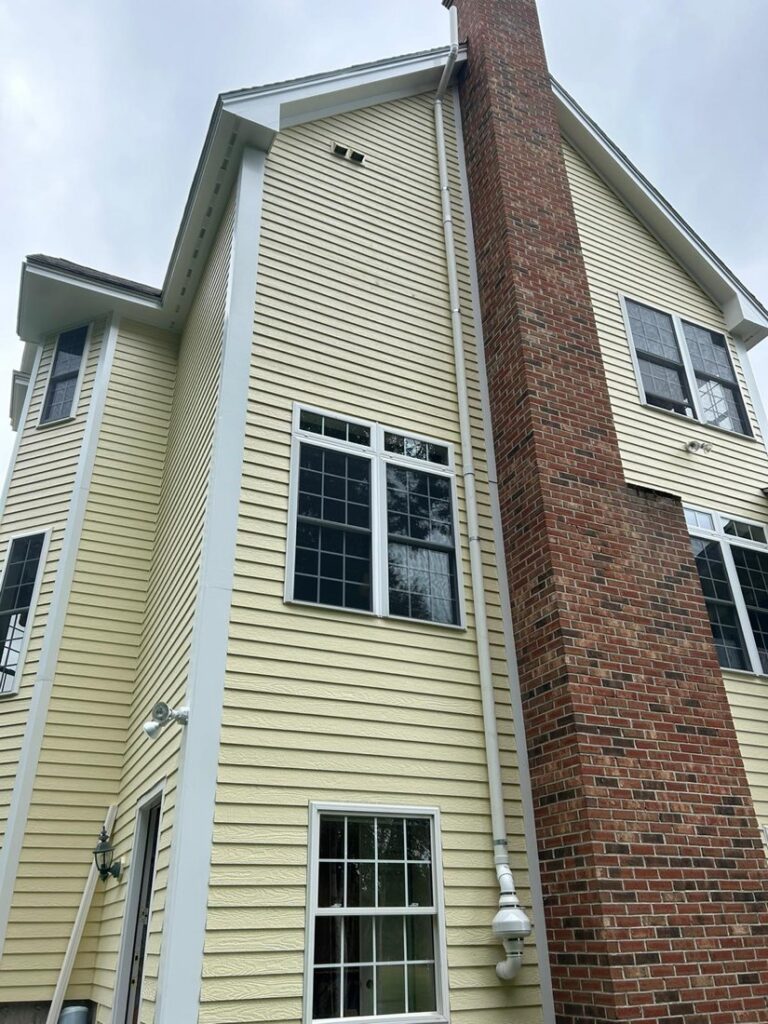
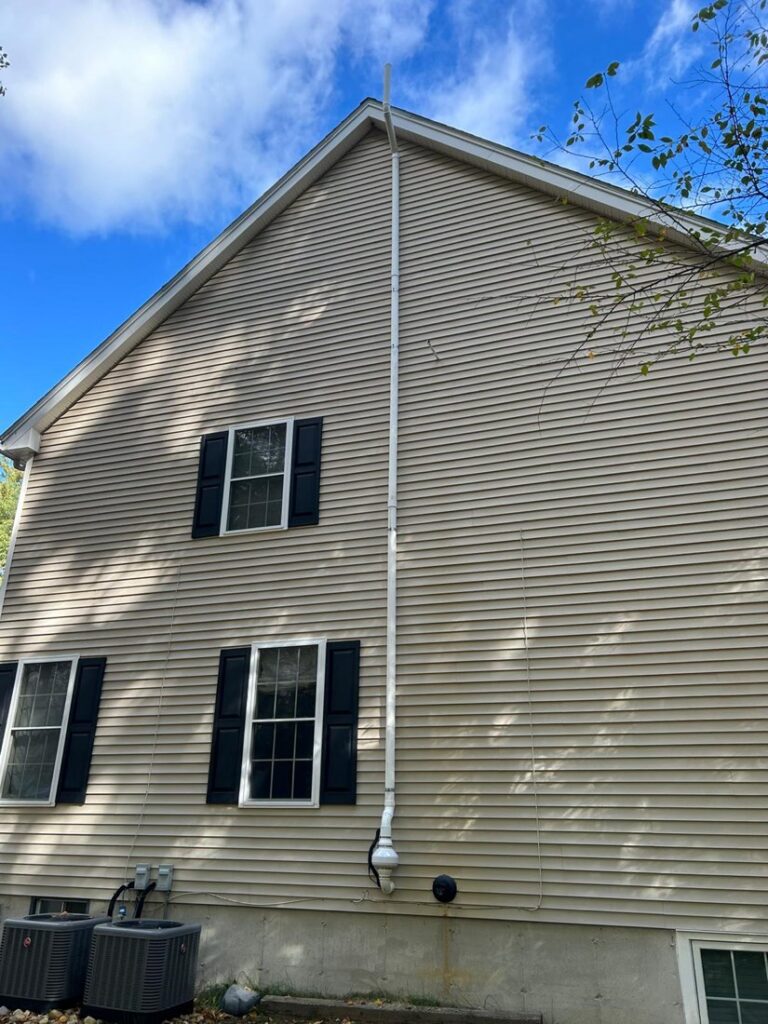
The project specification identifies the suction point, fan, sealed penetrations, pressure field, exhaust route, electrical connection, and system monitor. It also says which existing components remain and which areas are outside the work.
The document should separate necessary system work from optional finish choices and later maintenance.
The promised outcome needs a boundary: the rooms, surfaces, readings, or components the installed work is expected to affect.
A total without locations and quantities is hard to verify, so the scope places each major component on the plan.
What radon mitigation costs
The broad 603 range is $900 to $6,000, with most systems between $1,950 and $2,250. The written Lynn estimate converts that range into quantities, locations, assumptions, and exclusions.
603's applicable warranty is a 10-year warranty on the mitigation system and its components. Coverage follows the written system boundary rather than the town or service label alone.
A short Lynn homeowner checklist
- Preserve failed parts. Keep removed pump, fan, liner, drain, or finish pieces available when they help explain the earlier condition.
- Do not adjust equipment first. Leave settings and temporary fixes alone when safe so the visit can see the actual original state.
- Trace outside terminations. Locate visible drains, vents, downspouts, sump discharge, and low grade before the visit.
- Keep the evidence. Leave stains, openings, equipment, temporary patches, and problem areas visible until they have been documented.
What to ask before the Lynn proposal
What does a radon test cost?
603 charges $50 for a test and credits that amount when the property owner proceeds with mitigation.
Can one fan serve an addition and the original slab?
Only when field testing shows the suction field communicates across those footprints. The plan should not assume it.
Should an old system be replaced or repaired?
603 should inspect the fan, piping, seals, monitor, labels, and suction field before deciding which parts can remain.
Get a written Lynn radon mitigation work plan
A 603 inspector will map the condition, access, and radon mitigation scope before the owner decides.
Related 603 resources
- Radon Mitigation service guide
- radon testing
- radon mitigation systems
- understanding a radon result
- 603 service areas
Sources for the local figures are U.S. Census Bureau 2023 ACS 5-year tables B25035, B25003, B25024, and B01003. Image credit and license appear in the town caption through Wikimedia Commons. 603 provided the commercial and operating facts, plus the pictured work methods.
Common questions about radon
- How can I mitigate radon in an older house with no access to the crawl space?
- How do I test for radon in my basement to make sure the levels are safe?
- How do you get rid of radon gas in a basement?
- How much does a typical radon mitigation system cost?
- How much radon is dangerous if I’m going to live in the basement of a house?
- How quickly do radon levels change?
- I have a radon mitigation system that blows air out of my house. Is that normal?
- I sleep in the basement. Should I be scared of radon?
- If a basement’s concrete cracks, will radon get into the air inside the house?
- If our radon test came back above 12, will a mitigation system really get our home to a safe level?
- Is a bedroom average radon level of 2 pCi/L safe, or should I look into mitigation?
- My house’s radon mitigation system’s fan is getting louder. Is that a problem, and what should I do?